
The formula of alliance: how Baku and Bishkek are building a new architecture of relations
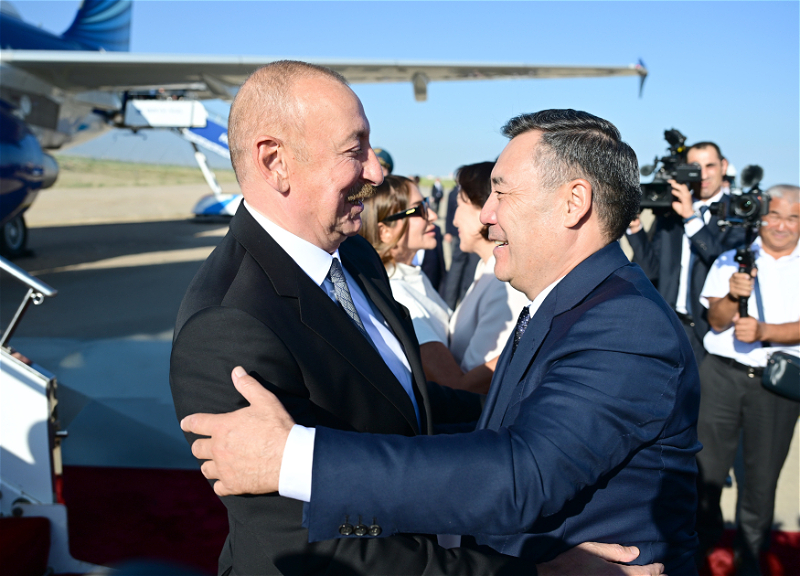
The state visit of Azerbaijani President Ilham Aliyev to Kyrgyzstan taking place today has become another decisive step toward the formation of a single space of strategic connectivity and deep integration of the regions of the South Caucasus and Central Asia.
The talks held in the city of Cholpon-Ata between Ilham Aliyev and Sadyr Japarov, as well as the 3rd meeting of the Interstate Council of Azerbaijan and Kyrgyzstan held there, marked the transition of bilateral cooperation into the plane of unconditional alliance.
Humanitarian basis and investment driver
The central element of the political dialogue was the mutual recognition of the depth of historical commonality and of the practical contribution to the post-conflict transformation of the territories. Characterizing the significance of joint humanitarian initiatives, the President of Azerbaijan particularly emphasized the role of Kyrgyzstan in the restoration of the Karabakh region, focusing on the symbolism of the implemented projects. "I would also like to express gratitude for the assistance in the restoration of Karabakh. The school that we opened together in the Aghdam region bears the name of Manas, and children are already studying there. This school is another symbol of our brotherhood, and it will forever remain a monument to the unity of our peoples. This is appreciated not only by the residents of Karabakh, but by all of Azerbaijan," Ilham Aliyev said.
This humanitarian gesture reflects the overall dynamics of cultural and civilizational rapprochement, which in recent years has acquired an intensive and systemic character. Support for socio-cultural ties serves as the fundamental basis on which the entire complex of interstate agreements is built. Against the backdrop of intensified cultural exchange, a logical step was the expansion of practical economic instruments designed to convert political trust into concrete investment projects.
The key driver of the financial and economic partnership is the Azerbaijan-Kyrgyz Development Fund, whose mechanisms underwent significant scaling up following the talks. Recognizing the need to increase capital investment in joint ventures and infrastructure facilities, the parties came to a decision on a radical increase of this structure's financial resources. A decision has been made to increase the funds of this fund, President Ilham Aliyev stated. "I am glad that the Azerbaijan-Kyrgyz Fund is functioning successfully. We have made a decision to increase the fund's resources, and several projects are already being implemented. I am confident that as the fund's activities develop, the number of projects will grow. This will serve our common goals," the head of state noted. The twofold increase in the fund's capitalization — to $200 million — underscores the transition from declarative intentions to direct financing of priority sectors. "I am confident that this is not the limit either, because the presentation that was made to us on the fund's activities shows that it is being filled with concrete content," the head of the Azerbaijani state emphasized.
An atmosphere of trust and the highest level of cooperation
The political continuation of such a rich agenda was an official invitation to continue the dialogue on Azerbaijani soil, when President Ilham Aliyev invited his Kyrgyz counterpart to pay a state visit to Azerbaijan.
In his response, the leader of Kyrgyzstan confirmed the inviolability of the chosen course toward comprehensive rapprochement, backing his position with references to classical heritage and emphasizing the absence of any contradictions in mutual relations. He stated that Kyrgyzstan and Azerbaijan are united by historical roots and spiritual closeness. "With particular pride I would like to note that Kyrgyzstan and Azerbaijan have found reliable friends in each other," Japarov noted.
Noting the absence of objective obstacles to deepening the partnership, he said that Kyrgyzstan and Azerbaijan are entering a new stage in the development of bilateral cooperation based on a solid foundation of friendship and mutual respect. "There are no unresolved issues between Kyrgyzstan and Azerbaijan that could hinder the development of our strategic partnership. On the contrary, an atmosphere of complete trust and openness has been established, allowing us to move forward with confidence," he emphasized. Focusing attention on foreign policy coordination and the allied nature of the ties, Japarov noted that Kyrgyzstan and Azerbaijan invariably support each other and successfully coordinate approaches on issues of mutual interest: "I note with satisfaction that the political dialogue between Kyrgyzstan and Azerbaijan is today at the highest level. Regular contacts and mutual trust create a solid basis for further strengthening the allied relations established today."
The high level of mutual recognition of the merits of the leaders of the two states was officially recorded during the ceremonial procedure of presenting the highest state awards: Sadyr Japarov presented Ilham Aliyev with the Order of "Manas" of the 1st degree, and Ilham Aliyev presented Sadyr Japarov with the Order of "Heydar Aliyev."

A ceremony of exchanging documents took place with the participation of the presidents of the two countries. The main outcome of the legal formalization of the updated status of relations was the signing by the heads of state of the "Decision of the 3rd Meeting of the Interstate Council of the Republic of Azerbaijan and the Kyrgyz Republic" and the "Treaty on Allied Relations between the Republic of Azerbaijan and the Kyrgyz Republic."
Assessing the fundamental significance of the concluded treaty, Ilham Aliyev regarded this step as "the highest level of cooperation." "Today, together with you, we have raised our interstate relations to the highest level, once again demonstrating our joint aspiration to strengthen our cooperation," Ilham Aliyev said in a statement to the press. "Allied relations are a very great responsibility, and we are ready for this responsibility. We will continue to support each other in all endeavors: both on international platforms and in the trade and economic sphere, in the sphere of strengthening security."
In turn, Sadyr Japarov called the signing of the treaty on allied relations an important outcome of the talks: "This is a truly historic event; it marks a new stage of Kyrgyz-Azerbaijani cooperation." He also emphasized that a solid package of bilateral documents had been signed, covering the spheres of energy, transport, cybersecurity, education, financial market regulation and the circulation of precious metals.
A legal shield and sovereign equality
A structural analysis of current processes shows that the signing of the treaty on alliance signifies a paradigm shift in the perception of regional geopolitics, where the transit and raw material capabilities of the two states are beginning to work as a single systemic mechanism. A restructuring of the treaty and legal framework is taking place, with agreements of past years acquiring a firm legal form. The treaty, along with strengthening the legal foundations of political trust, mutual respect and the will for long-term cooperation, marks the beginning of a new stage in the development of the entire system of Azerbaijan's relations with Central Asia.
In the context of global transformations, the signing of such a document responds to the challenges of the times, which require the consolidation of the states of a broader region. In essence, a legal shield is being created that protects the participants from foreign policy pressure and guarantees the stability of the decisions made. It is fundamentally important that the main philosophy of the document lies in the principles of equality of states, mutual respect for independence, sovereignty and territorial integrity, as well as consideration of mutual interests. Amid the crisis of international institutions, it is precisely commitment to sovereign equality that lays a durable foundation for cooperation. This approach creates conditions for developing relations between Baku and Bishkek not only in a bilateral format, but also on the international arena. At the same time, the legal consolidation of mutual neutrality with respect to third parties eliminates the potential risks of the countries being drawn into other parties' conflicts. The parties' confirmation of the obligation not to participate in any blocs directed against each other testifies that the relations are based on the principles of deep mutual trust.

Military-political coordination and spheres of strategic cooperation
The military-political vector of the agreement reflects a growing awareness of the commonality of threats in Eurasia. The architecture of responding to challenges is built on mechanisms of immediate coordination. According to the document, in a situation where, in the opinion of one of the parties, a threat of armed attack from third states arises, they will immediately hold appropriate consultations and carry out mutual activities aimed at taking measures conducive to a peaceful settlement of the situation. These actions are planned to be linked with existing global institutions, ensuring the legitimacy of the decisions taken. The intention to provide each other with the necessary assistance, taking into account the obligations of international law and national legislation, increases the practical significance of mutual support in the sphere of security.
Diplomatic synchronization is becoming an indispensable condition for the effectiveness of the alliance on world platforms. Joint work at international forums allows small and medium-sized states to defend national agendas more effectively. Azerbaijan and Kyrgyzstan, holding consultations on international issues of mutual interest, are developing mutual support in international and regional organizations, which creates the effect of consolidated promotion of joint initiatives.
In the treaty, the sphere of defense and military-technical development is given a place that meets modern standards of responding to risks. The expansion of military and military-technical cooperation provided for by the document envisages the exchange of combat training experience, modernization of equipment and coordination of actions. In the modern era, the changing nature of security threats, the emergence of new challenges and the growth of hybrid risks increase the importance of coordination between the security structures of both countries.
In parallel, the institutions of legislative power are being strengthened. The development of interparliamentary ties is an important direction in Azerbaijani-Kyrgyz relations. Direct contacts between parliamentarians guarantee the harmonization of legislative norms necessary for the functioning of joint economic projects. Interparliamentary groups are becoming an effective channel for promoting business and humanitarian initiatives.
The economic block of the treaty serves as the material base determining the practical significance of the concluded alliance. Both countries have complementary structures of the national economy. Azerbaijan and Kyrgyzstan attach particular importance to deepening cooperation in such areas as energy, renewable energy sources, transport and logistics, high technologies, digital development, agriculture, the mining industry and tourism. Such a diversity of vectors reduces dependence on the market fluctuations of individual world markets.
A special place on the investment agenda is occupied by the combination of traditional and alternative energy. Amid the global energy transition, the integration of technological capabilities is becoming a key factor of competitiveness. The experience accumulated by Azerbaijan in the oil and gas and energy sectors and the hydropower potential of Kyrgyzstan form a favorable basis for joint projects.
The law enforcement structures of both countries are receiving a detailed mandate base for combining efforts. Coordination is envisaged in combating such threats as international terrorism, extremism, separatism, transnational organized crime, money laundering, cybercrime and human trafficking. The exchange of operational data and the development of unified response protocols turn joint actions into a reliable barrier to destabilizing factors.
Reaching a high-tech level of cooperation testifies to the parties' desire to overcome the raw material orientation of their economies. Cooperation in the sphere of high and satellite technologies shows that Azerbaijani-Kyrgyz relations cover priority directions of digital transformation. The use of space capabilities and digital services can optimize public administration, resource monitoring and logistics processes.
The transport and logistics framework and interregional partnership
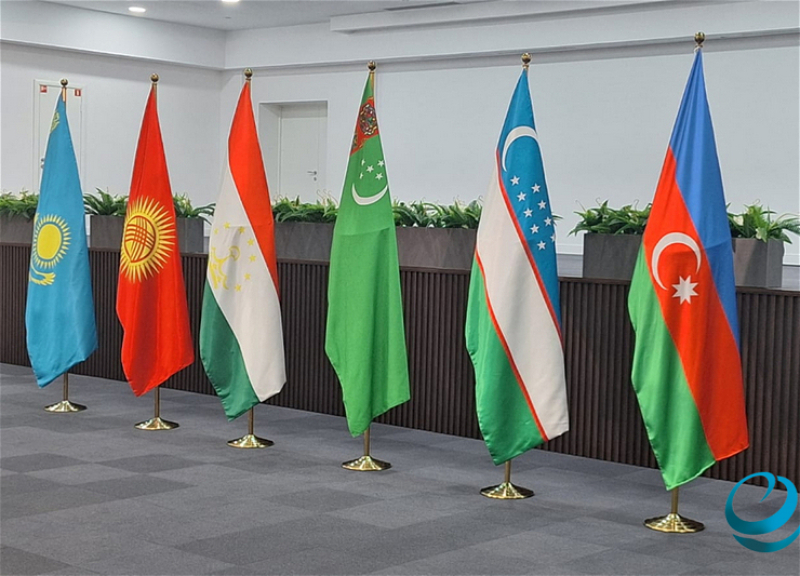
The transport and logistics sector acts as the most important connecting link, uniting the geographic spaces of the South Caucasus and Central Asia into a single multimodal system. The interfacing of infrastructure projects creates conditions for increasing transit flow along the East-West route. The creation of legal, economic and organizational conditions is envisaged for the development of international transport corridors passing through the territory of the two countries.
Azerbaijan's geographic position as a key hub on the Caspian Sea, combined with investments in the port of Alat and the railway network, creates a platform for Central Asian exporters. In turn, Kyrgyzstan is actively developing domestic and cross-border logistics. A sustainable logistics chain is being formed that minimizes external geopolitical risks and strengthens connectivity between Central Asia and the South Caucasus as a whole.
The spiritual and cultural foundation of the alliance gives it the necessary strength. The homogeneity of the historical and cultural area and belonging to the Turkic world form a natural mutual understanding. The legal consolidation of humanitarian priorities stimulates contacts in the spheres of culture, education, science, healthcare, sports and art.
Youth policy and educational programs lay a long-term vector of alliance. Institutional academic exchange, joint scientific research and the development of educational programs create conditions for strengthening humanitarian ties between the younger generation of the two countries. Holding mutual events in the sphere of culture and art allows the peoples to get to know each other better.
Direct cooperation between regions expands the geography of cooperation, taking it beyond the capital-centric model. The establishment and expansion of ties between the administrative-territorial units of Azerbaijan and Kyrgyzstan stimulate local economies. Interregional dialogue promotes direct contact between business circles and more effective use of tourism potential.
Baku's Central Asian strategy and the new geopolitical reality
The signing of the treaty with Bishkek should be regarded not as an isolated event, but as an element of Baku's consistent strategy of building a system of alliance with the states of Central Asia. This document became the third treaty of similar content signed by Azerbaijan in this region. Earlier, the Treaty on Strategic Partnership and Allied Relations with Kazakhstan was concluded (with the subsequent adoption of the Declaration on Allied Cooperation), as well as the Treaty on Allied Relations with Uzbekistan.
The formation of an institutional network of allied and strategic commitments covers all the key states of the region. The signing of declarations on strategic partnership with Turkmenistan and Tajikistan made an important contribution to strengthening the legal foundations of Baku's foreign policy in the Central Asian direction. Azerbaijan-Central Asia relations are being transformed from a format of separate bilateral ties into a model of multi-vector strategic cooperation.
Multilateral institutions, primarily the Organization of Turkic States (OTS), serve as an effective umbrella mechanism complementing the bilateral allied format. A common institutional platform facilitates the coordination of cross-cutting projects in the sphere of trade, energy and transport.
The formation of the South Caucasus - Central Asia axis is taking place against the backdrop of a global restructuring of supply chains and a change in the balance of power in Eurasia. The intensification of contacts at the highest level guarantees promptness in decision-making amid external economic shocks. The geographic linkage of the two regions turns them into a single transit-logistics and geopolitical bloc.
The comprehensive nature of the document signed in Cholpon-Ata guarantees its sustainability and its filling with practical content over the long term. Azerbaijan's systematic work on the Central Asian vector is bringing tangible results, strengthening the sovereignty and international weight of all participants in the process. As a result of the active and multi-vector foreign policy of President Ilham Aliyev, Azerbaijan is steadily expanding ties with regional partners, forming a space of stability, security and economic growth.