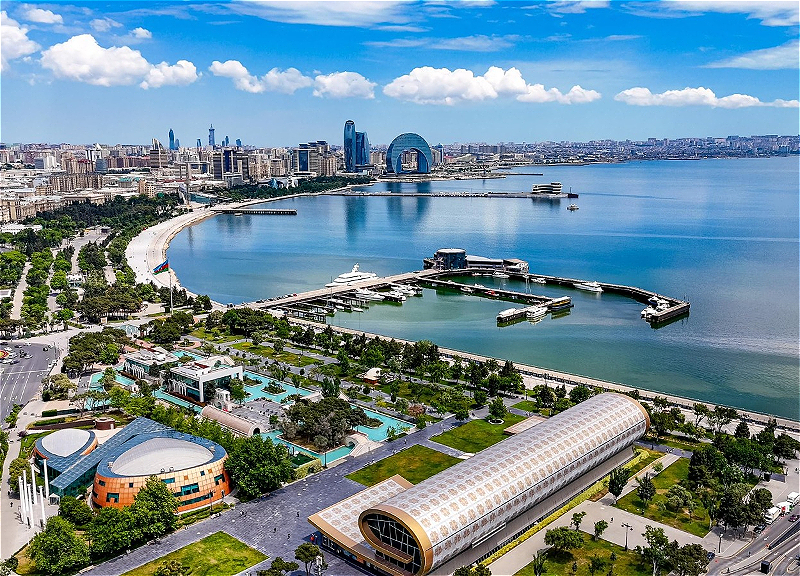
From peace "on paper" to peace "on the ground": the main messages of the Joint Statement of Baku, Washington, and Yerevan
Thousands of tons of cargo and millions of dollars for transport connectivity, energy security, and telecommunications links — over the past twelve months the South Caucasus has begun to change not "on paper" but "on the ground," and it is precisely this that turns the anniversary of the Washington summit into something far greater than a diplomatic date.
The political will for peace, recorded a year ago at the White House, did not remain merely a symbolic moment — it began to take shape in a new regional reality.
The Joint Statement of Azerbaijan, the United States, and Armenia on the occasion of the first anniversary of the Peace Summit at the White House already lists concrete results: 60,000 tons of cargo, 20,000 tons of petroleum products, engineering work on TRIPP, financing for the Middle Corridor, an agreement between telecom operators, the dismantling of the institutions of an already concluded conflict. In other words, if a year ago peace in the South Caucasus was a political declaration, today it is gradually becoming infrastructure.
Peacebuilding in practice
In the year that has passed since the Washington summit, the very political logic of Armenian-Azerbaijani relations has gradually changed. Whereas previously the central question was the resolution of a long-standing conflict, now the parties are consistently eliminating its institutional and political consequences.
From the Joint Statement of the United States, Armenia, and Azerbaijan on the occasion of the first anniversary of the Peace Summit at the White House: "The United States, Armenia, and Azerbaijan reaffirm their unwavering support for the sovereignty, territorial integrity, and jurisdiction of Armenia and Azerbaijan within their internationally recognized borders. The three states remain committed to the full implementation of the Joint Declaration of August 8, both in letter and in spirit, as well as to unlocking the region's enormous economic potential. In addition, the United States remains committed to the full implementation of the bilateral charters and memorandums of understanding signed with Armenia and Azerbaijan, and to strengthening bilateral relations with both countries."
Today stability has been maintained on the Armenian-Azerbaijani border, and Baku and Yerevan continue to take concrete steps to normalize relations and strengthen mutual trust — both at the level of governments and of civil societies.
But perhaps the most telling symbol of this process was the joint request of the two countries to dissolve the OSCE Minsk Group. From the Joint Statement of the United States, Armenia, and Azerbaijan on the occasion of the first anniversary of the Peace Summit at the White House: "The OSCE Minsk Group and its associated structures were dissolved at the joint request of Armenia and Azerbaijan, which testifies to the end of the era of unresolved conflict."
This decision has significance far beyond diplomatic procedure. For decades, the Minsk process was one of the main international mechanisms connected with the Armenian-Azerbaijani conflict. Its liquidation on the joint initiative of Baku and Yerevan means that the parties no longer regard the former conflict architecture as part of their relations.
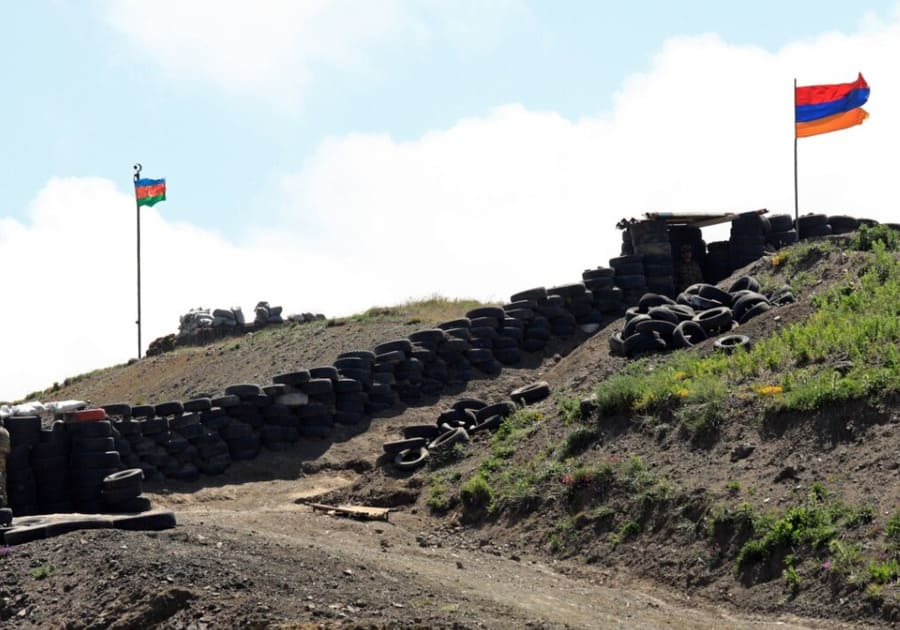
It is here that the difference between August 2025 and August 2026 is especially noticeable. A year ago in Washington, the political will for peace was recorded. Today, this will is already expressed in concrete actions that are changing the very structure of relations between the two states.
Azerbaijani President Ilham Aliyev emphasizes that peace has de facto been achieved between the two countries today, and he underscores its advantages. "We have taken many unilateral steps to demonstrate that peace exists not only on paper, that it can be felt in everyday life. Azerbaijan has lifted all restrictions on the transit of goods through its territory to Armenia. These restrictions were introduced in connection with Armenia's occupation of our internationally recognized territories. We have also begun supplying Armenia with critically important fuel, in particular gasoline and diesel fuel. In the current geopolitical situation, this is of even greater importance than ever before. Thus, we are demonstrating that for us peace is something that can already be sensed, felt, and we are learning to live in conditions of peace. We lived under occupation for 30 years and restored our sovereignty and territorial integrity by our own efforts — both by military means and by political means. And we offered peace to Armenia. So now peace is a reality, but we must work hard to consolidate it, to make it long-lasting, to make it eternal."
Today it is no longer only a matter of ending the conflict as such. It is a matter of a transition from the logic of confrontation to the logic of normal interstate relations — with border delimitation, trade, transport links, and the gradual restoration of trust. And this is fundamentally important: a durable peace begins not at the moment a document is signed, but when the need for the former mechanisms of conflict gradually disappears.
From the Joint Statement of the United States, Armenia, and Azerbaijan on the occasion of the first anniversary of the Peace Summit at the White House: "The Joint Declaration [of the leaders] defined a concrete road map for Armenia and Azerbaijan, with the support of the United States, aimed at strengthening peace, achieving prosperity, and deepening partnership. In the year that has passed since the meeting of these courageous leaders, the countries have laid the foundation for further successful development.
Armenia and Azerbaijan have maintained stability along the Armenian-Azerbaijani border, and both sides are taking concrete steps to normalize relations, delimit the border, and build confidence through measures necessary to ensure long-term stability."
Thus, the main change over the year is that the conflict has ceased to be the political system around which relations between the two countries were built.
The infrastructure of peace
If the first year after the Washington summit showed the political readiness of Armenia and Azerbaijan to move beyond the former logic of conflict, then the next step in this direction is the creation of a material foundation for a new regional order. The main project here is the Trump Route for International Peace and Prosperity — TRIPP.
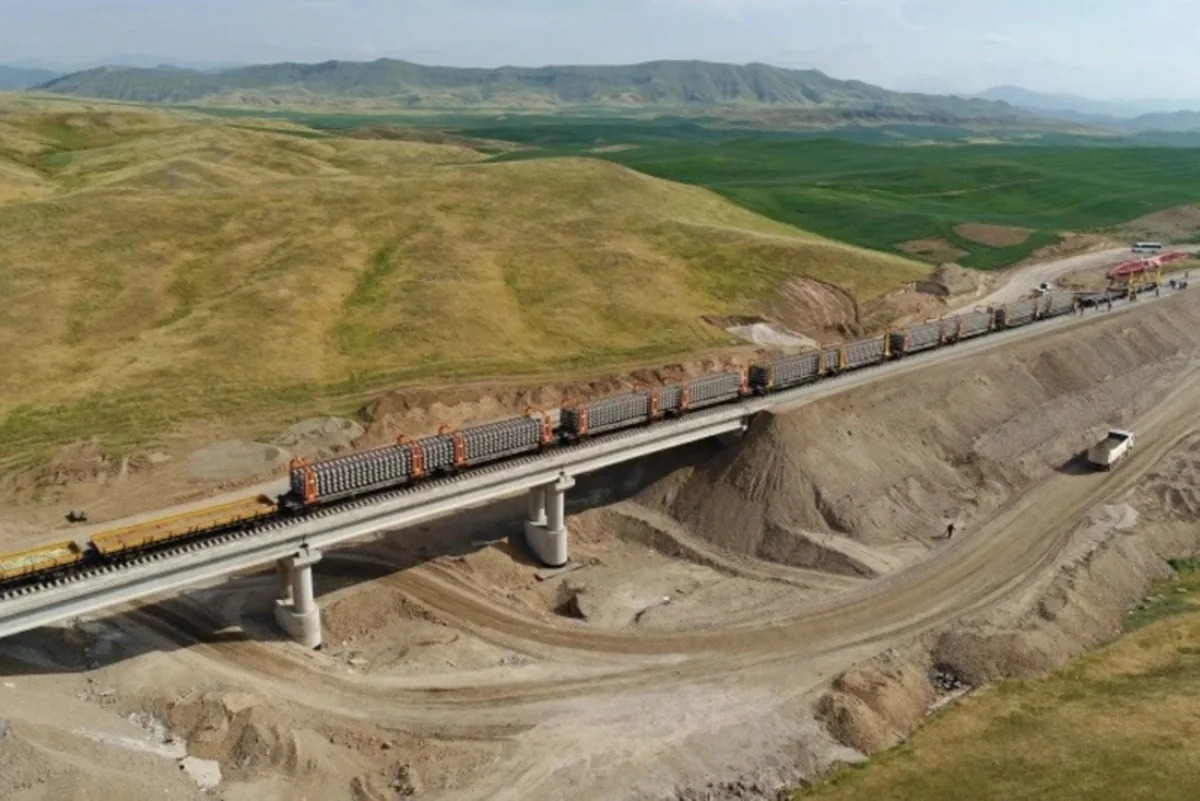
Just a year ago, this route existed primarily as part of a political agreement. Today it is moving from concept to practical implementation. The United States and Armenia have concluded an agreement on strategic cooperation around the TRIPP project on Armenian territory. To date, an Armenian-American company has been created to implement the project — the TRIPP Development Company; its founders are the government of Armenia and TRIPP Development Company US (on the American side).
From the Joint Statement of the United States, Armenia, and Azerbaijan on the occasion of the first anniversary of the Peace Summit at the White House: "The Trump Route for International Peace and Prosperity (TRIPP) — a multimodal transport route — is moving from concept to practical implementation. Concrete progress has been achieved, including the conclusion of an agreement between the U.S. and Armenia on the creation of a TRIPP development company that will lead infrastructure development. Engineering and survey work is already being carried out in Armenia. Azerbaijan has practically completed the construction on its territory of the road and railway that will be connected to TRIPP in Armenia. The three countries also support the construction of a power transmission line along the TRIPP route."
In recent days, a team from the American engineering and consulting company AECOM was in Armenia to carry out specific work on the project. It includes a feasibility study and the development of proposals for the construction of a railway and other infrastructure.
In parallel, Azerbaijan has practically completed the construction of road and railway infrastructure on its territory, which should subsequently connect with TRIPP in Armenia.
This is forming a single transport link capable of connecting the main part of Azerbaijan with its exclave of Nakhchivan through the territory of Armenia and, at the same time, integrating this route into a broader system of regional communications.
Of particular importance is the fact that TRIPP is not viewed exclusively as a transport project. The three countries also support the construction of a power transmission line along the route, which means that what is gradually at stake is the creation of a more comprehensive infrastructural connectivity — transport, energy, and economic.
This is precisely the fundamental difference of the current stage — peace is beginning to acquire a physical dimension. Roads, railway lines, energy lines, and new trade routes create an interdependence that can become one of the most reliable mechanisms of long-term stability.
And in this sense TRIPP is important not only as a transport route. Its significance is determined by the broader system of connections it can form around itself. Connecting with Azerbaijan's infrastructure and further with the routes of the Middle Corridor, the project is capable of transforming the South Caucasus from a space that was long divided by closed borders and conflict into a link between Europe, the South Caucasus, and Central Asia.
The first test of the new peace
However, infrastructure by itself does not yet create a new economic reality. Its significance is determined by whether trade begins to move along it. And here, too, the first concrete results appeared over the past year.
From the Joint Statement of the United States, Armenia, and Azerbaijan on the occasion of the first anniversary of the Peace Summit at the White House: "In line with the spirit of the peace summit at the White House, Azerbaijan unilaterally lifted all transit restrictions with respect to Armenia. Within one year, about 60,000 tons of cargo were transported through the territory of Azerbaijan to and from Armenia. Azerbaijan also supplied Armenia with 20,000 tons of petroleum products. The two countries continue to work on expanding bilateral trade."
Since October of last year, when Baku lifted the transit restrictions, more than 36,000 tons of grain, about 9,000 tons of fertilizers, 1,136 tons of propane, 133 tons of aluminum, 414 tons of anthracite, and 67,000 tons of lumber have been sent to Armenia through the territory of Azerbaijan (statistics as of August 6).
Of fundamental importance in this context are the supplies of petroleum products from Azerbaijan to Armenia. According to the same statistics, about 15,000 tons of diesel fuel, as well as about 5,000 tons of AI-92 and AI-95 grade gasoline, have already been exported from Azerbaijan to Armenia. In a world where disruptions in fuel supplies can directly hit economies, access to stable regional supplies is becoming an important factor in a country's resilience.
Here is what the Azerbaijani leader says about this: "This is especially important now, when many countries are experiencing difficulties with access to fuel sources, and Armenia has a reliable supplier in the person of Azerbaijan. If not for this, they would probably have to search for gasoline and diesel fuel all over the world today."
At first glance, the figures cited may seem to be merely individual economic indicators. However, their political significance is considerably broader. For decades, transport and trade links between the two countries were hostage to the conflict. Now, economic interaction is gradually becoming an important part of the normalization process.
It is especially telling that these are actions taken by Azerbaijan unilaterally. This demonstrates a shift from the principle of "first a final political settlement, and then economic contacts" to a different, more effective logic — economic connectivity itself becomes an instrument for strengthening peace.

It is precisely here that the most important interconnection between the political agreement and the future regional infrastructure emerges. TRIPP, the Middle Corridor, and other projects should not exist as abstract transport schemes. Their ultimate goal is to create a sustainable movement of people, goods, energy, and capital across the South Caucasus.
Therefore, it would not be entirely correct to regard tons of cargo as simply statistics. This is one of the first indicators that borders which for decades served as dividing lines are gradually beginning to perform another function — ensuring movement and economic ties.
From regional trade to Eurasian connectivity
At the same time, the significance of the ongoing changes extends far beyond Armenian-Azerbaijani relations. In the year since the Washington summit, the South Caucasus has begun to fit ever more noticeably into a broader system of transport, energy, and digital links connecting Europe with Central Asia.
One of the key elements of this process is the Middle Corridor — the Trans-Caspian International Transport Route, whose importance has been rapidly growing in recent years.
From the Joint Statement of the United States, Armenia, and Azerbaijan on the occasion of the first anniversary of the Peace Summit at the White House: "The United States provided $201 million to the Trans-Caspian Enterprise Fund to help attract private sector investment in the Trans-Caspian trade route (Middle Corridor) in the South Caucasus and Central Asia."
It is worth noting that the volume of financing for this fund, named TRIPP+, was recently doubled — from $201 million to $402 million. The financing of the fund by the United States shows that Washington views regional connectivity no longer as a local infrastructure issue, but as part of a larger economic strategy across a vast geography. The South Caucasus is gradually turning into a space through which not only goods pass and may pass in the future, but also energy, investment, and digital flows.
Progress in the telecommunications sphere is also telling in this respect. From the Joint Statement of the United States, Armenia, and Azerbaijan on the occasion of the first anniversary of the Peace Summit at the White House: "The telecommunications operators of the two countries signed an internet connectivity agreement that will make it possible to diversify regional communication routes, increase the reliability and resilience of telecommunications infrastructure in the South Caucasus, and promote the development of the infrastructure of Eurasian telecommunications networks."
The bilateral agreements on providing Armenia's international internet connection through the territory of Azerbaijan, signed in June by AzerTelecom and Telecom Armenia, at first glance seem to be a technical matter. However, the significance of these agreements extends far beyond the industry. Under the agreements, AzerTelecom, the region's leading backbone internet operator, will expand the geography of its services for the transmission of international internet traffic, and will also ensure the transit of internet traffic toward Armenia using its own infrastructure. Such agreements contribute to the diversification of communication routes in the region, to a further increase in the reliability of telecommunications networks, and to the development of cooperation in the field of telecommunications.
As can be seen, the new regional connectivity is being formed simultaneously at several levels — transport, energy, and digital — since in the modern economy digital communications are becoming just as much a part of strategic infrastructure as railways, ports, and power transmission lines. And this, too, is a distinctive feature of the current stage, since what is at stake is already the gradual formation of a unified infrastructural ecosystem.
In this model, the South Caucasus ceases to be a periphery separating different economic spaces. On the contrary, its geography is beginning to work as an advantage — as a link between the Caspian, Central Asia, Turkey, and the markets of Europe.
The U.S. as a participant in the new architecture of peace
In the international dimension, the most noticeable change over the past year has been, perhaps, the very presence of the United States in the South Caucasus. Having stepped out of the role of mediator, Washington is increasingly beginning to form long-term strategic ties with both countries.
From the Joint Statement of the United States, Armenia, and Azerbaijan on the occasion of the first anniversary of the Peace Summit at the White House: "The United States has deepened relations with both Armenia and Azerbaijan by signing charters defining new bilateral strategic partnerships, as well as memorandums of understanding in the spheres of energy security, border infrastructure and security, artificial intelligence and semiconductor innovation, and critical minerals. These agreements represent an investment in the long-term prosperity of all three countries and have already brought concrete results."
The very set of areas is telling. Washington is building relations with Baku and Yerevan not only within the framework of the peace process, but around an entire complex of issues that will define the economic and technological competition of the coming decades. Energy, transport, digital technologies, and critical minerals are becoming part of a single agenda.
The participation of Armenia and Azerbaijan in the American Board of Peace initiative is also telling. From the Joint Statement of the United States, Armenia, and Azerbaijan on the occasion of the first anniversary of the Peace Summit at the White House: "At the invitation of the United States, Armenia and Azerbaijan joined the Board of Peace, thereby demonstrating that they stand side by side with the United States in efforts to create a more peaceful and prosperous world."
The fact that the two states were simultaneously included in a single international initiative demonstrates a change in their position: from parties to a protracted conflict they are gradually turning into participants in a broader agenda of international cooperation.
Thus, American policy in the region is acquiring a new dimension. Washington is not simply supporting the agreements reached by Baku and Yerevan — it is linking the peace process with investment, infrastructure, energy, and technology. And it is precisely this linkage that is capable of making the political agreement reached a long-term one.
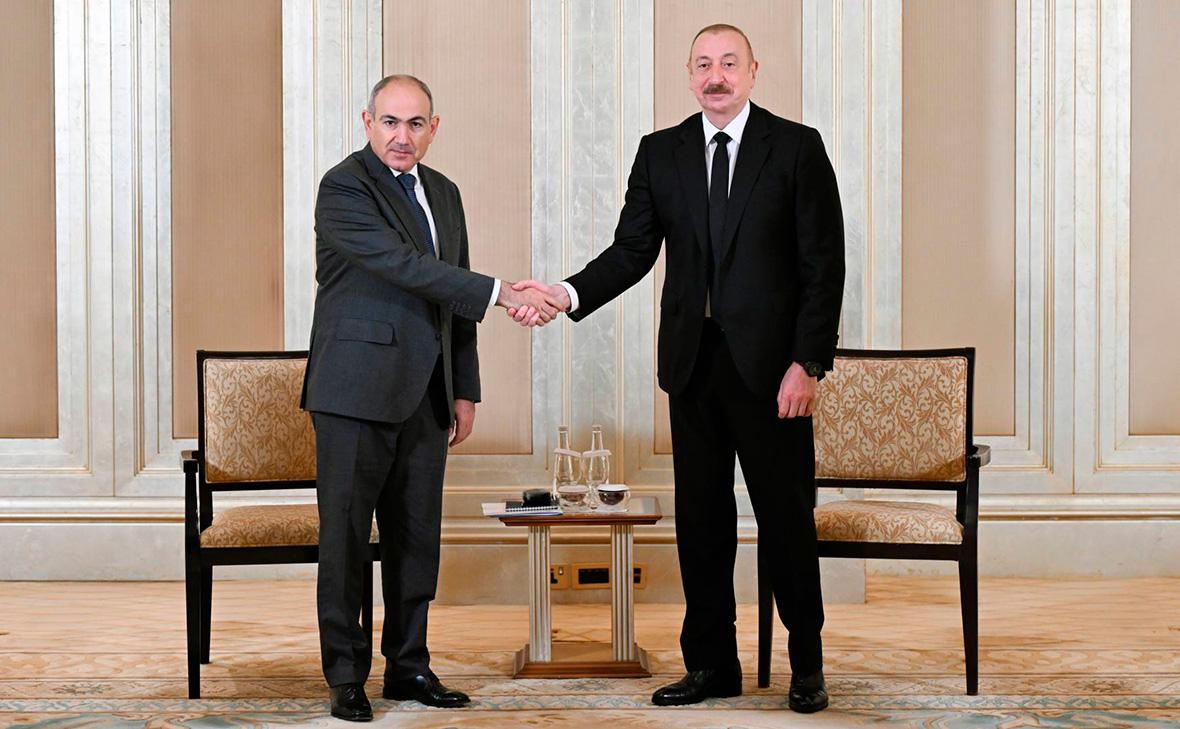
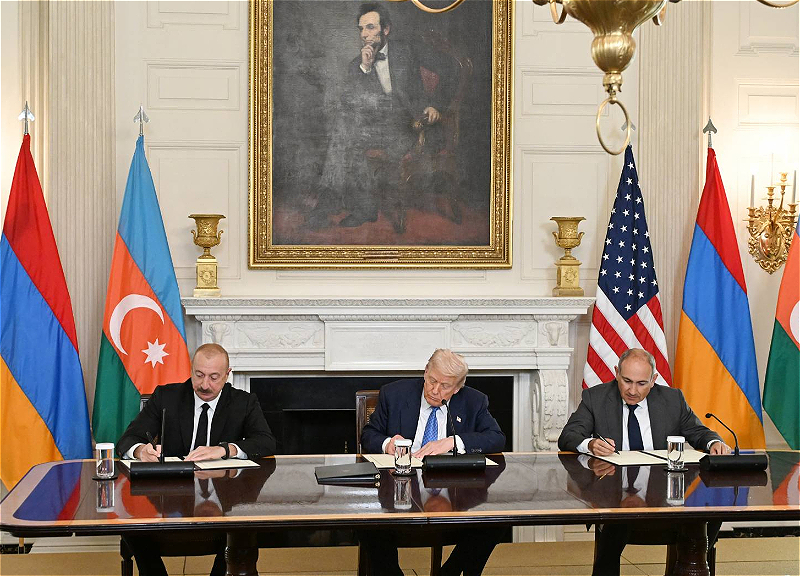
A symbolic recognition of the U.S. role in the peace process was the joint decision of Baku and Yerevan to nominate the American president for the Nobel Peace Prize. From the Joint Statement of the United States, Armenia, and Azerbaijan on the occasion of the first anniversary of the Peace Summit at the White House: "A year ago, President Trump held a historic Summit at the White House with the President of the Republic of Azerbaijan Ilham Aliyev and the Prime Minister of the Republic of Armenia Nikol Pashinyan, during which President Ilham Aliyev and Prime Minister Nikol Pashinyan signed a Joint Declaration on peace. In the presence of the three leaders, the foreign ministers of Armenia and Azerbaijan initialed the draft 'Agreement on the Establishment of Peace and Interstate Relations between the Republic of Armenia and the Republic of Azerbaijan.' On the first anniversary of this event, we feel deep pride in what our countries have managed to achieve together and are determined to continue this work, building on the foundation that ended decades of conflict and opened for the South Caucasus a path to a more prosperous future. In recognition of these historic and significant efforts to ensure peace, President Aliyev and Prime Minister Pashinyan jointly nominated President Trump for the Nobel Peace Prize."
The very fact of the joint nomination is telling. Until recently, Baku and Yerevan were on opposite sides of one of the most protracted and complex conflicts in the post-Soviet space. Now the two countries are jointly noting the contribution of one and the same external player to the achievement of peace. And this is yet another of the most vivid political symbols of how much the regional reality has changed over the past year.
***
Thus, the year after the Washington summit has shown that peace in the South Caucasus is ceasing to be an exclusively political formula. It is acquiring material content — in the transport routes being opened, growing trade, energy supplies, new telecommunications links, and investment in regional infrastructure.
This fundamentally changes the very logic of the South Caucasus. A space that for decades was associated with conflict and dividing lines is gradually turning into a link between regions — a route for trade, a hub of energy and digital flows, and a platform for new investment.
That is why the significance of the Washington summit extends far beyond its first anniversary. Its main result is not only the agreements reached at the negotiating table, but also the processes that are continuing beyond it. Roads, railways, trade flows, energy supplies, and digital links create something that cannot be achieved by a single diplomatic declaration. This is an interconnectedness that makes peace economically and strategically more advantageous than conflict.
And if previously peace in the South Caucasus was a political declaration, today it is gradually becoming infrastructure. And it is precisely in this transformation — from signed documents to new ties between countries — that the main outcome of the first year after the Washington summit lies.