Brotherhood is not an IOU

Friendship between states has a boundary that must not be crossed, even under the pretext of the closest possible relations.
Historical commonality does not give one country the right to test the political loyalty of another, and brotherhood does not imply that a partner is obliged to justify every independent step it takes.
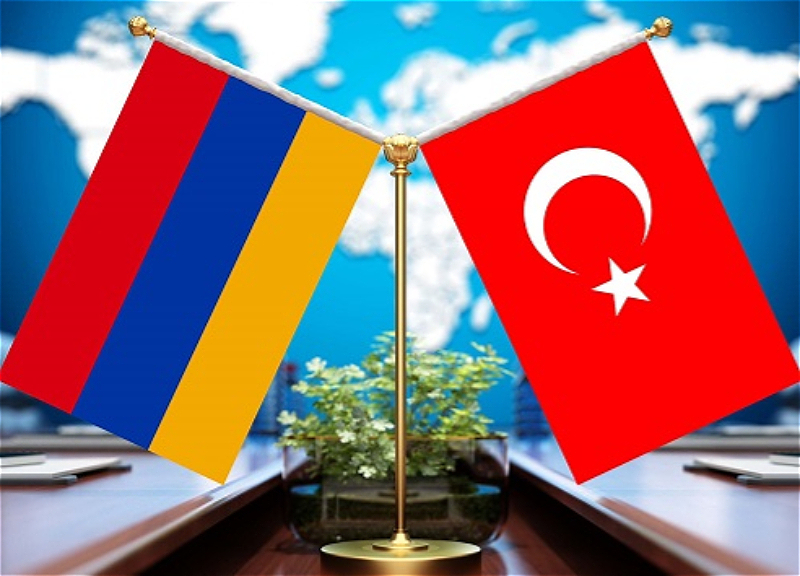
Azerbaijan and Turkey are bound by a shared language and culture, mutual support, major economic projects, and close political cooperation. The formula "one nation - two states" has become a concise expression of this closeness. Yet for several days now, certain Turkish politicians and certain media outlets inspired by their narratives have seemed to be trying to add to this formula a condition that was never part of it. That condition boils down to the notion that the two states must hold identical views, and that any divergence requires explanations from Baku, as the side knowingly standing on the "wrong side" whenever disagreements with Turkey are involved.
This is how brotherhood is turned into an instrument of pressure. The pretexts for attacks are Azerbaijan's foreign policy course, its partnership with Israel (unwelcome to Ankara given the current circumstances), and domestic decisions that certain circles assess through the prism of their own religious and ideological views. A dispute over a specific issue quickly escalates into doubts about the legitimacy of Azerbaijan's choices as such.
Meanwhile, Baku has the right to take Ankara's position and those of other partners into account, but it makes final decisions on its own. Attempts to present this independence as ingratitude look untenable. A friendship that is preserved only on the condition of political obedience too closely resembles a system of obligations drawn up unilaterally.
Billions in investment do not buy political loyalty
Azerbaijani-Turkish relations are not merely symbols and historical memory. Behind them stand investments, energy infrastructure, transport routes, and long-term economic interests. Azerbaijan has invested significant funds in the Turkish economy and participates in the development of strategic facilities. Turkish business, in turn, operates in Azerbaijan and takes advantage of the opportunities of bilateral cooperation. Both sides benefit from this.
All the stranger, then, are the attempts to turn economic ties into a moral bill presented to one side. Investments are not a charitable contribution in exchange for obedience, but economic activity based on calculation and mutual benefit. Azerbaijan invests in Turkey not in order to acquire political influence, and the Turkish side cannot count on close cooperation giving it the right to present Baku with ideological demands.
The strength of a true partnership is determined precisely by the ability to respect each other's interests, even when decisions do not coincide. But when past support begins to be invoked to demand payment in political loyalty, that is not quite about friendship.
The Israeli question and the right to one's own course
The problem manifests itself especially clearly in criticism of Azerbaijan's relations with Israel. For some Turkish politicians and media outlets, Baku's ties with Tel Aviv have become a pretext for accusations that call into question the independence of Azerbaijani diplomacy.
Meanwhile, relations between the two countries have taken shape over decades and have political, energy, and defense dimensions. Azerbaijan builds them on the basis of its own interests. Turkey has the right to adhere to a different line with regard to Israel, to criticize its actions, and to defend its position on the Palestinian question. But a difference in approaches does not provide grounds for demanding that Baku revise its foreign policy.
Azerbaijan supports the right of the Palestinian people to self-determination and the creation of an independent state. Diplomatic relations with Israel do not negate this position, just as support for the Palestinians does not require severing ties with other countries. Foreign policy is not reduced to unconditionally choosing one side in all international conflicts.
Likewise, maintaining strategic relations with Israel cannot be declared a departure from alliance and brotherhood with Turkey; otherwise, what is at issue is no longer a discussion but an attempt to restrict Azerbaijan's right to determine the circle of its partners on its own.
Strategic depth instead of a blind monolith
The paradox of the situation is that the political blindness of Baku's critics prevents them from seeing the obvious truth that Azerbaijan's pragmatic and multi-vector course is beneficial to Ankara itself. In contemporary geopolitics, rigid attachment to a single bloc or ideological center turns regional alliances into vulnerable targets. When Azerbaijan builds independent, pragmatic bridges with the states of the Middle East, Central Asia, or the West, it expands not only its own opportunities but also creates additional room for maneuver for the entire Turkic geopolitical architecture.
Azerbaijan has repeatedly proven that it is capable of acting as an effective and indispensable moderator in the most complex regional knots, where Ankara's direct diplomacy reaches a dead end because of its emotional or ideological bias. Turning Baku into a diplomatic "echo" of Ankara would deprive the Turkic alliance of its main advantage - flexibility and the ability to conduct dialogue with all key players in world politics. Respect for Azerbaijani autonomy is not a courtesy, but a strategic resource that strengthens both countries.
Unity without ideological oversight
Behind such claims one can discern the desire of certain circles to perceive Turkic unity as grounds for political leadership over other states. In this logic, a shared culture, language, and history supposedly presuppose a single ideological line, disagreement with which becomes a violation of unspoken discipline.
But Turkic unity cannot be built on a principle under which some set the rules and the rest are obliged to follow them. Neither cultural closeness, nor religious commonality, nor historical merits give individual politicians the right to speak on behalf of all Turkic peoples or to interfere in the affairs of sovereign states.
A telling example was the declaration adopted a week ago by the Milli Majlis working group on interparliamentary relations with Turkey. It expressed concern over biased publications in certain Turkish media and on social networks, as well as unfounded accusations by some deputies of the ruling Justice and Development Party and by the chief adviser to the president of Turkey, Oktay Saral. Azerbaijani parliamentarians emphasized that the formula "one nation - two states" implies the existence of two independent and sovereign states, not the right of one to interfere in the internal affairs of the other.
Baku is not renouncing brotherly relations and is not calling into question the alliance with Ankara. It is recalling a principle without which an equal partnership is impossible. That principle is that respect for sovereignty must be mutual.
For Azerbaijan, brotherhood with Turkey truly means a great deal. But it is not an IOU that one side has the right to present to the other at every political disagreement. And if someone in Ankara confuses a fraternal alliance with a protectorate, then that is not a problem of Azerbaijani diplomacy, but of someone's unrealized neo-imperial illusions. In Baku, people remember perfectly well the price of their independence, which is why any attempts to manage Azerbaijan's foreign policy from someone else's offices are doomed to run up against a harsh reality: there are no vassals among brothers.
Farhad Huseyn