"Heroes" with blood on their hands
When a society loses the ability to draw the line between a heroic feat and a crime, it finds itself in a dangerous moral aberration.
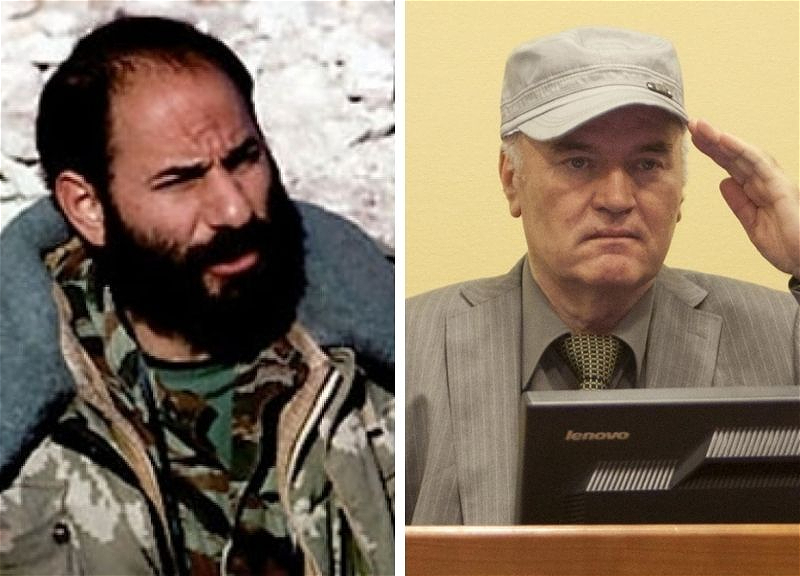
The glorification of those who committed crimes against humanity not only distorts history — it lays the foundation for future catastrophes, turning acts of violence into an instrument of national identity. It is precisely this process that can be observed today in the Balkans. Hundreds of people gathered in Pale — the wartime capital of the Bosnian Serb leadership — to kneel before a portrait of the convicted war criminal Ratko Mladic, light candles and kiss the Serbian flag on the third evening of commemorative events following his death.
And a few kilometers from that place lies Sarajevo, which the troops under Mladic's command held under a bloody siege for 1,425 days, methodically killing thousands of civilians with sniper and artillery fire. The contrast between mourning for the executioner and the memory of his victims lays bare a profound mental deformation. When statesmen, including Serbian President Aleksandar Vucic, lash out at the International Tribunal in The Hague for "anti-civilizational behavior" and for obstructing the general's return to his homeland, a shift in fundamental values is taking place. The man responsible for the genocide in Srebrenica and for systematic war crimes is being transformed, in official and everyday rhetoric, into a national martyr.
This dangerous tendency to substitute concepts, in which the organizers of mass killings and ethnic cleansing are elevated to the rank of national heroes, is not confined to the Balkans and has become a systemic disease in a number of countries. In Armenian social and political reality, former field commanders and ideologues of military aggression have enjoyed complete impunity for decades.
The institutional crisis of morality is most vividly manifested in the artificial glorification of international terrorists. Monte Melkonian, whose hands are stained with the blood of civilians of Azerbaijan and citizens of other states, instead of legal and civic condemnation was elevated to the status of the principal national symbol. With the direct support of Armenia's state structures, feature films are made about him, military and educational institutions are named after him, and his biography is presented to the rising generation as a model of patriotism. Such a practice forms a distorted perception of reality, in which the scale of the crime is justified by national expediency. The facts of the most brutal deeds — from the mass slaughter in Khojaly to documented torture in Karabakh — are ignored or rewritten, despite exhaustive bodies of legal evidence, photo and video materials, expert conclusions and witness testimony repeatedly presented to the international community.
The danger of myth-making around war criminals lies in the inevitable destruction of international legal norms and of the very structure of human morality. Raising young people on the examples of individuals who committed crimes against humanity lays the foundation for new rounds of aggression and revanchism. When a terrorist or an organizer of genocide is offered to society as a moral guide, the concept of patriotism is reduced to the justification of any violence, while the refusal to recognize the decisions of international tribunals or to conduct one's own independent investigations isolates the state from the common legal space. Serbia may today hold discussions about the place of Ratko Mladic's reburial, but the fact remains unchanged: his guilt has been officially proven by an international court. At the same time, attempts to turn convicted criminals into national martyrs or to avoid trial for those currently implicated in war crimes lead to the degradation of society itself. The glorification of those who carried out terrorist attacks, mass killings and destroyed entire regions is not merely historical blindness, but a distorted reality in which crime is proclaimed valor. Until society finds the strength within itself to give an unconditional legal and moral assessment of the executioners regardless of their national affiliation, it remains a hostage of perverted meanings that preclude the possibility of an objective understanding of the past and of movement toward genuine peace.