Ilgar Velizade: Iranian circles should deal with their own problems rather than lecture Azerbaijan
A number of external circles, including in neighboring Iran, are trying to use the Azerbaijani government's decision to approve dress code requirements in state general education institutions to escalate the situation and create artificial tension.
Such actions constitute direct interference in the internal affairs of a sovereign state and an attempt to impose alien standards.
Despite the fact that Azerbaijan strictly adheres to the principle of good-neighborliness and never interferes in the internal processes of other countries, the destructive steps of biased foreign structures only increase mistrust and contradict the spirit of bilateral relations.
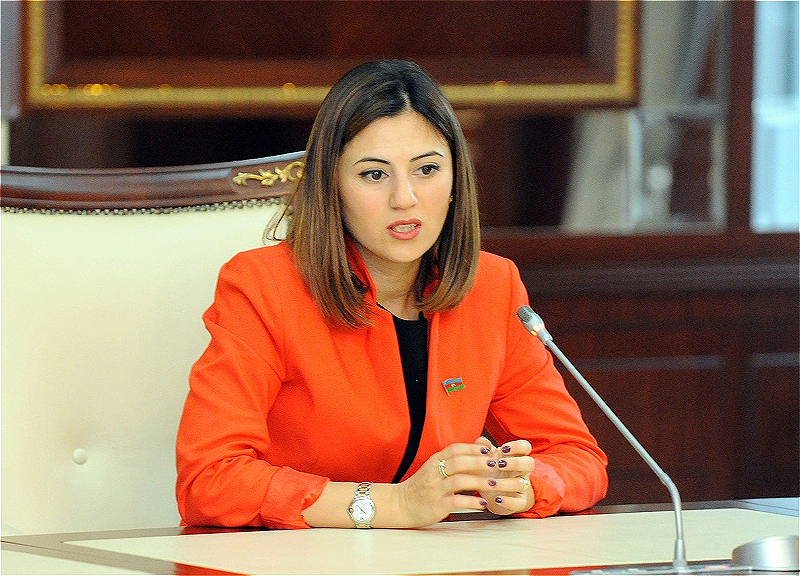
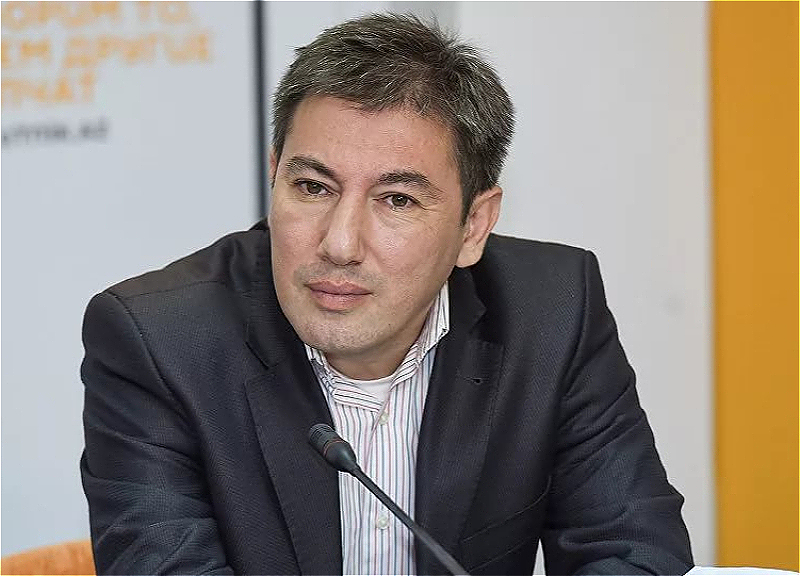
In an interview with 1news.az, political analyst and head of the "South Caucasus" Political Scientists Club Ilgar Velizade spoke about why any attempts to impose someone else's agenda on Baku are unacceptable, how Azerbaijan builds its internal dialogue, and what destructive external influence leads to:
"The decisions of the Azerbaijani government to approve dress code requirements in state schools, adopted within the framework of the legislation of the Republic of Azerbaijan, are causing a painful reaction among certain external forces, in particular in neighboring Iran.
Any state has the right to establish on its territory those norms and rules that it deems necessary.
Of course, this topic has proven sensitive for Azerbaijani society: active discussions are currently underway, and citizens freely express their opinions. Everyone has the right to express their own position regarding one decision or another — this is what is called public discourse. It is conducted at different levels with varying degrees of intensity, which testifies to people's concern about the processes taking place in the country and to the diversity of existing views.
This is an entirely normal and ordinary practice. Moreover, such public dialogue makes it possible to better understand the sentiments of citizens. The Azerbaijani state listens to the opinion of the people and builds its policy by combining long-term strategic interests with the demands of the broad public. For this purpose, public councils operate under state structures and agencies, and other platforms function as well, ensuring constant dialogue between the authorities and the public.
And when external forces with their own agenda interfere in this dialogue between the authorities and society, it is perceived as an attempt to "impose one's own rules in someone else's monastery," which naturally provokes a sharply negative reaction. Every state has its own internal socio-political discourse, conditioned by local processes. Constructive dialogue between the people and the authorities ultimately leads to a positive result, giving rise to a symbiosis of ideas that are then put into practice.
When external forces with their own interests try to wedge themselves into this dialogue, their desire to steer it in a direction advantageous to them, to strengthen their influence on processes in another society, and to model the situation at their own discretion becomes obvious. This ceases to be an intra-societal dialogue. In essence, we are talking about undisguised interference in internal affairs and the introduction of an external element into domestic political discourse. The experience of many states, as well as our own, shows that such actions never lead to anything good. Because an alien discourse, implanted into our social environment, begins to live by its own laws. It turns into an instrument of external manipulation, the goal of which is to reshape society according to foreign standards. In various years, different centers of power have applied similar approaches in different corners of the world, and this practice persists to this day.
Azerbaijani President Ilham Aliyev, speaking not long ago at the congress of the New Azerbaijan Party, emphasized that attempts at external interference in our country's affairs were actively undertaken in the past and will continue in the future. That is precisely why it is necessary to strengthen the protection of the information and cyber space from such encroachments.
We see that such attempts are being made today as well. At the same time, Azerbaijan does not interfere in Iran's internal processes and does not tell the Iranian leadership how to act in one situation or another, although quite unseemly events periodically occur in the neighboring country, which have become the object of condemnation and attempts at interference by third states.
Azerbaijan, guided by the principles of good-neighborliness and respect for neighboring states, in particular for Iran, has never allowed such steps and does not allow them today. Moreover, in the current difficult situation, Azerbaijan is providing comprehensive support to the Islamic Republic. This was stated by Iranian President Masoud Pezeshkian during a meeting with the President of Azerbaijan on the sidelines of the CIS summit in Turkmenistan. He expressed gratitude to Ilham Aliyev for the assistance provided and emphasized that this is the main evidence of the fraternal relations between the two countries.
The actions of biased political circles in Iran, controlled by security structures, can hardly be called fraternal. Naturally, they only increase mistrust and tension between the two countries — especially during such a sensitive period for Iran itself. Whether this is beneficial for Iran itself and for Iranian society is a big question. It would be desirable for pragmatism to prevail in this matter, and for those showing such "concern" about the situation in Azerbaijan to pay more attention to what is happening in their own country.
All the more so since there are more than enough problems there — including social ones and those connected with Iran's internal socio-political discourse. We are well aware of these problems and of how Iranians themselves view them, but we do not interfere in their internal affairs. We would like them to act the same way we do.
It is worth recalling that in recent years mass protests against the mandatory wearing of the hijab have repeatedly flared up in Iran, accompanied, among other things, by violence. Despite this, Azerbaijan does not allow itself to lecture or make claims against the leadership of the neighboring country. We count on a similarly respectful attitude toward our position. Otherwise, Baku reserves the right to adjust its approach. At the same time, our country remains faithful to the fundamental principles of foreign policy, from which it will never retreat."