Reform of TABIB is tied to the goal of a healthy lifestyle for citizens

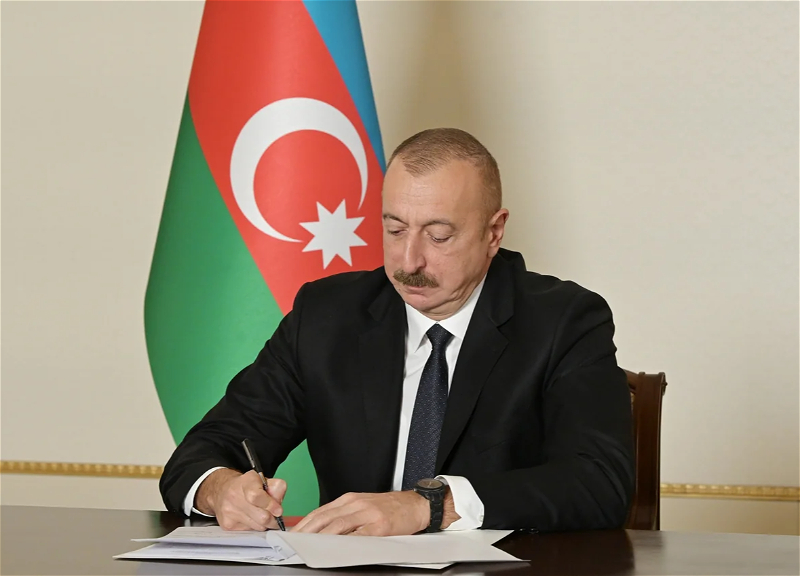
President Ilham Aliyev's decree of Oct. 19, 2026, "On a number of measures related to the improvement of management in the healthcare sector" transfers the Management Union of Medical Territorial Units (TABIB) to the Ministry of Health of the Republic of Azerbaijan, a step meant to strengthen the link between state health policy and the organization of medical services.
The decree marks the next stage of reforms in healthcare governance, the Center for Analysis of Economic Reforms and Communication said.
The new approach is not limited to a change of subordination, said Sevinj Jabbarova of the center's monitoring and evaluation department. The decree provides for TABIB's rights, obligations and property to pass to a new legal entity, for its day to day management to be handled by a management board, and for its work to continue through the transition period.
TABIB was set up in 2018, creating an organizational framework for running medical institutions.
By a decree of March 19, 2026, powers over compulsory medical insurance were assigned to the Ministry of Labor and Social Protection of Population of the Republic of Azerbaijan, under which the State Medical Insurance and Expertise Agency is to be created. The agency was given the functions of managing the compulsory medical insurance fund, acting as the centralized purchaser of medical services and covering their costs.
The advantage of that division of functions lies in the ability to align separate management decisions with single health priorities, according to Jabbarova. Data on the work of medical institutions, staffing needs, infrastructure and the service network can feed into policymaking and help plan resources more precisely, she said.
Coordination must be maintained between insurance financing mechanisms and the actual organization of medical care, she added. Clear boundaries of authority between institutions, data exchange and uninterrupted services will be the main conditions for applying the new model.
The reform is tied to the goal of a healthy lifestyle for citizens set out in the Socio-Economic Development Strategy of the Republic of Azerbaijan for 2022-2026. Priorities in that area include stronger primary health care, the development of the family doctor institution, maternal and child health, disease prevention and early detection, the supply of medical personnel and the quality and accessibility of services.
The practical effect will show first in citizens' access to medical care, including the correct referral of patients between primary and specialized care, the distribution of medical staff across regions according to need and the organization of appointments and examinations. Digital health solutions and data exchange between medical institutions can support more connected services and evidence based management decisions.
Continuous monitoring will matter for assessing the results, with indicators such as waiting times for doctor appointments and diagnostic examinations, coverage by primary health care, staffing in the regions, the efficiency of patient referral, the performance of medical institutions and patient satisfaction.