UN reforms and energy pragmatism: Baku's principles in the mirror of the Shenzhen Declaration

World politics is gradually coming to recognize what Azerbaijan has been declaring from international rostrums for many years: the existing architecture of international relations needs a profound overhaul, and global energy security is impossible without a pragmatic approach to the use of all available resources.
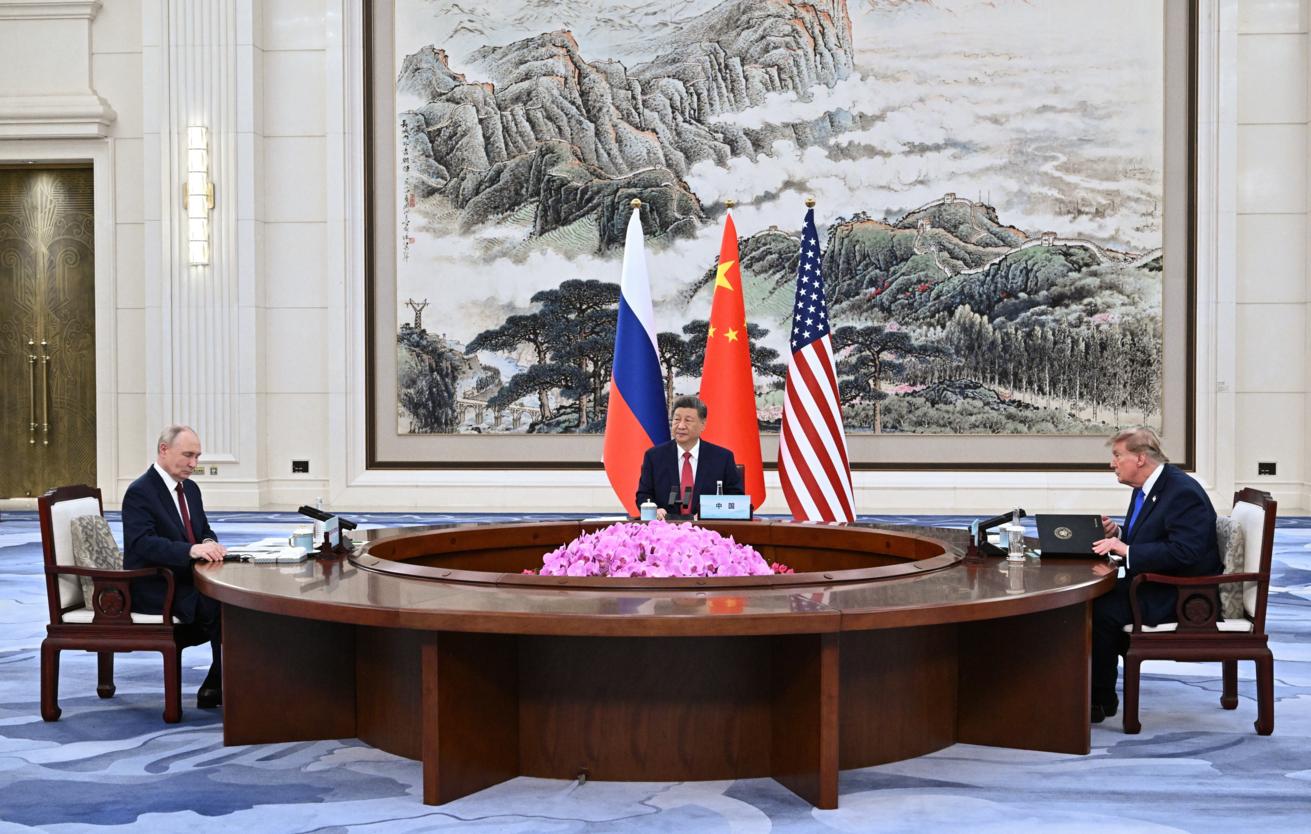
It is noteworthy that these two fundamental issues were among the priorities of the joint declaration adopted on November 19 following the meeting of the leaders of the United States, China, and Russia — Donald Trump, Xi Jinping, and Vladimir Putin — on the sidelines of the APEC (Asia-Pacific Economic Cooperation) summit in the Chinese city of Shenzhen.
In the document, titled the "Declaration on Peace," the heads of the three states, in particular, outlined their commitment to reforming the UN, emphasizing the need to enhance its ability to respond to global challenges and to fulfill its fundamental mission of ensuring international peace and security. Another important area was energy: the parties reaffirmed the importance of stable energy flows and expressed their intention to facilitate an increase in the production and supply of petroleum products.
At first glance, these are two independent areas of the international agenda. However, there is a fundamental connection between them. Both the international security system and the global energy market today face the consequences of decisions made under entirely different geopolitical and economic conditions. Old mechanisms are increasingly proving incapable of responding to new realities, and attempts to ignore objective processes only aggravate existing contradictions.
It is precisely these circumstances that Baku has consistently emphasized. Azerbaijani President Ilham Aliyev has consistently identified specific problems, proposed options for solving them, and defended an approach based on national interests, international law, and a realistic assessment of global processes.
Today, when the world's largest centers of power include similar issues in a joint declaration, it becomes especially evident how relevant these initiatives have proven to be.
The UN: an international order cannot exist without working mechanisms
The call to reform the UN is not new in itself. For many years, states, international experts, and political figures have pointed to the need to adapt the Organization to the changed world order. However, what is of fundamental importance is that the necessity of such transformations has now been reflected in a joint document of three permanent members of the UN Security Council — the United States, China, and Russia.
In effect, this is a recognition of the problem at the level of states bearing special responsibility for maintaining international peace and security. It is they who possess the right of veto, which is simultaneously one of the key instruments of the UN system and one of the main subjects of discussions about its reform.
But the problem is much deeper than the institutional structure of the Organization. The question is not only how effectively the UN responds to new threats, but also why its decisions in some cases become a binding reference point for the international community, while in others they remain on paper for years.
For Azerbaijan, this is not an abstract discussion nor an exclusively theoretical question of international politics. The country has directly faced the consequences of the existing system's inability to ensure the implementation of its own decisions.
For almost three decades, Azerbaijan found itself in a situation where the internationally recognized principles of a state's territorial integrity and sovereignty did not receive proper practical implementation. Four UN Security Council resolutions, adopted in 1993 in connection with the occupation of Azerbaijani territories, were never implemented over the following decades.
President Ilham Aliyev has repeatedly drawn the international community's attention to this circumstance, emphasizing the fundamental contradiction between the proclaimed norms of international law and the actual practice of their application.
It is particularly telling that this is not a matter of a lack of legal grounds. The UN Security Council formulated its position quite definitively. However, the demands set out in the resolutions were not accompanied by effective mechanisms that could ensure their fulfillment. As a result, the occupation continued, and for many years the international community was unable to achieve the implementation of its own decisions.
The head of state has directly pointed to the absence of sanctions and other effective instruments of influence on Armenia, which ignored the Security Council's demands for the full, immediate, and unconditional withdrawal of occupying forces from the internationally recognized territory of Azerbaijan.
At the same time, in other international situations, corresponding decisions were enforced within considerably shorter time frames. Such selectivity not only undermined the authority of the UN, but also cast doubt on the universality of the principles on which the international system should be built.
Ilham Aliyev has raised this topic at various international venues, including at events attended by UN Secretary-General António Guterres. Speaking at the SCO+ summit on September 1 of this year in Bishkek, the head of state recalled the four UN Security Council resolutions adopted in 1993. "Unfortunately, the UN played no role in the implementation of these resolutions. Azerbaijan itself fully restored its sovereignty and territorial integrity," Ilham Aliyev stated. "The implementation of UN Security Council resolutions within a short time frame requires the development of appropriate mechanisms. If this is done, it will contribute to increasing the authority of the UN and the organization's role in conflict resolution," the Azerbaijani leader declared.
The President of Azerbaijan also raised the issue of a mechanism for implementing the decisions of international organizations in his speech at the opening of the VII World Forum on Intercultural Dialogue on October 27 of this year in Baku: "At present, many people are talking about reforms in the United Nations. I do not want to go into details, but I believe that one of the important issues should be the mechanism for implementing UN Security Council resolutions." He recalled that Azerbaijan was in this situation for thirty years: "The UN Security Council adopted four resolutions demanding the liberation of Azerbaijani territories. They were not implemented. There was no mechanism for their implementation. No sanctions were imposed on Armenia." "Now, wherever you look, there are sanctions everywhere. If you look from Azerbaijan to the North and to the South, you can see hundreds of sanctions. But Armenia was not subjected to sanctions, and this is a matter of double standards. This is nothing but double standards, and we have always fought and will continue to fight against double standards in politics," Ilham Aliyev said, emphasizing that this is one of the important elements of the country's foreign policy.
This is the central meaning of Baku's position — international law cannot be effective only when its application corresponds to the interests of influential states. If the decisions of international institutions are binding, then their implementation must not depend on the political situation, the geographical position of a state, or its weight on the world stage.
Otherwise, the UN risks turning into a platform where states formulate correct principles but lack the ability to ensure their observance.
UN reform: what Baku proposes
It is important to emphasize that Azerbaijan has not limited itself merely to pointing out the shortcomings of the existing system. Baku has consistently advocated its transformation, proposing to expand the representation of states and international associations in the UN Security Council.
This agenda was promoted especially actively during Azerbaijan's chairmanship of the Non-Aligned Movement. Using the opportunities of this international platform, the country raised the question of the need to overcome the established monopoly of the permanent five and to achieve fairer representation of various regions and groups of states.
The proposed approach envisaged granting permanent seats and the right of veto on a rotational basis to such associations as the Non-Aligned Movement, the Organization of Islamic Cooperation, and the African Union. The initiative is based on the idea that an international organization claiming universality must take into account the interests of a significantly wider range of states, and not only the participants in the postwar world order.
President Ilham Aliyev continued to defend this position at other authoritative venues as well. Answering questions from participants of the IV Shusha Global Media Forum on July 13 of this year, the Azerbaijani leader noted that the issue of reforming the UN Security Council is discussed from time to time, but without any noticeable progress: "Azerbaijan has its own position on this issue. And as chairman of the Non-Aligned Movement, we put forward our own version of reform, since it must be inclusive and representative. Therefore, our proposal is that, on a rotational basis, one permanent seat be granted to the Non-Aligned Movement, and, for example, the current chairman of the movement would become a permanent member with the right of veto. One seat — also on a rotational basis — should be granted to the Organization of Islamic Cooperation, since Muslim countries are also not represented in the UN Security Council. Finally, one more seat — to the African Union, specifically to the country that at that moment chairs the Union. This will ensure a fair balance of power in the UN Security Council."
"We know that some countries aspire to become members of the Security Council, but there must be criteria determining why one or another country should be included in its composition — in the event that reforms are nevertheless carried out. It will be very difficult to find such criteria. Population size cannot serve as such a criterion, nor can economic potential. Therefore, our proposal is based first and foremost on the principle of inclusiveness: on a rotational system, as, for example, most seats in the Security Council are currently distributed by rotation, but in this case these countries will have the right of veto. This must be done; otherwise, the United Nations will continue to lose its potential and remain in the shadow of other centers of power in matters of conflict resolution and international relations," the head of the Azerbaijani state emphasized.
Of course, the reform of the Security Council itself remains an extremely complex political and legal task. Changing its composition, the procedure for decision-making, and the veto mechanism inevitably affects the interests of states possessing special powers. Therefore, even recognition of the need for reform does not yet mean that all participants in the international system are ready for concrete transformations.

However, something else is important here: Azerbaijan long ago moved the discussion from the plane of general wishes to the plane of concrete proposals. Baku has outlined not only the problem, but also its vision of the direction in which reform should develop. A fundamentally important aspect of Baku's foreign policy concept is that it does not call into question the importance of international institutions, but consistently demands their effective work and the strict observance of international law without selective approaches. Equally justified is the approach according to which a state cannot fully rely, in matters of security, on external structures that are not always capable of fulfilling the functions entrusted to them. Azerbaijan's experience has clearly demonstrated the consequences of such an approach. The complete restoration of territorial integrity and sovereignty was the result of Baku's consistent state policy, the strengthening of defense capability, and the use of political and diplomatic opportunities.
Therefore, the current inclusion of UN reform in the joint declaration of the United States, China, and Russia should be viewed in a broader context. The world's leading powers are in effect acknowledging that existing mechanisms need to be adapted to modern conditions. And this means that the issues Azerbaijan has raised many times are already becoming part of a broader international discussion.
Energy: pragmatism instead of a politicized approach
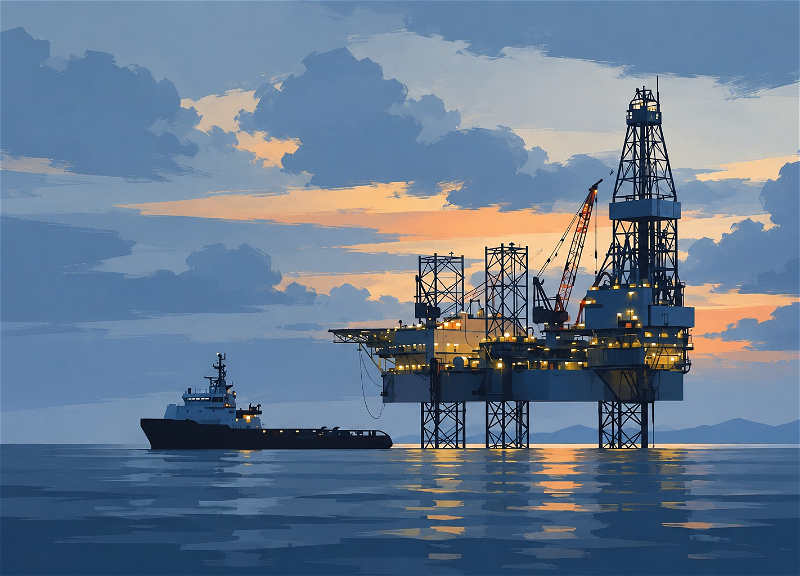
No less telling is the second area of the "Declaration on Peace" — energy. The recognition by the leaders of the United States, China, and Russia of the need to maintain stable energy flows and to increase the production and supply of petroleum products has significance far beyond the energy sector itself.
The world economy still depends on a reliable supply of energy resources. Industry, transport, agriculture, logistics, and infrastructure cannot function without stable access to energy. And although the development of renewable sources is becoming an increasingly important part of the global agenda, the transition to a new energy model does not cancel out existing needs.
President Ilham Aliyev has repeatedly drawn the international community's attention to the contradiction between long-term climate goals and today's economic realities.
This position was voiced especially clearly at the opening ceremony of the COP29 Leaders' Summit on November 12, 2024, in Baku. While supporting the global energy transition, the head of the Azerbaijani state at the same time called for abandoning unrealistic expectations and a politicized attitude toward traditional energy resources. In his speech, Ilham Aliyev formulated a principle that became one of the most notable theses of Azerbaijani energy policy: "Natural resources are a gift of God."
"Oil, gas, wind, sun, gold, silver, copper — all of these are natural resources. Countries cannot be blamed for having these resources. Nor can they be blamed for bringing these resources to the market. Because the market needs them. People need them. So, here is my message: As the president of COP29, we will, of course, strongly advocate for the green transition, and we are doing so. But at the same time, we must be realists," Ilham Aliyev emphasized.

Thus, Azerbaijan has formulated a clear principle of realism: natural resources are a natural asset, and states should not be subjected to accusations merely for possessing them and supplying them to the world market as long as there is demand for them. Behind this approach lies an entirely concrete economic logic. The energy transition cannot be built on a denial of the existing structure of global consumption. One cannot simultaneously demand uninterrupted energy supplies, the affordability of energy resources, and a rapid abandonment of the sources on which a significant part of the world economy still rests.
Attempts to pit traditional and renewable energy against each other do not solve this problem. On the contrary, they can create additional risks for energy security, especially for states with limited resources and a high dependence on imports.
The President of Azerbaijan continued this thought in his speech at the opening ceremony of Baku Energy Week on June 1 of this year. "The world cannot exist without fossil fuels. We all strive to improve the climate in order to save the planet. We all want to live in a more favorable environment. But today we must be very pragmatic and rely on realism, planning our future with energy security in mind, as well as investing in renewable energy sources. I think this is the path along which we need to move forward! — the head of state said — Countries should not be condemned for having oil and gas, since oil and gas are a commodity, just like any other. And every country uses what it has in its subsoil or on the seabed for its development. That is exactly how it was with Azerbaijan at the beginning of our independence. Oil and gas became for us the only way to survive as an independent state. Therefore, countries should be judged not by the presence or absence of oil, but by how they use the revenues they receive. How they invest the funds accumulated from the development of energy into the development of the country in order to provide better living conditions for their citizens, how they invest in the issues of the green agenda. And I think that the example of Azerbaijan can be very telling, demonstrating that when you open your country to international investment and pursue a wise policy based on national interests, you achieve success."
Thus, Baku's position consists not in denying the need for a green transition, but in rejecting an artificial choice between climate obligations and economic stability. The development of renewable sources must proceed in parallel with ensuring reliable supplies of traditional energy resources as long as they remain in demand by the world economy.
It is precisely this logic that is reflected in the energy section of the Shenzhen Declaration. When the three largest world powers speak of the need for stable energy flows and increased supplies of petroleum products, they are in fact confirming an obvious but sometimes ignored reality — energy security cannot be ensured solely by political statements about a future abandonment of hydrocarbons. It requires taking into account actual demand, production capabilities, infrastructure, and the interests of consumers.
The Azerbaijani model
For Azerbaijan, such pragmatism has not only a conceptual but also a practical dimension. For many years the country has remained an important participant in the international energy market, while at the same time shaping new directions for the development of its energy system.
On the one hand, Azerbaijan is expanding its exports of natural gas and making a significant contribution to ensuring the energy security of European states. Amid changing global supply routes and the need to diversify sources of supply, the importance of reliable partners and resilient infrastructure becomes especially evident. Since 2022, when a Memorandum of Understanding on a Strategic Partnership in the Field of Energy was signed between Azerbaijan and the European Union, gas supplies from Azerbaijan to the EU have increased from 8 billion to 13 billion cubic meters. This accounts for almost half of Azerbaijan's exports, President Ilham Aliyev stated at a roundtable within the framework of the 9th summit of the European Political Community on November 12 in Dublin. The head of state reported plans to increase gas supplies, emphasizing in this connection the discovery of new fields. He noted that today the gas pipeline stretching from Baku to Italy across the territories of 7 countries and providing gas supplies to 10 European Union countries through interconnectors in Bulgaria is fully loaded. President Ilham Aliyev emphasized the need to expand its throughput capacity, reporting that the capacity of the pipeline running to Greece and Italy has been increased from 10 billion to 11.2 billion cubic meters. He also emphasized that the total production capacity of Azerbaijan's processing enterprises amounts to 30 million tons. The Azerbaijani leader also noted that in the future the role of alternative energy sources will increase even further.
Today Azerbaijan is consistently developing renewable energy. Karabakh, East Zangezur, and Nakhchivan have been declared green energy zones. Azerbaijan has set the goal of bringing the share of renewable sources in electricity production to 30% by 2030.

Herein lies the fundamental distinctive feature of Azerbaijan's energy strategy. Baku does not regard traditional energy resources and renewable sources as mutually exclusive directions. On the contrary, the development of both segments should ensure the sustainability of the economy, expand export opportunities, and create a foundation for a long-term energy transformation.
This approach is especially relevant at a time when the global energy agenda increasingly becomes a subject of political disagreement. Over the past years, Azerbaijan has faced attempts to present it exclusively through the prism of the oil and gas sector, often accompanied by biased assessments and politicized criticism. Meanwhile, economic realities and the needs of international markets have remained unchanged.
Today even the world's leading powers emphasize in their joint documents the need for stability of energy supplies and an increase in the production of petroleum products. This once again shows that the pragmatic approach advocated by Baku has an objective economic basis.
At the same time, this does not mean that global energy problems come down exclusively to the production and supply of hydrocarbons. The future of the market will be determined by a combination of various energy sources, the development of technologies, investments in infrastructure, and the ability of states to adapt to changing conditions. The Azerbaijani concept proceeds precisely from the need to take all these factors into account, without substituting political slogans for economic calculations.
The international agenda is changing, the principles remain
The joint declaration of the United States, China, and Russia is interesting not only for the content of its individual provisions, but also for the very fact that these issues have been raised to the level of three world centers of power. These are states that possess colossal political, economic, and energy influence and at the same time bear special responsibility for the functioning of the existing system of international relations. Their appeal to the need to reform the UN testifies to the fact that the problem of the effectiveness of international institutions can no longer be regarded as secondary. Similarly, the recognition of the importance of stable energy flows confirms that global energy security requires not ideologized attitudes, but consideration of the objective needs of the world economy.
For Azerbaijan, both areas have special significance. The country has learned from its own experience what consequences result from the absence of effective mechanisms for implementing international decisions. At the same time, for many years it has been demonstrating that energy policy must be based on a balance of economic interests, international obligations, and real capabilities.
In this context, the current international processes deserve attention as evidence of a deeper change in global approaches. What until recently certain political circles preferred not to notice or interpreted through the prism of their own ideological attitudes is today manifesting itself ever more distinctly in the statements and documents of leading powers.
The Azerbaijani position on UN reform and energy security is the result of many years of analysis of international processes, its own historical experience, and an understanding that a sustainable world order is impossible without fair rules, working mechanisms, and consideration of the real interests of states.
That is precisely why the coincidence of the key provisions of the Shenzhen Declaration with the approaches that Baku has consistently defended for many years is of fundamental importance. It shows that in international politics, sooner or later a moment comes when objective realities prove stronger than political preferences. And then ideas that previously were voiced from individual rostrums become a necessity for the entire international community.