The Armenian lobby in Washington celebrates victory and prepares to present a bill to Azerbaijan

Seven seats in the Senate, dozens of winning candidates for the House of Representatives — and an already prepared list of demands for the American authorities.
The Armenian National Committee of America (ANCA), summing up the results of the midterm elections, clearly does not intend to rest on its laurels for long. Having obtained the desired result on the electoral field, the organization intends to turn it into an additional instrument of pressure on the American authorities, seeking to advance its agenda. The main addressee of these claims is Azerbaijan.
ANCA stated that 90 percent of the candidates it supported won in races with already determined results, and all seven candidates the organization backed in the Senate elections made it into the upper chamber of Congress. The Armenian lobby perceives such a result as an opportunity to move to the next stage of its campaign — promoting its agenda in the American legislative body. And the list of priorities that it intends to bring to the attention of every congressman is quite telling.
From protecting the community to a political offensive
ANCA's list combines demands to release the former leaders of the separatist regime who are serving sentences in Baku, to ensure the return of Armenians to Karabakh under international guarantees, to halt military aid to Azerbaijan, to apply Section 907 and to impose sanctions against Azerbaijani officials. It also includes deepening U.S. military cooperation with Armenia, pressuring Turkey on the issue of the so-called “Armenian genocide,” as well as protecting the Armenian Quarter of Jerusalem and Christian communities of the Middle East.
The latter points may in themselves look like concern for religious and cultural communities. But taken together, it becomes obvious that ANCA seeks to use American political institutions to advance a far more large-scale program. In it, Azerbaijan is assigned the role of a permanent defendant, Armenia the role of a party to which Washington is obliged to provide ever new guarantees, and Turkey the role of a state that should be compelled to accept the historical interpretation convenient for the Armenian lobby.

The attempt to present the former ringleaders of the separatist regime convicted in Azerbaijan as “hostages” looks especially cynical. For ANCA, apparently, there is no difference between a political slogan and a legal fact. It is enough to declare defendants in criminal cases “hostages” in order to demand that American lawmakers intervene in a matter that falls within the competence of Azerbaijani justice. Neither the court proceedings nor the verdicts handed down prevent the organization from staging its customary performance with roles assigned in advance, where some must necessarily be victims and others perpetrators.
No less far-reaching goals are concealed behind the talk of the return of Armenians to Karabakh and the protection of the so-called “Armenian Christian heritage of Artsakh.” The right of return must not become a cover for attempts to cast doubt on Azerbaijan's territorial integrity or to bring the liquidated separatist project back onto the political agenda. The preservation of cultural and religious heritage is a separate topic that must not be turned into an instrument of territorial claims. However, ANCA persistently combines these issues, counting on giving its political demands the appearance of a humanitarian mission.
An old cudgel and a new target
A special place in the program is occupied by Section 907 of the Freedom Support Act. The Armenian lobby is seeking not merely the restoration of restrictions, but also a complete cessation of military aid to Azerbaijan. In other words, it wants to once again make U.S.-Azerbaijani relations hostage to the political circumstances of the early 1990s, when the amendment was adopted under entirely different conditions.
Meanwhile, American administrations have repeatedly used the legally provided option of suspending the restrictions. In August 2025, Donald Trump extended the corresponding waiver, citing the interests of the fight against international terrorism and the peaceful settlement between Baku and Yerevan. Now ANCA intends to achieve a revision of this approach. Here the Armenian lobby is in effect proposing that Washington sacrifice its own strategic interests in order to satisfy its political demands.
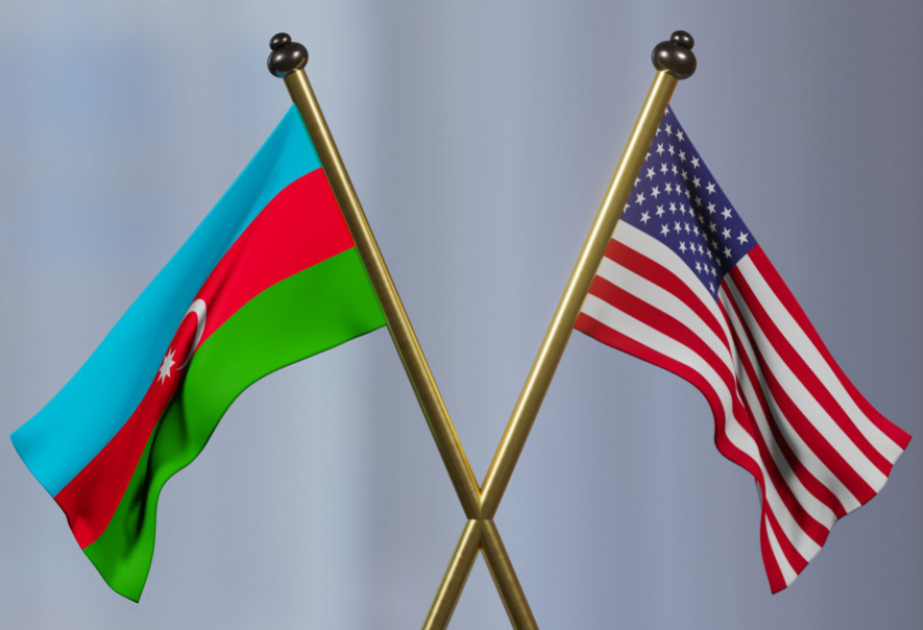
Azerbaijan occupies a key position in the South Caucasus, participates in ensuring regional energy and transport connectivity, and remains an important partner on security issues. Do they really believe in Washington that these circumstances can be crossed out at the demand of an organization that measures American policy primarily by the extent to which it corresponds to the interests of Yerevan?
However, ANCA's appetites do not end there. The organization intends to seek sanctions against Azerbaijani officials under the Global Magnitsky Act, citing accusations of “war crimes.” In such a case, the sanctions mechanism risks turning into a means of political reprisal: first accusations are put forward, then a lobbying campaign unfolds around them, and afterwards the American authorities are required to punish specific individuals. At the same time, political rhetoric in itself does not replace evidence, and the loudness of accusations does not establish individual responsibility. U.S. legislative instruments must not become an extension of someone else's campaign of revanche.
TRIPP also gives no rest
It is telling that ANCA intends to place American diplomacy around the TRIPP project under the control of Congress as well. The initiative, which provides for transport communication between the main part of Azerbaijan and Nakhchivan through the territory of Armenia, became one of the important results of the Washington agreements of August 8, 2025. It opens prospects for regional connectivity and serves the interests not only of Azerbaijan but of the United States itself.
However, the Armenian lobby is already striving to turn this project into yet another platform for promoting its own political agenda. Instead of facilitating the implementation of the agreements, ANCA intends to monitor American diplomacy, seeking to ensure that any decisions on TRIPP pass through the filter of Armenian demands. The result is a rather peculiar picture: Washington is taking part in the creation of a transport project that is supposed to open new opportunities for the region, while an organization claiming special influence in the American political establishment is preparing in advance the instruments for pressuring one of the key parties to this initiative.

In the same vein is the demand to influence Turkey, pressing Ankara to abandon its own position on historical events and to promote the Armenian interpretation at the national level in the United States. Here it is already difficult to speak of defending the interests of a community. ANCA lays claim to the right to determine what historical position other states should take and what interpretation American institutions are obliged to support. A truly impressive scope for an organization that explains its activity as concern for the interests of the Armenian community.
Congress is not a branch of ANCA
The Armenian lobby pins special hopes on the change in the political balance in Washington. The Democrats' victory in both chambers opens up additional opportunities for parliamentary oversight of Donald Trump's administration. ANCA expects to use this circumstance to press for a revision of decisions on Section 907, to restrict military aid to Azerbaijan, and to exert pressure on the White House on the issues of TRIPP and the former separatist leaders held in Baku.
But here the organization seems to be in something of a hurry to celebrate. The victory of the candidates it supported by no means signifies that American voters voted for ANCA's entire list of demands. The election of a congressman does not turn him into a representative of the Armenian lobby, and a change in the balance of forces in the legislative branch does not guarantee the automatic fulfillment of its wishes. Making decisions requires political support, legal grounds and, what is especially important, an understanding of the consequences for the United States itself.
Baku, of course, should not underestimate this campaign. ANCA demonstrates an intention to act systematically — from working with individual congressmen to attempts to influence legislative initiatives and administration decisions. Azerbaijan needs to consistently convey its position to American political circles, leaving no room for the unimpeded spread of one-sided interpretations of regional events.
Yet it is also time for Washington to decide what matters more to it — its own interests in the South Caucasus or the political ambitions of a lobbying organization. It is impossible to simultaneously advocate regional connectivity, support the peace process and create conditions for economic cooperation, and then, under pressure from ANCA, attempt to punish one of the region's key countries. American policy must not become hostage to someone else's grievances and revanchist aspirations.
The Armenian lobby may celebrate its electoral successes as much as it likes. But seven winning Senate candidates are not yet seven votes for its demands, and a victory in elections is not an indulgence for interference in the sovereign affairs of Azerbaijan. Washington will have to decide whether it will pursue its own foreign policy or allow those who present their bill the loudest to present it on behalf of the United States.