Johnson & Johnson baby powder linked to cancer: company to pay $5.5 billion
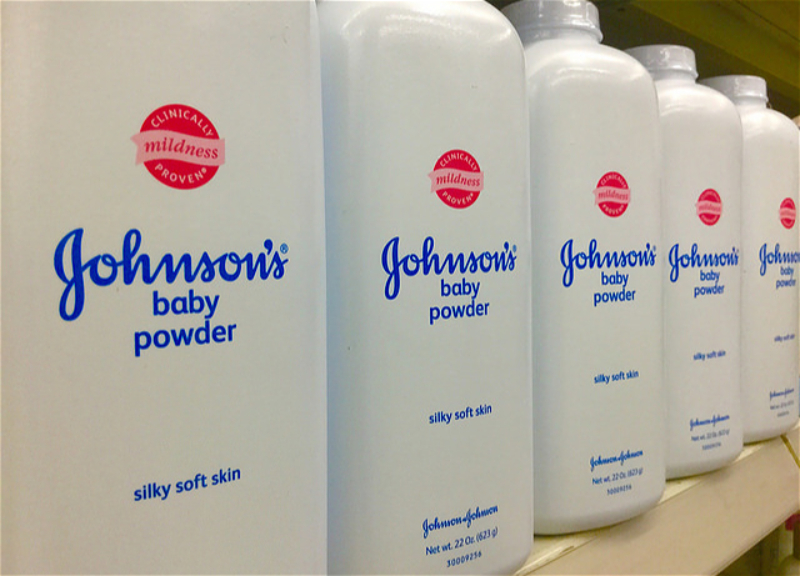
Johnson & Johnson has reached an agreement to settle tens of thousands of lawsuits in the United States related to talc-based baby powder.
According to the company's statement, $5.5 billion is planned to be allocated for payments under the settlement agreement.
As Johnson & Johnson reported, the agreement covers approximately 69 thousand lawsuits pending in federal courts and courts of individual states. According to the company, this amounts to about 99.75 percent of all unresolved litigation in the United States related to talc-based products.
However, the settlement agreement will only take effect if it is supported by at least 95 percent of the plaintiffs involved in the relevant proceedings in federal courts and state courts.
The majority of the lawsuits concern claims that long-term use of talc-based baby powder could have caused the development of oncological diseases, primarily ovarian cancer. The plaintiffs assert that Johnson & Johnson products posed a health risk, while the company has consistently rejected such accusations and insists on the safety of its products.
Talc is a natural soft mineral that has been widely used for decades in the production of cosmetics, baby powder, and other personal hygiene products. However, in recent years its use has significantly decreased amid a growing number of scientific studies and lawsuits concerning a possible link between talc use and the development of certain types of cancer.
Additional attention to this topic was drawn by the position of the World Health Organization. In 2024, the International Agency for Research on Cancer, part of the organization, classified talc as a substance "probably carcinogenic to humans," citing limited evidence of its carcinogenicity in humans and sufficient data obtained from animal studies.
Despite ongoing litigation, Johnson & Johnson states that scientific data do not confirm a causal link between talc use and the occurrence of cancer. At the same time, the company discontinued sales of talc-based baby powder in the United States market back in 2020, and in 2023 completely ceased distribution of this product worldwide.
One of the first high-profile lawsuits in this category of cases was the 2016 proceeding, when a U.S. jury ordered Johnson & Johnson to pay $72 million to the family of a woman who died of ovarian cancer. Although the decision was later overturned, it marked the starting point for a sharp increase in similar lawsuits. In subsequent years, juries in various states repeatedly ruled in favor of plaintiffs, leading to substantial growth in financial and reputational risks for the company.
At the same time, the reached agreement concerns exclusively litigation in the United States and does not extend to similar proceedings in other countries.
In particular, the largest collective proceeding in the country's history regarding alleged defects in Johnson & Johnson products continues in the United Kingdom. According to available data, it may cover more than seven thousand potential plaintiffs. The lawsuit, filed in October 2025, claims that the company allegedly possessed information about a possible link between its talc-based products and the development of oncological diseases, including ovarian cancer and mesothelioma, yet continued to sell them.