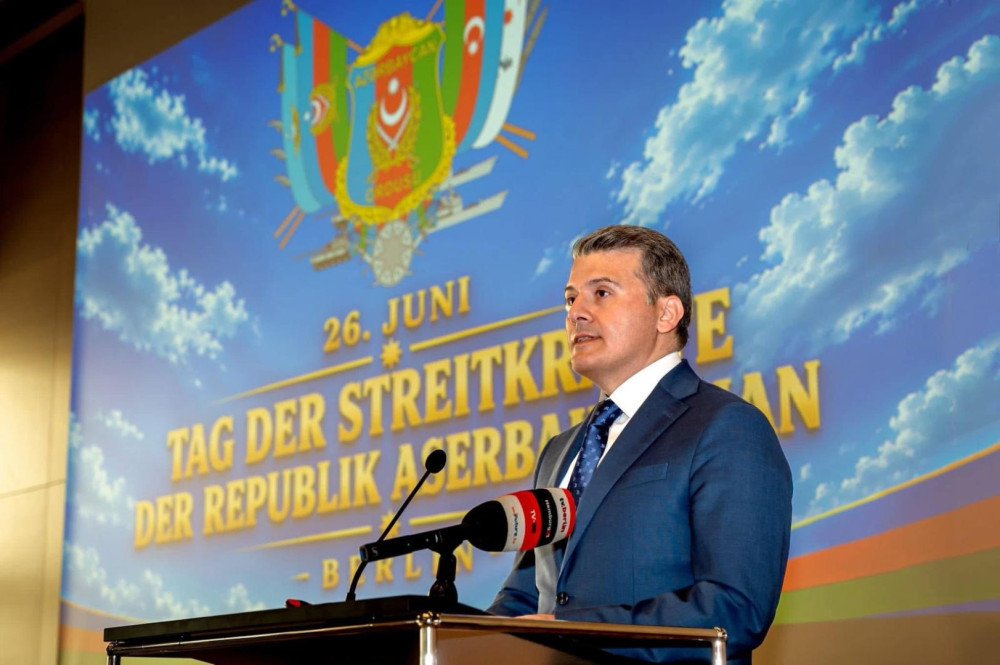
Baku and Berlin open a new page: Interview with Azerbaijan's Ambassador Nasimi Aghayev
The official visit of Azerbaijan’s President Ilham Aliyev to Germany and the signing of the historic Joint Declaration on a Strategic Agenda have opened a qualitatively new page in relations between Baku and Berlin.
How will the newly established Azerbaijani-German Business Council work, what is the interest of German investors in Karabakh and the Middle Corridor, and how is it possible to overcome the "information wall" in European media?
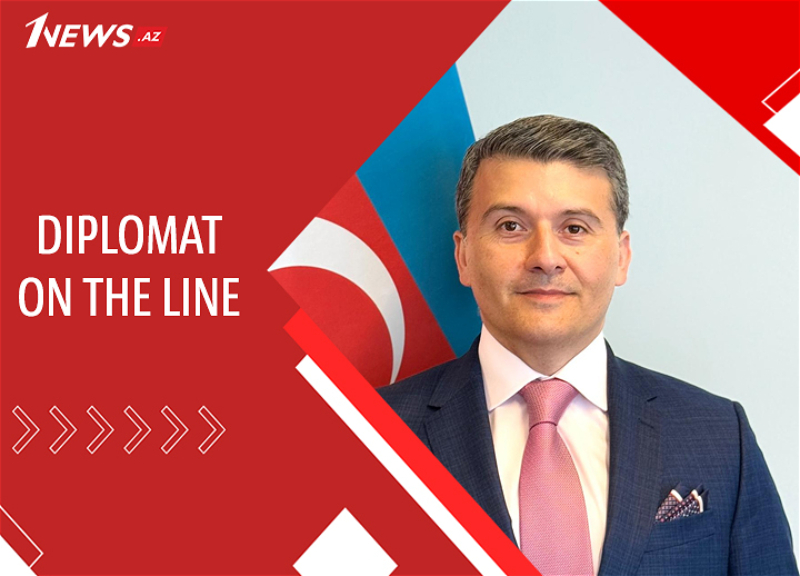
These and other key questions were answered by Ambassador Extraordinary and Plenipotentiary of Azerbaijan to Germany Nasimi Aghayev in an interview with 1news.az.
- The official visit of President Ilham Aliyev to Berlin recently took place, and within the framework of the visit a Joint Declaration on a Strategic Agenda for the Bilateral Partnership was signed. How do you assess the prospects of relations between Baku and Berlin after this visit and the signing of the document?
- The official visit of President Ilham Aliyev to Germany marks the beginning of a qualitatively new stage in our bilateral relations. The Joint Declaration on a Strategic Agenda for the Bilateral Partnership, signed by President Ilham Aliyev and Federal Chancellor Friedrich Merz, is the first official document in the history of our bilateral relations signed by the president and the federal chancellor. This historic document defines the long-term framework for the development of our relations, based on political will, mutual respect and trust, as well as on common interests.
This document is not merely an expression of intentions, but a political road map defining specific areas of activity. These include regular high-level dialogue, trade and investments, energy security, green energy, transport links, industrial modernization, digital transformation, and cooperation in the fields of science, education, defense and security.
Germany is Europe's leading economic power, and Azerbaijan is the main force, the economic, energy and transport center of the South Caucasus. Combining these strategic advantages will make an important contribution to strengthening stability, connectivity and sustainable economic development not only for Azerbaijan and Germany, but also across the broader Eurasian space as a whole.
- One of the main results of the visit was the decision to establish an Azerbaijani-German Business Council. What priority areas and projects do you think will be the focus of this council first and foremost?
- The establishment of the Azerbaijani-German Business Council testifies to the transition of economic cooperation between the two countries to a new stage on an institutional basis. The main goal of the Business Council is to create a permanent platform for dialogue between the government, business circles and economic promotion institutions, to identify and implement joint initiatives and investment opportunities, and to facilitate expert exchanges by sectors.
First and foremost, special attention will be paid to promoting specific projects in the fields of energy security, green energy, energy efficiency, industry, high technologies, the digital economy, logistics and transport corridors, agriculture and agribusiness, as well as the development of small and medium-sized enterprises.
Germany's advanced technologies and industrial experience complement Azerbaijan's favorable investment climate, strategic geographical location and economic transformation agenda. We are confident that the Business Council, by combining these advantages, will make an important contribution to establishing long-term partnership relations between the business circles of the two countries, increasing mutual investment and realizing new economic opportunities.
- German business traditionally takes a cautious position when choosing new markets. What work is the embassy carrying out to attract investors and conduct negotiations with them?
- The decision-making process of German investors, as a rule, requires a certain amount of time, since it is based on a fairly thorough analysis and assessment. However, practice shows that once an investment decision has been made, German companies act as reliable, responsible and long-term partners.
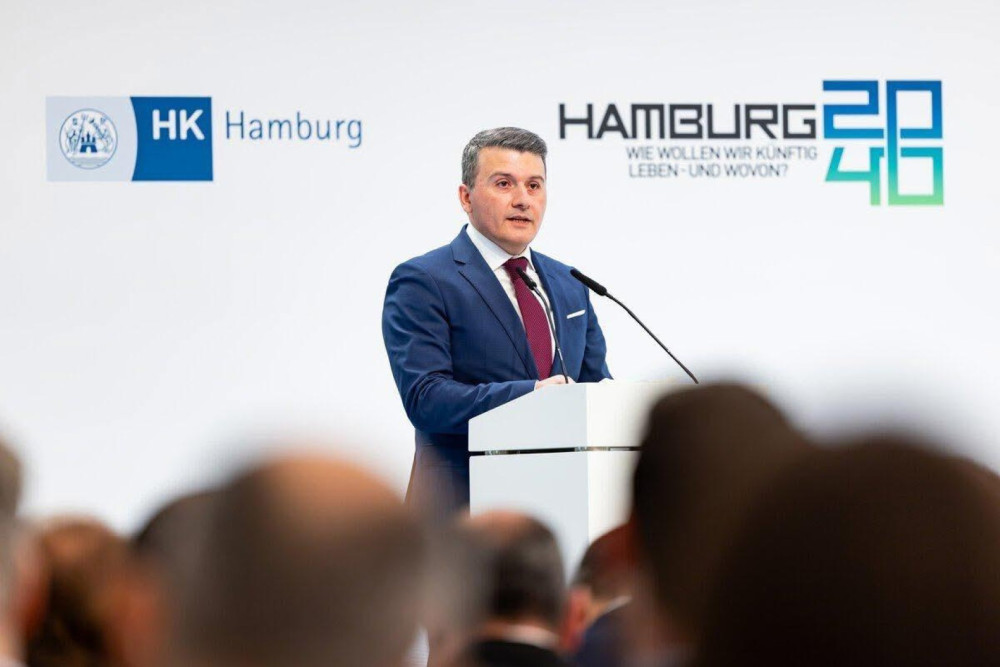
As an embassy, we structure our activities along several lines. We maintain constant contacts with Germany's federal and regional economic structures, chambers of commerce and industry, business associations, financial institutions and individual companies. We hold targeted presentations on Azerbaijan's investment climate, industrial parks, the Alat Free Economic Zone, tax and customs incentives, etc. At the same time, by organizing economic forums and business events in various federal states of Germany, we present Azerbaijan's economic potential and investment opportunities to German business circles.
We do not limit ourselves to appeals of a general nature. We give preference to presenting relevant Azerbaijani projects that match the profile of German companies. An important part of our work is also organizing visits of potential investors to Azerbaijan, arranging their meetings with relevant state structures and local partners, as well as promptly responding to their questions.
- How is the dialogue with the German side on the infrastructure of the Middle Corridor progressing? Are major German logistics companies showing interest in the project?
- In Germany there is serious interest in sustainable transport links between Europe and Asia. The geopolitical developments of recent years have shown that the dependence of supply chains on just one or two routes is risky both from an economic and security point of view.
In this respect, the Middle Corridor is not merely an alternative, but already an important element of Eurasia's transport architecture. Azerbaijan is the central link of this corridor. Without Azerbaijan, the Middle Corridor is impossible. The Baku–Tbilisi–Kars railway, the Baku International Sea Trade Port, the Alat Free Economic Zone, modern highways and growing transit capabilities strengthen our country's role as a regional logistics hub.
Major German logistics and transport companies are closely following the development of this route and are using the opportunities of the Middle Corridor. In particular, we are seeing growing interest from German investors in the project of expand the Baku International Sea Trade Port.
- Germany is one of the leaders of the "green transition" in Europe. How does the embassy support attracting German technologies to Azerbaijan's renewable energy projects, especially in Garabagh?
- Azerbaijan's green energy agenda and Germany's technological and industrial potential complement each other. Germany has extensive experience in the fields of wind and solar energy, energy efficiency, electricity grid management, energy storage systems, green hydrogen and environmental urban planning.
The declaration of the liberated Garabagh and Eastern Zangezur as a green energy zone opens up important cooperation opportunities for German companies. Here it is not only a matter of solar panels and wind turbines. This includes an integrated ecosystem, such as smart electricity grids, energy storage systems, energy efficiency of buildings, electric transport, waste recycling, water resources management and green hydrogen production.
The embassy is establishing contacts with specialized companies, engineering associations, energy agencies and research centers in Germany, and organizes the provision of technical information about Azerbaijan's projects. Our goal is not merely the purchase of ready-made technologies, but joint production, the training of specialists and the formation of scientific research cooperation.
- We see that in European structures (including in PACE and the European Parliament, with the activity of certain German politicians) biased initiatives against Azerbaijan are sometimes put forward. How does the embassy act against such campaigns?
We are always ready for objective criticism and open dialogue. Azerbaijan is a state that does not avoid questions. However, it is necessary to distinguish constructive criticism from destructive political bias, and a fact-based position from malicious campaigns of character assassination.
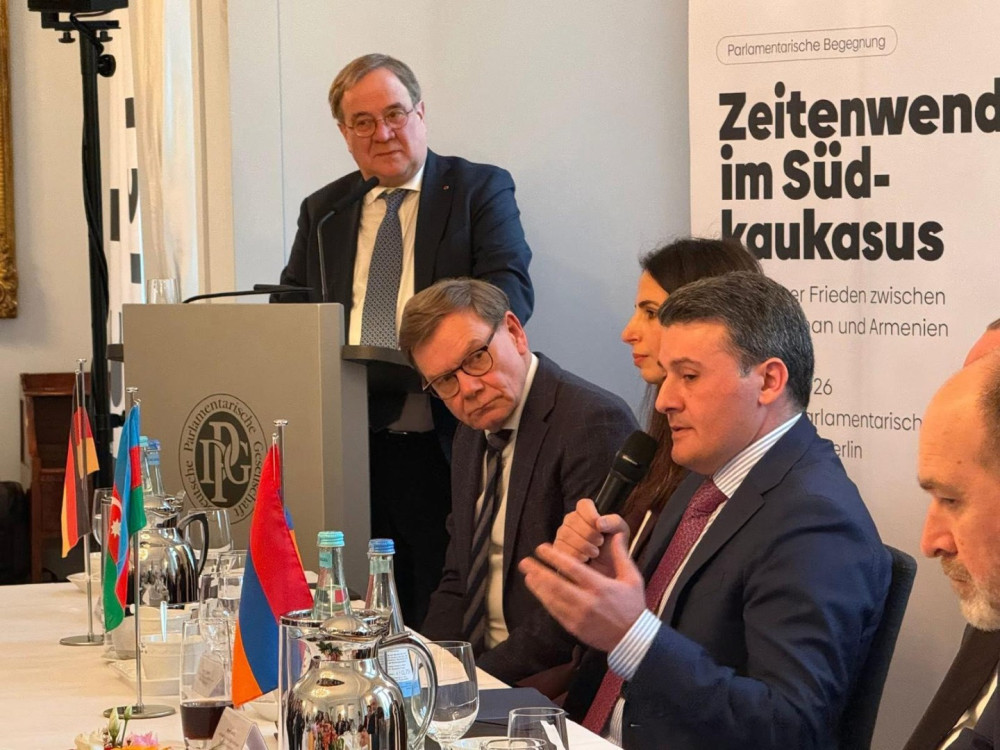
The embassy does not engage in emotional polemics, but in systematic communication based on verifiable information. We hold regular meetings with members of the Bundestag, federal government structures, political foundations, think tanks, journalists and representatives of civil society. We respond promptly to inaccurate information and present our position on the basis of legal documents and facts.
At the same time, it is noteworthy that the biased position of individual politicians should not be seen as the position of the German state or society as a whole. The elevation of the relations between Azerbaijan and Germany to a strategic level shows that official Berlin highly values the importance of cooperation and Azerbaijan's growing regional role, and is also interested in further strengthening this mutually beneficial partnership.
On the whole, despite all the difficulties, we can say with confidence that in recent years the number of Azerbaijan's friends in Germany has grown.
- How difficult is it to overcome the "information wall" that exists in Germany's media space?
- Germany's mainstream media space is characterized by approaches to a number of topics that have taken shape and even "petrified" over many years. Of course, it is impossible to change with a single interview or statement the stereotypes about the South Caucasus that have been forming over decades.
One of the main challenges is that parts of the German media continue to view the region through the prism of the former conflict and outdated dividing lines. This perspective often fails to reflect the profound transformation that has taken place. Azerbaijan has established peace in the region through its own efforts and has emerged as a country with a modern economy, an independent foreign policy, and strong multicultural traditions. It also plays a vital role in Europe’s energy security and intercontinental transport connectivity.
Our task is not to tell German journalists what they should write about, but to provide them with access to all the necessary facts and various sources. That is why we work directly with editorial offices, give interviews, correct inaccurate information, and facilitate journalists' visits to Azerbaijan and their contacts with experts.
"Information walls" are overcome not by emotions, but by trust. And trust is formed not by a single statement, but by consistent activity, accuracy and professional communication based on facts. In the long term, it is precisely this approach that weakens stereotypes and serves to form a more balanced approach.
- What work is the embassy carrying out to promote Azerbaijan's culture in Germany and to develop cultural ties?
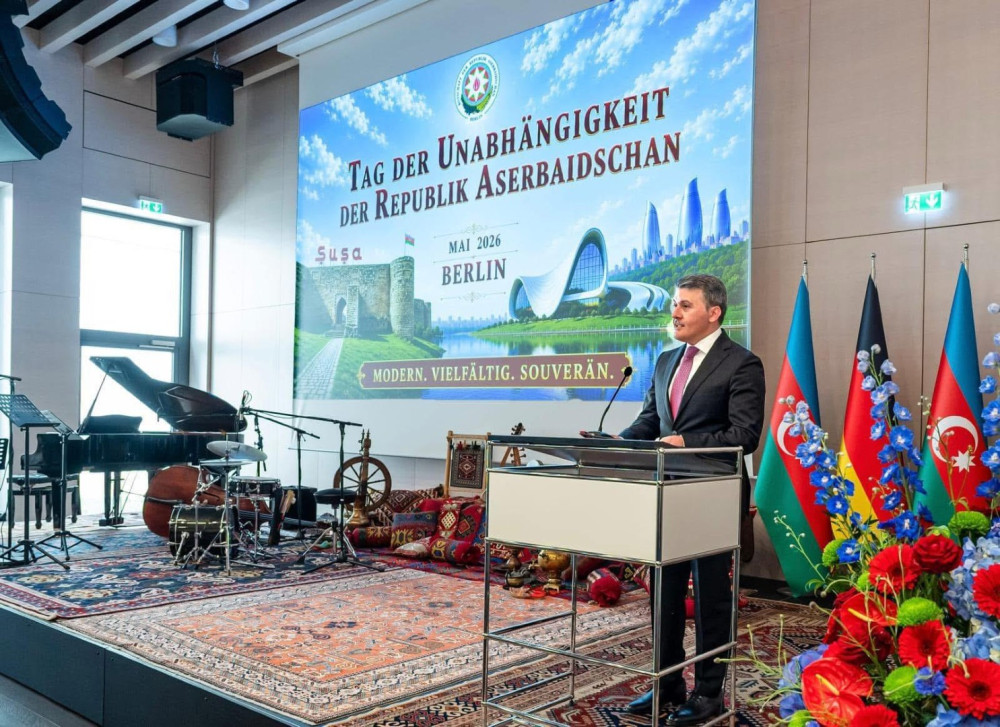
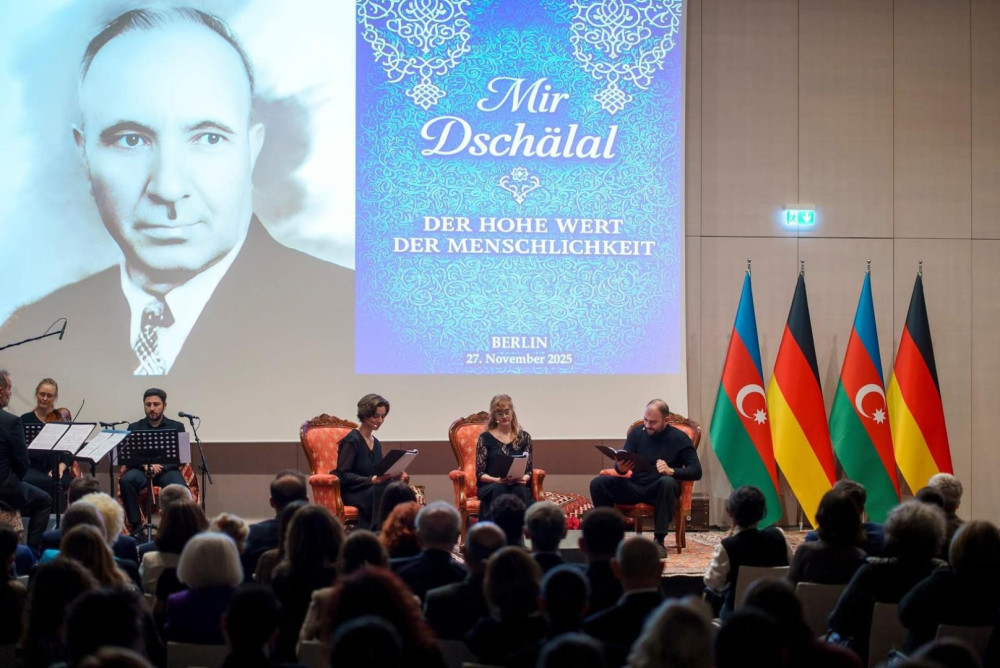
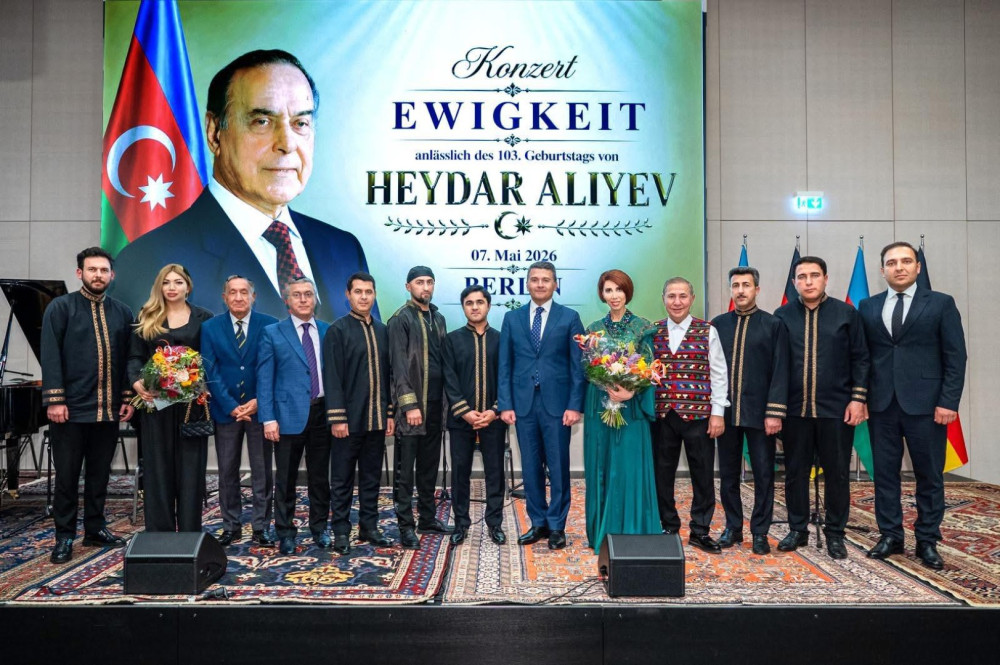
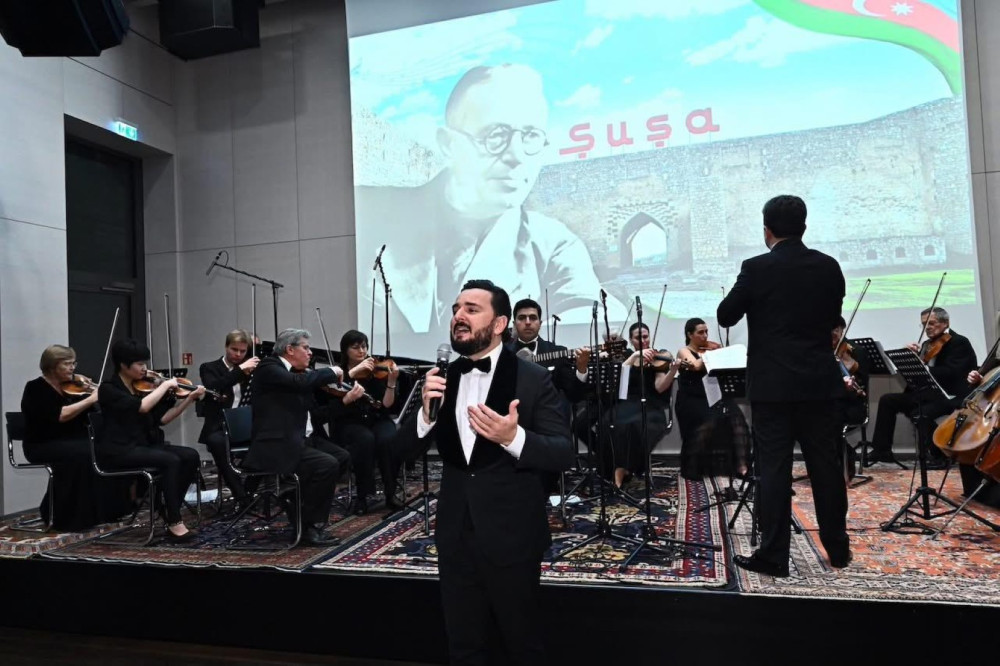
- Cultural diplomacy is one of the main areas of our embassy's activity. Our goal is to acquaint the German public more closely with Azerbaijan's rich history, culture and art, as well as to establish sustainable cooperation ties between the leading cultural institutions of the two countries.
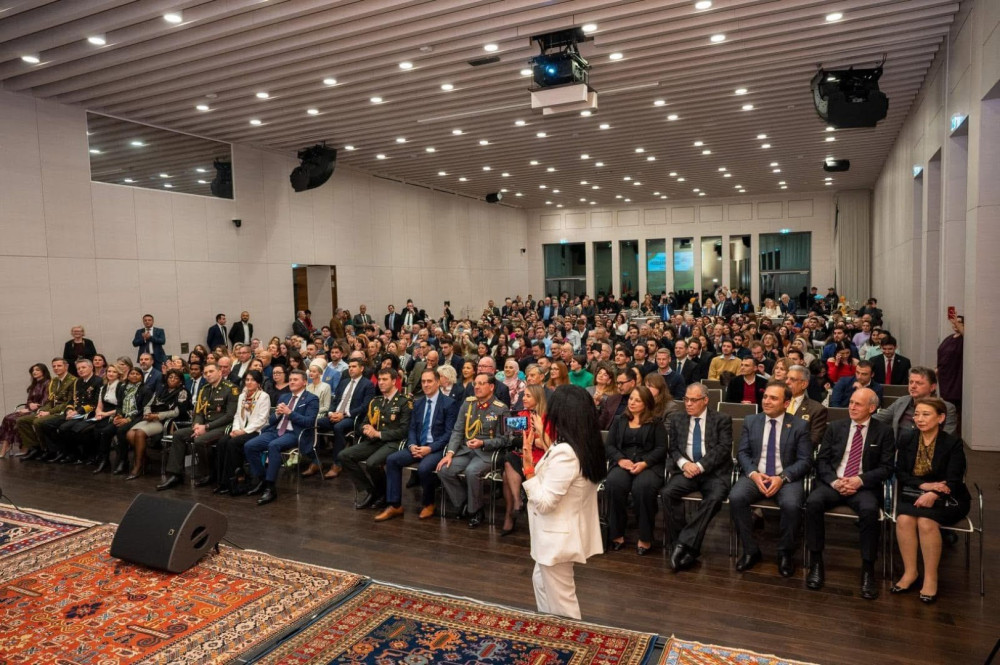
Since 2022, only at the Azerbaijani Culture Center in Berlin we have held more than 60 events, including concerts of classical music, mugham and jazz, exhibitions of carpets and paintings, theatrical performances, film screenings, book presentations and other events. Along with this, we are consistently working to expand cooperation with Germany's leading museums, theaters, concert halls, festivals, libraries, universities and other cultural institutions.
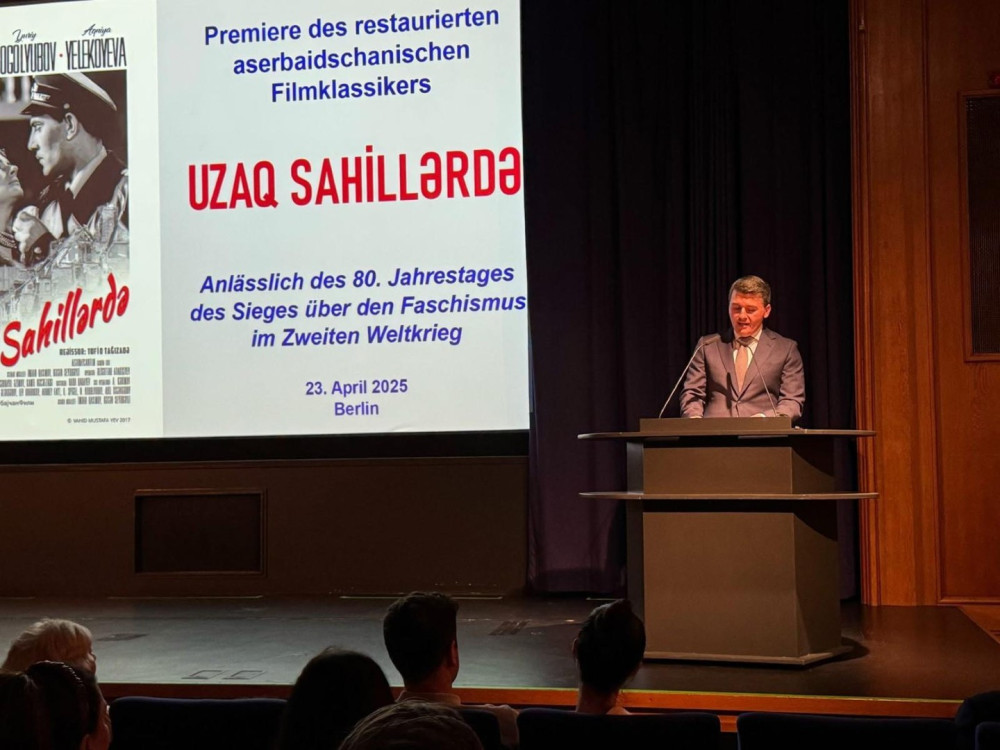
Also during this period, the translation of works by Azerbaijani writers into German and their publication in Germany were organized, and books devoted to Azerbaijani multiculturalism and Azerbaijan’s German heritage were published. The version of the Azerbaijani WWII film "On Distant Shores," dubbed into German in Berlin in 1959, was discovered in the archives by our Embassy, restored, digitized and, after many years, presented once again to the German public.
All these initiatives serve to more broadly promote Azerbaijan's rich cultural heritage in Germany, to strengthen humanitarian ties between our peoples and to develop long-term cooperation in the sphere of culture.
- Thank you for the interview!