A "not golden" autumn for Russian logistics: the crisis of export routes, the bet on "North-South" and Azerbaijan's transit role

While Russian grain competes for space at Baltic berths, railcars loaded with urea wait weeks for shipment, and metallurgists face restrictions on export logistics, the importance of southern transport corridors is growing.
In this shifting configuration, a special place is occupied by Azerbaijan - a country through which several of Eurasia's strategic transport routes pass at once.
This autumn has definitively shaped a new reality in continental logistics. The impetus for the redistribution of export flows came from events in Russia's Northwest: the Baltic direction faced a sharp increase in load. This was caused by the redistribution of grain flows after disruptions in shipments through the Azov-Black Sea basin. Exporters massively redirected cargo to the railway toward the ports of the Northwest, which triggered fierce competition for track capacity, terminals and warehouses.
The reformatting of Eurasian trade routes has entered a phase of a severe stress test. Systemic failures in the southern ports of the Azov-Black Sea basin provoked a massive redistribution of grain flows to the Baltic direction. Exporters tried to promptly redirect cargo by rail to the ports of Russia's Northwest, but ran into infrastructure constraints: port terminals, warehouse capacities and railway approaches turned out to be extremely overloaded. The scale of the problem proved tangible for key industries.
According to S&P Global Energy, the redirection of the grain export flow to the Baltic led to critical delays in urea shipments – according to producers and traders surveyed by the publication, idle times ranged from a week to a month.
Restrictions arose simultaneously at the ports and on the railway approaches to them. Grain, mineral fertilizers and metal products entered into fierce competition for infrastructure capacity. Market participants reported overcrowded terminals and delays in cargo delivery. The publication noted that grain, metal products and fertilizers are competing for access to transport infrastructure and port capacities.
The scale of the problem is clearly illustrated by data from Kommersant: while in September about 1.1 million tons of wheat were shipped through Russia's Baltic ports, for October carriers approved applications for the transportation of more than 1.5 million tons of grain - a volume comparable to the entire Baltic grain export for the whole 2025/2026 season.
The Russian Ministry of Agriculture was forced to acknowledge the limits of the Northwest's infrastructure capabilities and to begin using the Caspian terminals of Astrakhan and Dagestan, which previously did not specialize in grain, for grain cargo.
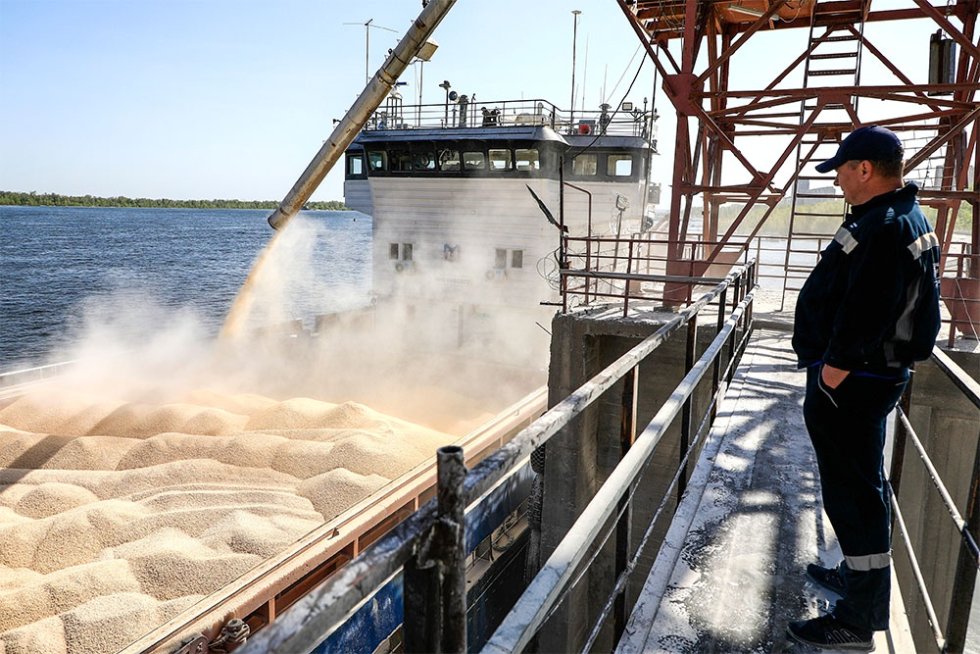
The problem is not limited to grain exports. The situation is even more dramatic in metallurgy: producers report restrictions on the part of Russian Railways (RZD), a shortage of port capacity, a visible increase in transport costs and the disruption of export contracts, in other words, the inability to ship finished products abroad on time.
Administrative response and personnel reshuffles
With a simultaneous increase in applications for the transportation of various goods, competition arises among exporters for railway capacity. This can lead to the postponement of shipping deadlines for individual consignments and to rising logistics costs. Thus, the increased load reveals the limitations of the Baltic ports and complicates the servicing of several large commodity flows at once.
The severity of the logistics crisis has forced the Russian government to apply both emergency financial mechanisms and personnel decisions:
- Financial subsidies: At the end of August, 9.7 billion rubles were allocated to subsidize rail deliveries of agricultural products to ports. The measure is aimed at reducing exporters' transport costs and ensuring the export of grain amid disruptions on the southern routes.
According to Interfax, on October 8, at the "Golden Autumn" exhibition, Deputy Minister of Agriculture Maxim Borovoy stated: the usual geography of subsidies has exhausted itself. After problems arose with shipments through the Azov-Black Sea basin, exporters had to promptly shift part of their transportation to the railway and look for alternative ports. The Ministry of Agriculture concluded that the current geography of preferential routes does not cover all the necessary directions. In this regard, the agency proposed expanding the preferential transportation program: to provide for additional routes to the Northwest, as well as to Caspian destinations - to Astrakhan and Dagestan. Deputy Prime Minister Dmitry Patrushev supported the initiative.
- Restructuring of management: the reshuffles in the Russian Cabinet in October of this year, coinciding with the aggravation of export logistics problems, formalized a new configuration of the industry's leadership. On October 22, Andrei Nikitin was appointed Deputy Prime Minister responsible for the development of the country's transport complex. On the same day, Dmitry Yadrov was appointed Minister of Transport of Russia. Thus, the leadership of the transport industry has received a new configuration: issues of transport system development and coordination of infrastructure projects are handled at the level of the deputy prime minister, while sectoral management is carried out by the new minister.
The new leadership will have to address the task of global diversification of export routes - including the increase in port capacity by 180 million tons by 2030 announced by the Ministry of Transport. A special place here is given to the development of international transport corridors and the expansion of port capacity. The significance of alternative routes is also growing - among the priorities named are the North-South corridor, the Eastern Operating Domain, the Azov-Black Sea direction and the Trans-Arctic Transport Corridor.
Statistics for 2026 clearly show that the Caspian region and overland alternatives are taking on an ever-greater volume of world trade. Against the background of restrictions on Black Sea routes and the overload of Baltic ports, the importance of the North-South transport corridor is becoming indisputable. According to data from Russia's Ministry of Transport dated September 2, 2026, in the first half of the year the volume of rail transportation along the western route of this corridor amounted to 300,000 tons versus 664,400 tons for all of 2025. Along the Caspian route, 1.3 million tons of cargo were transported in the first six months of 2026, whereas for all of 2025 the figure was 1.8 million tons. The volume of maritime transportation in the Caspian direction over seven months of 2026 reached approximately 4.5 million tons versus 2.8 million tons for the entire previous year. The growing interest in the corridor is also confirmed by decisions on subsidizing grain transportation. The Russian Ministry of Agriculture's proposal to include routes through Astrakhan and Dagestan in the preferential program potentially expands the possibilities for using the Caspian direction.
Azerbaijan: a new configuration of transit opportunities
Against this background, the geo-economic importance of Azerbaijan is growing enormously. The overland, western branch of the North-South corridor, which runs through the territory of Azerbaijan, represents the year-round route least exposed to climatic and operational risks, connecting the European part of Eurasia with Iran, the states of the Persian Gulf and India.
The key link for the full launch of this entire artery remains the completion of the Rasht-Astara railway section on Iranian territory, connecting the Iranian railway network with the Azerbaijani one. The project's highest status was confirmed by the talks between Russian Prime Minister Mikhail Mishustin and Iran's First Vice President Mohammad Reza Aref on October 19 in Dushanbe. Following their results, Deputy Prime Minister Alexei Overchuk reported that Iran had announced the completion of the buyout of land plots for construction and is awaiting documentary formalization, while a Russian company is already carrying out work on creating the future railbed.
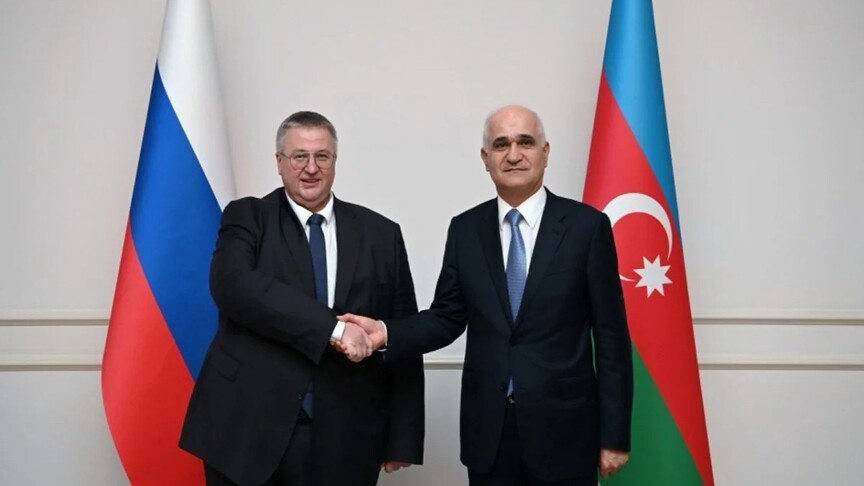
In this context, it is also worth recalling the meeting at the beginning of October between Alexei Overchuk and Azerbaijan's Deputy Prime Minister Shahin Mustafayev. In this connection, the press service of the Russian government reported that special attention at the talks was paid to "the development of transport links and increasing the efficiency of freight transportation between the two countries, the further use of the potential of the North-South international transport corridor, as well as issues of the functioning of checkpoints and the improvement of procedures for the passage of cargo and vehicles through them."
The events of this autumn have conclusively proven that the infrastructure of the Northwest and the Black Sea can no longer single-handedly guarantee the stability of Eurasian export flows. External restrictions and the physical overload of traditional ports are forcing logistics operators to look for sustainable alternatives.
Against this background, North-South acquires additional significance as an element of the diversification of Russian exports. Mishustin's talks confirm the high priority of the corridor's western branch. The growth of transportation along the Trans-Caspian direction, plans to expand preferential routes through Astrakhan and Dagestan, as well as the advancement of the Rasht-Astara project, testify to Russia's desire to develop alternative paths for reaching the markets of Iran and South Asia.
Taken together, the facts listed allow what is happening to be seen as a manifestation of attempts to restructure Russian export logistics: restrictions on certain directions are forcing the authorities to subsidize transportation, redistribute cargo flows and accelerate the development of alternative corridors.
In this new reality, Azerbaijan is turning into a key beneficiary and an indispensable architect of the region's new logistics map. Azerbaijan's geographical position and existing railway infrastructure make its territory a key transit link of the western branch of the North-South corridor. The completion of the Rasht-Astara section on Iranian territory should ensure uninterrupted rail communication between the transport networks of the two countries and increase the throughput capacity of the entire route.
The logistical constraints Russia is facing and the restructuring of international cargo flows mark a larger process - the formation of a new transport geography of Eurasia. In this system, Azerbaijan is strengthening its position as one of the region's key infrastructure hubs.
Thus, Azerbaijan gains the opportunity to influence the configuration of several Eurasian transport arteries at once, connecting them infrastructurally and geographically. It is precisely the ability to turn this position into a sustainable cargo flow, competitive logistics services and long-term international ties that will determine the real scale of the country's transport role in the coming years.