A return to origins and international law: why Nauru is becoming Naoero
Small states on the world map often become an arena for major geopolitical meanings.
The Pacific republic, known to the world for decades under the name Nauru, has taken a step that goes far beyond a formal change of place name in the registers of the United Nations.
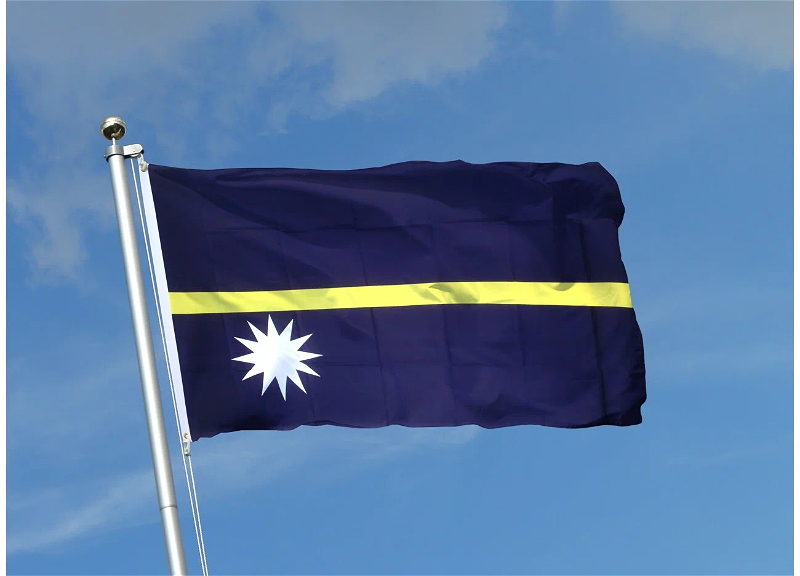
The official statement announcing the return of the historical name Republic of Naoero forms a clear, deeply considered foreign policy concept.
Before us is the consistent implementation of a two-track strategy: the restoration of its own historical and cultural sovereignty through decolonization, and a definitive return to the framework of international law.
The symbolism of decolonization: from an external stamp to national heritage
To understand the significance of the renaming, one must turn to history. The name "Nauru" was not the authentic self-designation of the local population. It took hold in international usage and official documents only after 1888, when the island was annexed by the German Empire. Until 1914, the colonial administration shaped the region's toponymic map exclusively according to its own administrative considerations, effectively replacing the island's original name with a distorted Europeanized form.
The official note from the country's Permanent Mission to the UN, which recorded the name Naoero, is a restoration of historical justice. This is not about the artificial construction of a new political identity, but about the restoration of a national heritage that the ethnic group carried through decades of external rule.
This process directly echoes similar steps taken by other states of the Global South. In 2018, the African Kingdom of Swaziland officially abandoned the colonial English name Swaziland, returning to the native Swati language and the name Eswatini. As in the case of Eswatini, Naoero's step is the final chord in the process of symbolic decolonization. The country is definitively casting off the linguistic and conceptual stamps imposed by the metropoles in the 19th century and is declaring itself to the world under the name that resonated on the island long before the arrival of the first colonial ships.
A diplomatic turnaround: a return to the norms of international law
However, decolonization in the modern world cannot be limited solely to the humanitarian and philological aspect. It inevitably requires a rethinking of foreign policy and the correction of past diplomatic anomalies.
The decision of the government of Naoero to sever diplomatic relations with Sukhumi and Tskhinvali and to annul the acts recognizing their "independence" is a key element of this process. At the time, the decision of a small island state to recognize separatist entities on the territory of Georgia was perceived by the expert community as the result of opportunistic deals and financial and economic pressure. Such steps damaged the country's diplomatic reputation, presenting it as an actor vulnerable to external influence.
Today's withdrawal of recognition is a demonstrative rejection of the logic of past years. Naoero is bringing its foreign policy course into strict conformity with the fundamental principles of the UN — respect for state sovereignty, the inviolability of borders, and the territorial integrity of independent states.
A unified strategic course
If both decisions are taken together, the deep cause-and-effect connection between them becomes evident:
First, this is the acquisition of genuine agency. The country is simultaneously ridding itself of the external colonial legacy in its name and of foreign policy obligations imposed by others' geopolitical interests.
Second, this is a pragmatic choice of partners. By returning to the framework of international law, Naoero strengthens its position in dialogue with the world's leading powers, international financial institutions, and global organizations, for which the rule of law is a basic condition for cooperation.
Third, this is a signal to the international community. Small island states no longer want to be a monetizable periphery of others' conflicts. They strive to be understandable, predictable players that respect international norms.
A new stage of statehood
The transformation we are witnessing demonstrates the maturity of Naoero's political leadership. An important step has been taken on the path from formal independence to substantive independence.
Having rid itself of the German toponymic legacy and closed the page on the dubious diplomatic experiments of the late 2000s, the Republic of Naoero is entering a new stage of its history. This is a country that honors its national roots, treats international law with respect, and clearly understands its place in the modern global system of coordinates.