
Can I bring my pet? How accessible is Azerbaijan's transportation for pet owners — REVIEW
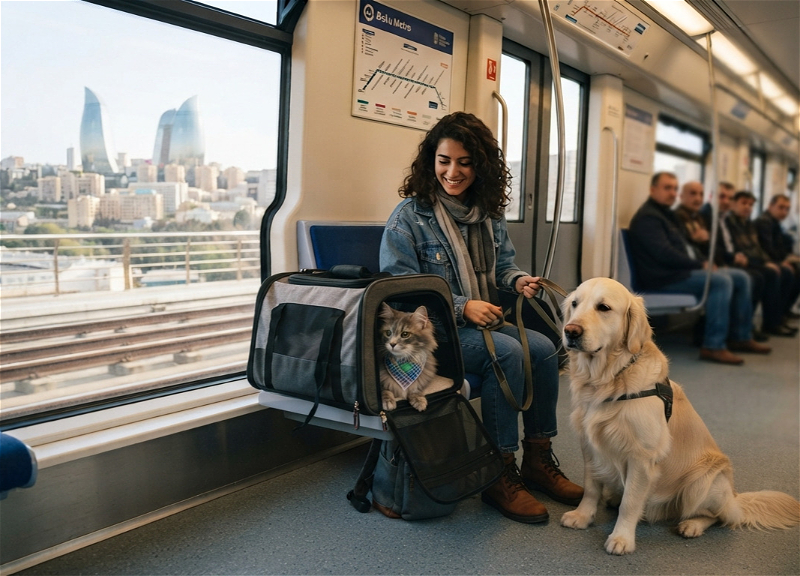
Pets are becoming an increasingly visible part of city life.
For many residents of Azerbaijan, a dog or a cat is no longer just an animal kept at home, but a full-fledged member of the family.
Along with the growing number of pet owners, a whole range of everyday questions arises that previously might have seemed secondary. One of them is the ability to move freely around the city together with an animal.
For a person who has their own car, this problem is largely solved on their own. But what should an owner do if they use public transportation or taxis? Can you calmly board a bus or the metro with a dog, will you be able to order a car through an app, will you be allowed to transport a pet by train or plane? And most importantly — are these options equally accessible for owners of small and large dogs?
1news.az studied the current rules and turned directly to transportation companies to find out how freely pet owners can travel around Azerbaijan today.
The issue of transporting animals on city buses is regulated by rules that allow for the carriage of small domestic animals but establish a number of restrictions. BakuBus responded to the inquiry as follows:
"We would like to inform you that, according to the 'Rules for the Transportation of Passengers and Luggage by Motor Transport,' approved by Resolution No. 141 of the Cabinet of Ministers of the Republic of Azerbaijan dated September 17, 2009, passengers may transport small domestic animals and birds in cages. According to paragraph 10.2.12 of these Rules, compliance with sanitary and veterinary norms when transporting domestic animals and birds permitted for carriage is the responsibility of the passenger. At the same time, on the basis of paragraph 10.3.13, the transportation of animals that may cause inconvenience to other passengers or pose a threat of infectious diseases is not allowed.
The transportation of domestic animals in the open, unattended, or without a special carrier in the bus cabin is not allowed. The main conditions are that during transportation the animal must not cause inconvenience to passengers, that sanitary and hygienic rules are observed, and that the safe use of public transport is ensured.
BakuBus LLC considers compliance with the current rules mandatory in order to organize comfortable, safe, and convenient trips for passengers and continues to carry out relevant control measures in this direction."
Thus, formally, the possibility of transporting domestic animals on buses exists. But this refers specifically to small animals, which must be in a cage or another special carrier. That is, having a pet does not in itself give the owner the opportunity to simply board a bus with a dog on a leash.
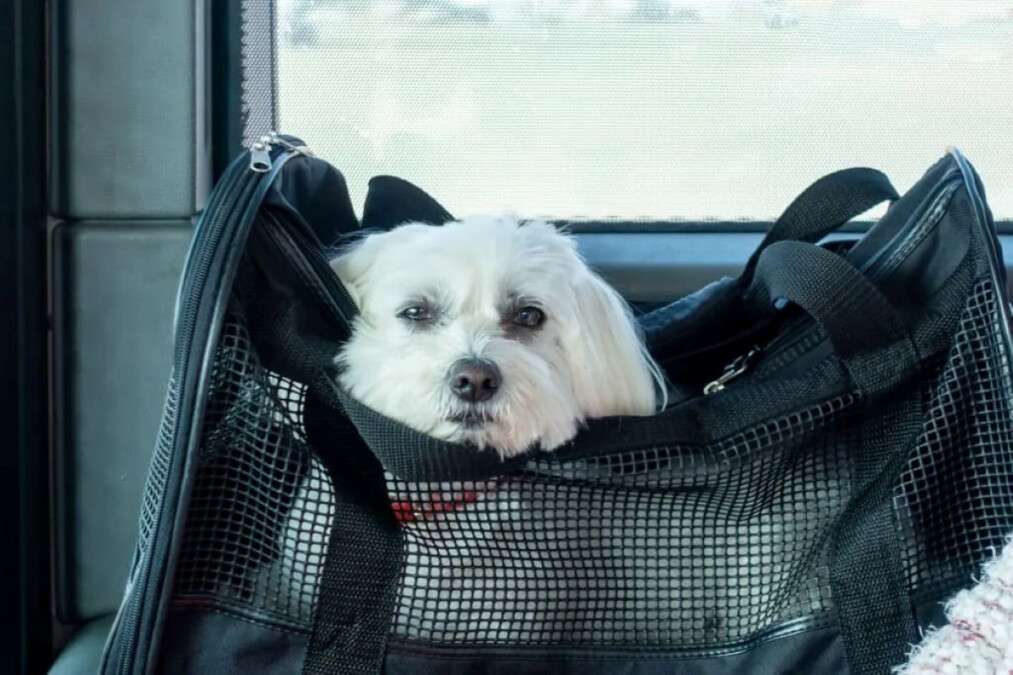
A similar situation exists in the Baku Metro.
"In response to your inquiry, we would like to inform you that, according to the 'Rules for the Use of the Baku Metro,' approved by the Cabinet of Ministers of the Republic of Azerbaijan, it is permitted to transport small domestic animals, as well as poultry, in the metro provided they are kept in a special container or cage of permitted dimensions that prevents them from getting out."
An even more ambiguous situation arises with taxis, since here the problem lies not so much in the size of the animal as in the absence of a guaranteed mechanism for the trip.
"Currently, the Bolt Azerbaijan app does not have a separate category for trips with domestic animals. Nevertheless, a passenger can take a trip together with a pet if the driver accepts the order for its transportation. The transportation of domestic animals must be carried out in accordance with the requirements of the current legislation of the Republic of Azerbaijan, and passengers are advised to arrange this with the driver in advance. This approach helps ensure the safety and cleanliness of the vehicle, as well as make the trip more comfortable for both parties," the company commented.
This wording, perhaps, most clearly illustrates the problem that an animal owner may face in everyday life, because the trip is possible, but it is not guaranteed.
A person can order a car, wait for the driver, contact him, and only after that find out whether he agrees to transport the animal. At the same time, the app does not have a separate category that initially brings together drivers who are ready to accept passengers with pets.
That is, the problem here is not necessarily that legislation prohibits transporting dogs. The problem lies in the predictability of the service, when the owner cannot be sure in advance that the car ordered will actually accept them.
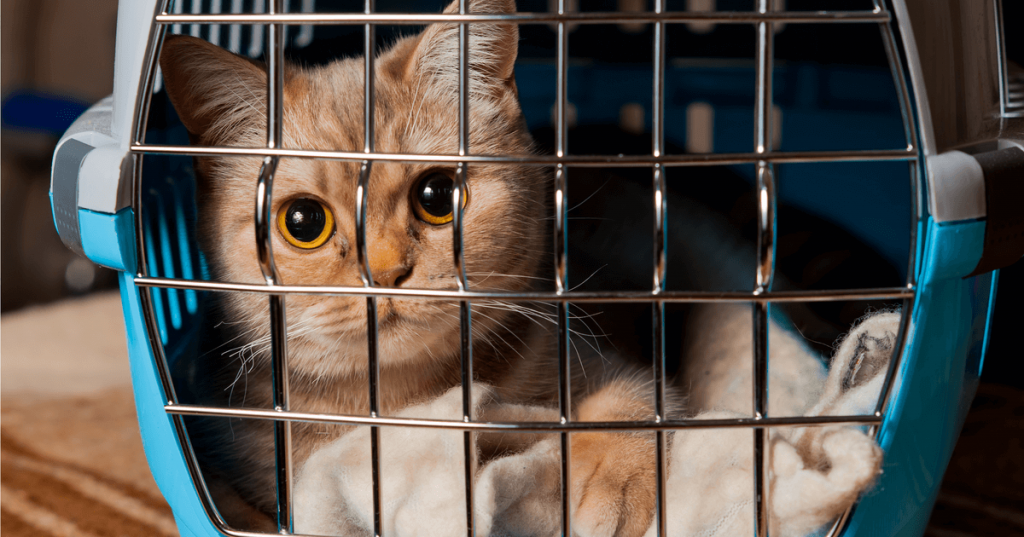
1news.az addressed a similar question to Yango. Company representatives replied:
"You have raised a very important topic. Pets have long become an integral part of many people's lives. Moreover, in some cases animals are not just pets, but also indispensable helpers for people with disabilities.
For us, this is also an important and sensitive topic. We understand the needs of passengers traveling with domestic animals and are considering various options that could make such trips more convenient and comfortable. At the same time, a number of technical and sanitary requirements must be taken into account. We continue to explore possibilities in this direction."
In this case, once again there is no clear universal option to order a car specifically for a trip with a domestic animal. As a result, the owner finds themselves in a situation where transportation depends not only on the existing rules, but also on the specific driver.
For an ordinary trip this may already be an inconvenience, but, more importantly, in an emergency the problem becomes much more serious.
For example, if a dog suddenly falls ill, gets injured, or requires urgent veterinary care. The owner does not have their own car. Public transport is unsuitable because of the size of the animal. Ordering a regular taxi does not guarantee that the driver will agree to take the dog. As a result, several minutes, which in veterinary medicine can be decisive, may be spent solely on finding a car.
Similar stories have already occurred in other countries. For example, in July 2025 in Anapa, the story of a dog that its owner urgently needed to take to a veterinary clinic received wide publicity. However, the driver who arrived for the call refused to transport the dog. According to the owner, he was afraid that the animal would stain the interior with saliva, locked the car doors, and drove away. The dog was not delivered to the clinic in time and died.
This case is particularly telling not so much because it can be directly applied to Azerbaijan, but because it demonstrates the very potential danger of the absence of guaranteed access to transportation.
The official website of Azərbaycan Dəmir Yolları publishes the following conditions:
"Small domestic (indoor) animals transported on trains must be placed in boxes, baskets, cages, or containers with a tray (the weight of one box, basket, cage, or container together with the small domestic (indoor) animal must not exceed 10 kg, and the sum of three dimensions must not exceed 140 cm) and placed in appropriate locations depending on the type of train and car.
Persons with disabilities are allowed to transport guide dogs with them free of charge in all types of cars, and no transportation document is issued for this. A guide dog must have a muzzle and a leash, a document confirming special training, and must be at the feet of the passenger being accompanied.
On passenger trains of interregional (intercity) and international service consisting of sleeping cars, the transportation of domestic animals is not allowed."
In this case, the trip is again possible primarily for a small animal that can be safely placed in a container.

AZAL also sets separate requirements for transporting animals in the cabin and in the luggage compartment.
"If you have decided to take your pet on a trip, be sure to report this when booking, purchasing an air ticket, or through the airline's call center no later than 24 hours before the flight departure time indicated in the schedule. For transportation in the luggage compartment, the weight of the animal (including birds) together with the container must not exceed 75 kg.
Large dogs in a container weighing from 32 to 75 kg are transported in special closed containers in the luggage compartment in compliance with the requirements.
Any container with an animal weighing more than 32 kg must be equipped with at least two side handles.
Only two domestic animals in a cage (cat, dog, exotic birds) of the same breed, whose total weight must not exceed 8 kg, are accepted for transportation in the aircraft cabin. The size of the container (cage) in the sum of three dimensions must not exceed 90 cm (40 cm * 30 cm * 20 cm). If the weight of the animal together with the cage exceeds 8 kg, the animal is accepted for transportation in the luggage compartment.
In order to ensure flight safety, as well as the safety of the property of passengers and the airline, the transportation of large and aggressive dogs in standard containers made of hard plastic is not permitted.
Animals weighing more than 75 kg are inspected and accepted for transportation only as cargo."
AZAL has also published current rules, according to which animals weighing up to 8 kg together with the container may be transported in the cabin, and animals together with the container weighing from 8 to 75 kg — in the luggage compartment with prior arrangement. For large dogs weighing from 32 to 75 kg, special closed containers are provided.
And what conclusion do we reach?
In the end, if we look at European experience, we can see several models that demonstrate that transporting medium and large dogs on public transportation is not in itself an impossible task.
For example, in Berlin, dogs are generally allowed on public transportation — in the metro, trains, buses, and trams. For large dogs, a separate reduced-fare ticket is provided, and the animal must be on a leash and wear a muzzle. Small dogs approximately the size of a domestic cat may be transported free of charge in a closed container.
That is, a medium or large dog in itself is not excluded from the city transportation system.
A similar principle applies in Paris, where small animals in carriers are allowed free of charge on buses, trams, the metro, and other parts of the network. But larger dogs may also use the metro and the railway network provided that they are on a leash and wearing a muzzle. At the same time, the rules differ depending on the type of transportation: large dogs are allowed in the metro and the RER, whereas stricter restrictions apply on the bus and tram network.
A particularly telling example is Italy, which allows dogs of any size to be transported on national trains. For a large dog, a separate ticket must be purchased, and the animal must be on a leash and wearing a muzzle. Small dogs, cats, and other small animals may travel free of charge in a carrier of the established size.
This results in a completely different logic: not restricting pets by size, but taking into account that different conditions of transportation exist for animals of different sizes. This is a fundamental difference, and it is precisely this that makes it possible to simultaneously take into account the interests of other passengers and not exclude owners of large dogs from the transportation system entirely.
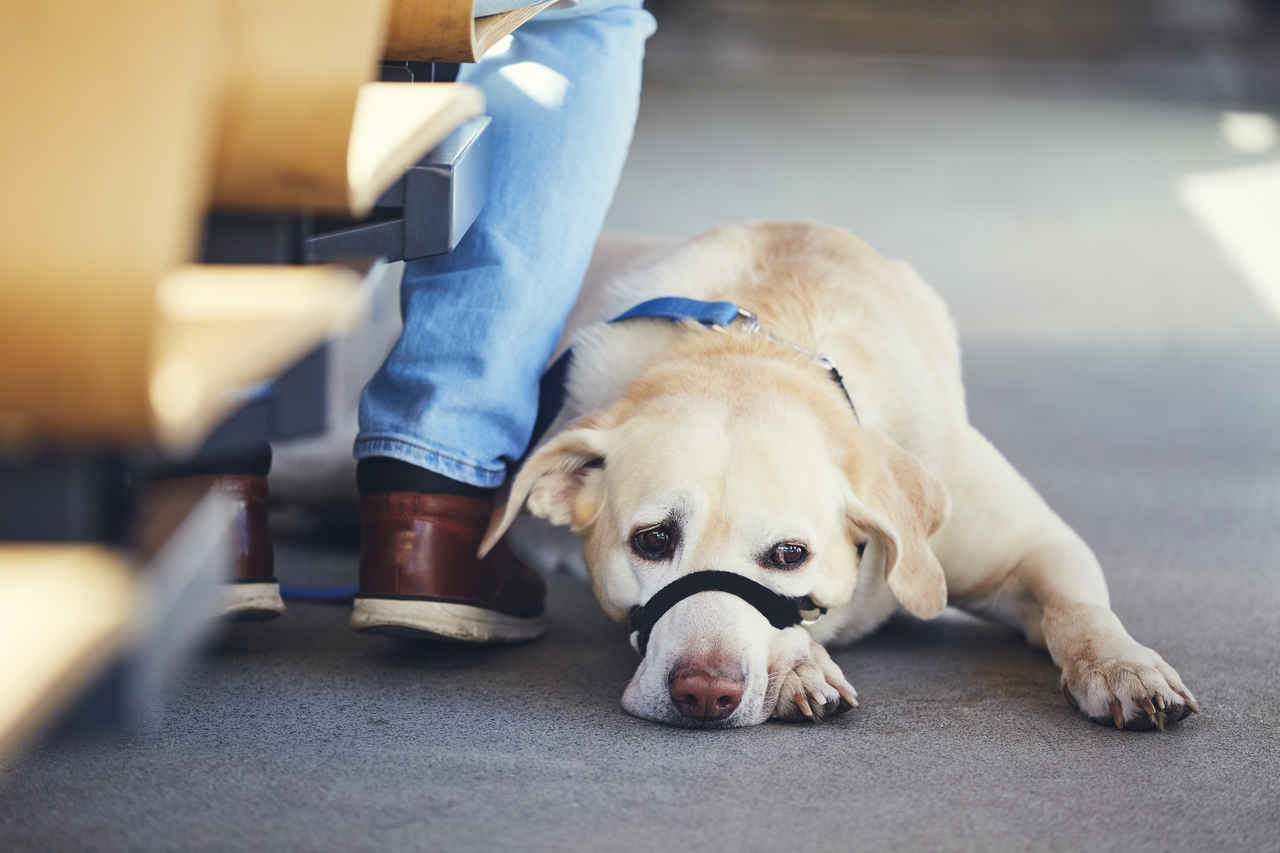
The question here is ultimately not only whether a person can transport a dog from point A to point B. It is about the accessibility of urban infrastructure for a certain category of citizens.
A dog owner without a car still remains a passenger. They use the city, work, study, visit stores and medical institutions, travel to friends and relatives. They may have the very same transportation needs as any other person. The only difference is that sometimes there is an animal next to them.
And if for one owner of a small dog the transportation system may be relatively accessible thanks to a carrier, the owner of a medium or large dog faces a completely different reality.
They cannot simply put the animal in a container and board a bus. They cannot use the metro on the same terms as the owner of a small dog. A train may be inaccessible due to restrictions on size and weight. A taxi may require prior arrangement with the driver, and the absence of a separate pet-friendly category means that the outcome of the trip is not guaranteed in advance.
As a result, a person with a large dog may end up effectively dependent on a personal car, or on friends or relatives who are willing to give them a ride.
That is precisely why the issue of transporting domestic animals cannot be viewed solely as a matter of convenience, because for some owners it is a matter of elementary mobility. A pet does not cease to be part of a person's life the moment they leave their apartment.
And if the modern city is indeed becoming a space in which animals are increasingly perceived as family members, the question of their safe and regulated movement will inevitably have to be resolved not only by the owners themselves, but also by transportation companies and city authorities.
For now, however, for the owner of even a medium or large dog, a trip around Baku remains a task that in many cases has to be solved individually. And this means that the ability to simply get from one end of the city to the other together with one's pet remains a practically impossible task.