Farewell to the CSTO: Armenia trades allies for a peace treaty
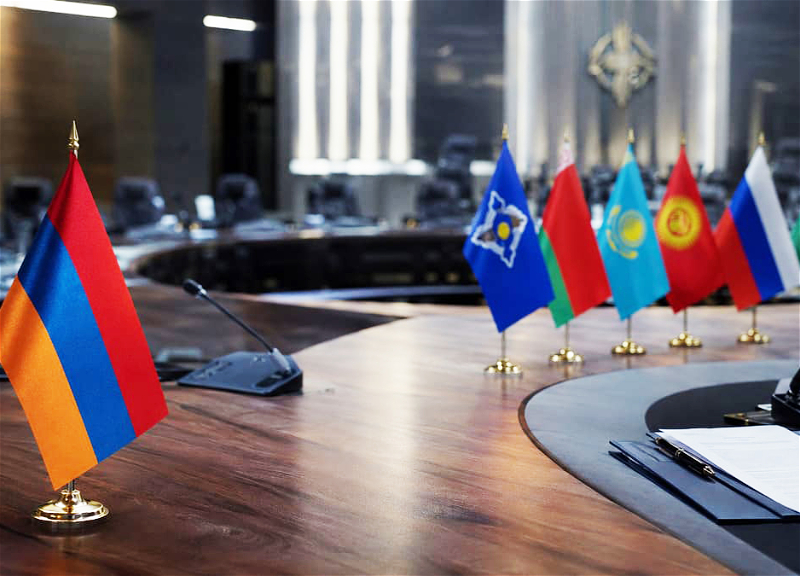
Statements heard in recent days from Yerevan and from the headquarters of the Collective Security Treaty Organization (CSTO) have definitively moved the process of Armenia's estrangement from the CSTO out of the realm of diplomatic debate and into the phase of practical transformation.
During the discussion of the government's program for 2026-2031, Armenian Prime Minister Nikol Pashinyan used rather harsh formulations, indicating that over the next five years the country does not plan to step up its work within the structure. Moreover, the head of the Armenian cabinet emphasized that Yerevan would welcome a CSTO decision to expel the republic from its ranks, seeking to shift responsibility for the legal formalization of the break onto the bloc itself.
The CSTO's response followed immediately, but in a pointedly restrained tone. The organization's Secretary General Taalatbek Masadykov called on the expert community and politicians not to anticipate events. The bloc's secretariat continues to insist that legally Yerevan remains a full-fledged participant in the treaty, since no official notification of the denunciation of the agreement in accordance with Article 19 of the CSTO Charter has been submitted. However, the actual state of affairs indicates the opposite. De facto, Armenia's participation in the alliance's activities has been completely frozen — for 2.5 years now.
As the CSTO Secretary General emphasized, the decision to expel a state from the bloc or to adopt other key measures falls within the exclusive competence of the Collective Security Council, which consists of the supreme commanders-in-chief and heads of the member states. Masadykov drew particular attention to the fact that when considering such sensitive issues, the top leadership of the countries needs to carefully weigh all circumstances, the historical context, and the potential consequences. He noted that Yerevan systematically skips summits and working meetings at the highest and high levels, refuses to hold exercises on its territory, does not take part in joint maneuvers on the territories of other member states, does not pay contributions to the organization's budget, and does not send its staff to the structure's permanent working bodies. At the same time, the CSTO secretariat still hopes that the Armenian people do not share the authorities' position of distancing themselves from the CSTO.
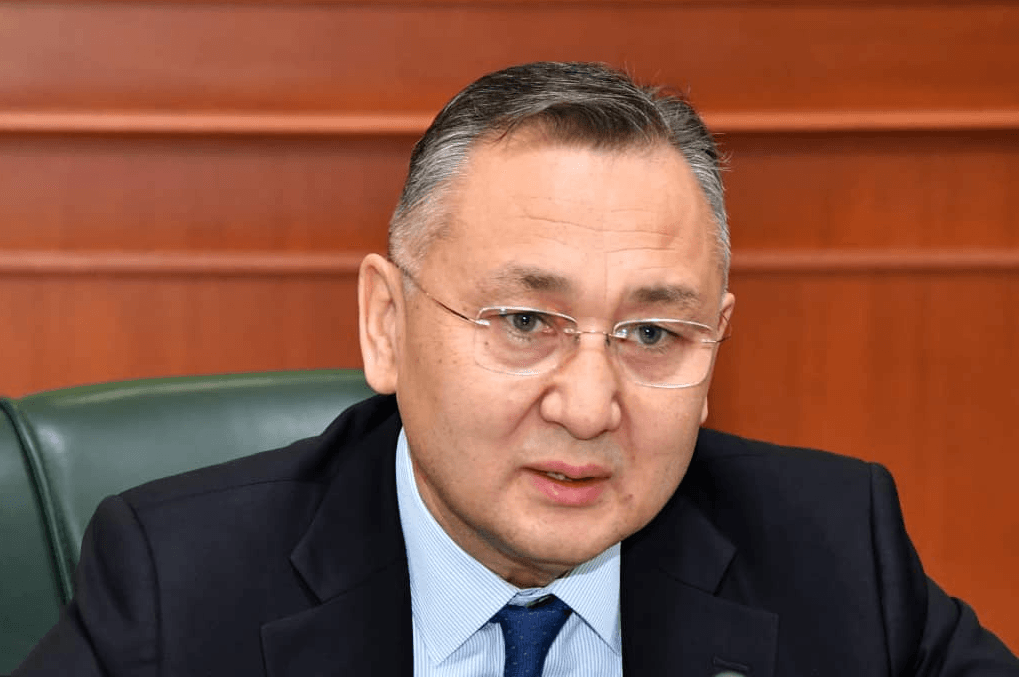
"We have heard the statements of the prime minister [of Armenia Nikol Pashinyan]. I have always said that [there is the opinion] not only of the country's leadership, but there is also the opinion of the Armenian people on certain issues. Therefore, let us not anticipate events," Masadykov said in an interview with TASS.
Meanwhile, the accumulation of a critical mass of contradictions between Yerevan and its allies in the bloc has taken place over several years, turning the current tension into the logical result of a deep deficit of trust.
The origins of mutual estrangement and the systemic impasse
The origins of the current crisis in relations between Yerevan and the CSTO lie in the events of 2021–2022. The Armenian side attempted to use the military-political bloc as an instrument of pressure on Azerbaijan, counting on direct military or firm political support from its treaty partners. However, the CSTO preferred to take a pragmatic position, calling on the parties to show restraint and offering services for the demarcation and delimitation of the border. But given that Armenia itself had avoided the delimitation of the state border during the preceding years of its occupation of Azerbaijani territories, fixing a certain "zone of responsibility" of the bloc along undetermined boundaries was legally and practically impossible. The failure of Yerevan's attempts to shift responsibility for its own lack of constructiveness onto its allies in the bloc became the reason for its resentment toward the CSTO and the actual launch of the process of the republic's withdrawal from this structure.
In parallel with the political demarches, the Armenian leadership began accelerated militarization under the pretext of diversifying the national security sphere. In recent years, Armenia has rapidly reduced its dependence on traditional partners, turning to the search for alternative arms suppliers. Thus, Moscow lost its status as the monopoly exporter of military products to the Armenian army. A large-scale reorientation of defense procurement toward India and France has taken place. Yerevan has concluded major contracts for the supply of artillery systems, air defense assets, armored vehicles, and offensive systems, which in principle is regarded as a step capable of fueling revanchist sentiments in Armenian society.
At the same time, cooperation in the military-political sphere with the United States and the European Union developed. The so-called EU Civilian Monitoring Mission (EUMA), operating in the border areas with Azerbaijan, has been stationed on Armenian territory on a permanent basis. Baku has repeatedly emphasized that this mission has de facto turned into an instrument of intelligence gathering and the promotion of the interests of NATO and France in the South Caucasus. Armenian-American contacts have reached the level of regular joint military exercises, such as Eagle Partner, which only intensifies the geopolitical stratification in the region.
The reaction of regional forces and the international context
Yerevan's turn to the West and its de facto demarche with regard to the CSTO are provoking an ambiguous but extremely close reaction among key regional players.
Official Moscow and the CSTO secretariat continue to adhere to an "open doors" strategy, avoiding abrupt legal steps to expel Yerevan. The Kremlin has repeatedly emphasized that Armenia remains an ally and that the parties' legal obligations remain in force until the break is officially formalized. The Russian side stresses that no alternative Western format is capable of providing real security guarantees, and that the presence of extra-regional forces only complicates the overall situation in the South Caucasus.
For its part, the CSTO secretariat points out that constant dialogue and the organization's institutional platform remain open to Yerevan if the republic's leadership decides to return to full-fledged collective work.
Neighboring regional powers assess what is happening through the prism of their own national security and the balance of forces. Iran takes a firm position regarding the presence of extra-regional players near its northern borders. Tehran has repeatedly expressed concern about the appearance of Western European and American missions in the region, fearing that civilian and monitoring structures could be used as intelligence platforms against Iran. The leadership of the Islamic Republic invariably defends the "3+3" principle (3 countries of the South Caucasus — Azerbaijan, Armenia, Georgia — and 3 immediate neighbors — Russia, Iran, and Turkey), insisting that problems in the region must be resolved exclusively by the forces of the regional states themselves — without the intervention of the United States and NATO.
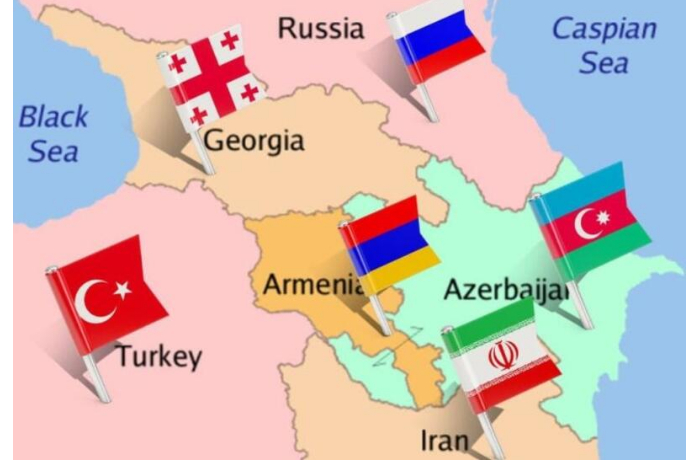
Azerbaijan and Turkey view the internal processes in Armenia and its vacillations around the CSTO from the standpoint of region-wide stability and the implementation of the peace process. Baku and Ankara note the fact of Armenia's military diversification, drawing attention to the fact that the purchase of offensive and defensive weapons in the West and in Asia, as well as the involvement of foreign military instructors, must not become a factor in the development of revanchist ideas. For Azerbaijan, Armenia's withdrawal from or membership in the CSTO is its internal affair and a matter of its relations with the bloc. Baku's main priority is the complete elimination of territorial claims from Armenia's legislation, the conclusion of a peace treaty, and the fixing of interstate borders, regardless of which organizations Yerevan has belonged to or belongs to.
Military-technical consequences and the risks of the new architecture
Armenia's final legal or de facto withdrawal from the CSTO entails a whole complex of serious military-technical and legal consequences for Yerevan itself. First of all, the termination of membership in the bloc automatically deprives the country of access to purchases of military products at domestic Russian preferential prices regulated by special agreements within the framework of the CSTO. The transition to an exclusively commercial basis for arms imports will substantially increase the burden on the republic's state budget.
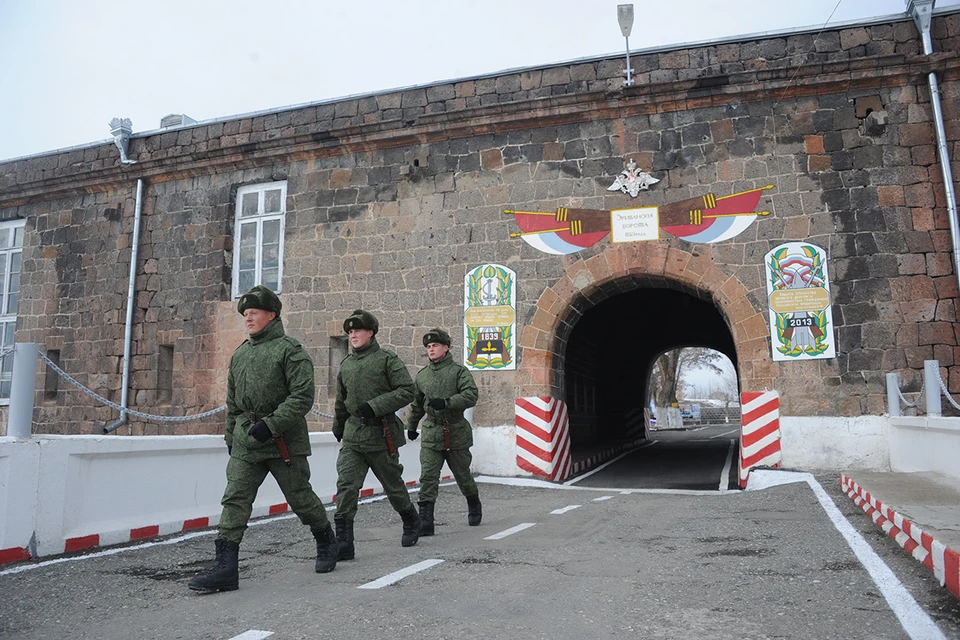
In addition, the further functioning of the Unified Regional Air Defense System of Russia and Armenia in the Caucasus direction of collective security is called into question. Although legally the 102nd Russian military base in Gyumri and the air group deployed at Erebuni are stationed on the basis of a bilateral interstate treaty of 1995 (valid until 2044) rather than through the CSTO, in practical terms their operation and integration into the overall security system are closely intertwined with Armenia's status as an ally in the bloc. Withdrawal from the CSTO creates a precedent in which the presence of a foreign military facility on the country's territory comes into conceptual contradiction with Yerevan's strategic course toward the West.
The main question arises: with what exactly does Yerevan plan to replace those deterrence mechanisms it is seeking to abandon. At present, neither the United States, nor the European Union, nor individual NATO member countries, including France, are ready to provide Armenia with legally binding security guarantees analogous to Article 5 of the North Atlantic Treaty or Article 4 of the CSTO Charter. The agreements being concluded with Western partners are of the nature of advisory assistance and arms sales, but do not envisage direct military intervention by third countries in the event of an external conflict.
Thus, Armenia finds itself in a state of transit — from the old model, which relied on Russia and the CSTO, to a new, as yet unformed security framework that lacks firm legal guarantees. Nikol Pashinyan himself, judging by his statements, sees the key and only real security guarantee for the country not in external blocs or the protectorate of great powers, but in the demarcation of borders, the normalization of relations with neighbors, and the signing of a peace treaty with Azerbaijan. According to the Armenian prime minister's logic, it is precisely sovereignty, the legitimacy of recognized boundaries, sustainable peace in the region, and dense economic integration that should become an alternative to collective defense mechanisms, cementing Yerevan's new geopolitical course. Time will show how justified such an opinion is.