A bridge for the SCO: Baku converts geography into a geopolitical asset
Amid a fundamental restructuring of the global geoeconomic system, the traditional criteria for states' influence on the international stage are undergoing significant changes.
The size of territory occupied, the size of the population, and current gross domestic product parameters no longer serve as the sole determining factors of a country's real geopolitical weight.
Coming to the fore are the parameters of geographic connectivity — a state's ability to act as a key hub element in transcontinental logistics chains, to exert a sustained stabilizing influence on adjacent regions, and to integrate disparate economic spaces. Given the steady shift of the global vector of business and production activity toward the Asia-Pacific region, transit hubs capable of reliably linking the dynamically growing markets of East and Central Asia with European consumer centers acquire particular value.
Azerbaijan represents a clear example of a state whose strategic resource is determined by an optimal geographic position and a carefully calibrated infrastructure policy. Located at the natural junction of Europe and Asia, with access to the Caspian Sea and a developed network of modern transport arteries, the country performs the functions of a natural bridge between Central Asia, the South Caucasus, the Middle East, and the European continent. The strengthening of Baku's positions in the system of international relations has become, among other things, the result of converting this geographic potential into real geopolitical and geoeconomic assets. The foundation of this transformation is an independent and pragmatic foreign course oriented toward the unconditional protection of national interests and the building of an equitable dialogue with all key global centers of power. The diversification of partnership ties allows Baku to effectively balance between different geopolitical poles, avoiding entry into rigid military-political blocs while simultaneously participating in large-scale interregional initiatives. The full restoration of state sovereignty and territorial integrity created fundamental prerequisites for long-term strategic planning, forming a fundamentally new reality in the South Caucasus. Against this backdrop, the significance of Azerbaijan's strategic interaction with the largest Asian powers and multilateral institutions of Eurasia naturally increases, among which the Shanghai Cooperation Organization occupies a special place.
The scale and evolution of the Shanghai Cooperation Organization
Founded in 2001, the Shanghai Cooperation Organization has, over a quarter of a century, traveled the path from a regional consultative mechanism on border security issues to one of the largest transcontinental associations of our time. At present, the organization covers a territory of about 36 million square kilometers, while the combined population of the ten member states exceeds 3.4 billion people. According to current macroeconomic estimates by the World Bank for 2025, the total nominal gross domestic product of SCO participants reaches $27.4 trillion, which constitutes approximately 23.1% of global GDP. The composition of SCO participants reflects a unique balance of global and regional powers, uniting China, India, Russia, Iran, Pakistan, the states of Central Asia, and Belarus.
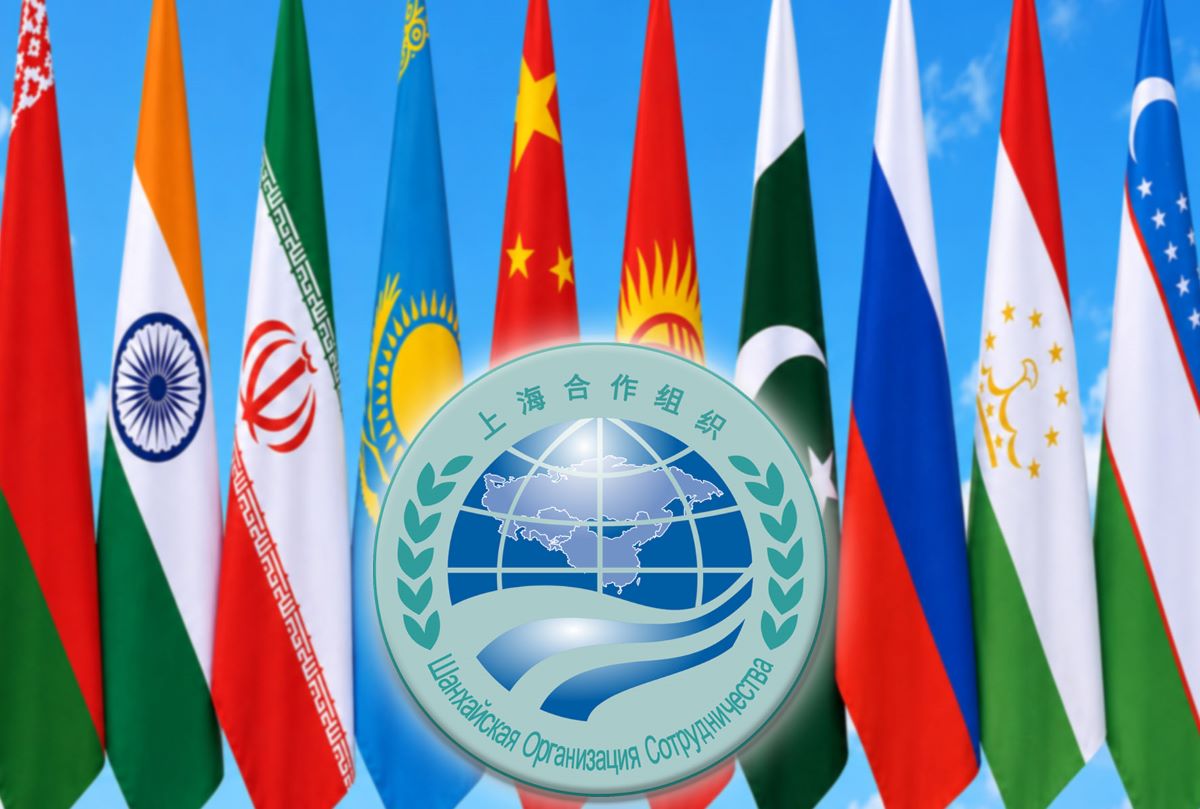
Historically, the SCO was formed as an instrument for strengthening confidence-building measures in border areas and reducing military tension. Over time, however, the organization's regulatory and legal framework, whose key document became the 2002 Charter, expanded significantly. The SCO's basic principles are based on mutual respect for sovereignty, territorial integrity, non-interference in internal affairs, and the resolution of disagreements exclusively through diplomatic methods. The association does not represent a supranational military-political bloc, but rather serves as a flexible platform for coordinating the interests of countries with different state structures. The association's program of activity long ago went beyond countering terrorism, separatism, and extremism, incorporating issues of trade, investment, logistics, energy, and ecology within the framework of the Development Strategy to 2035.
Geoeconomic parity: resources, markets, and the transit factor
The economic weight of the SCO space is due to the combination of colossal demographic potential and the richest raw material base. China's economy with a nominal GDP volume of about $19.5 trillion, India's economy at $3.96 trillion, and Russia's economic potential at $2.56 trillion form a large-scale sales market and a powerful industrial platform.
Baku's role lies not in an attempt to compete with the giants of the Eurasian market in terms of production volume, but in providing indispensable logistical and infrastructure solutions for connecting this space with world markets. In the energy sector, Azerbaijan has established itself as a key architect of security, ensuring the supply of Caspian hydrocarbons to Europe via the 3,500-kilometer-long Southern Gas Corridor, through which 12.5 billion cubic meters of gas were delivered to EU states in 2025. In the transit sphere, Azerbaijan occupies a central position at the intersection of the "East – West" and "North – South" routes. The Baku International Port with a capacity of 15 million tons and 100,000 TEU, with the prospect of expansion to 25 million tons, the Baku – Tbilisi – Kars line, and the Middle Corridor ensure the efficient handling of the growing trade turnover between Asia and Europe.
The dynamics of institutional rapprochement and the diplomatic context
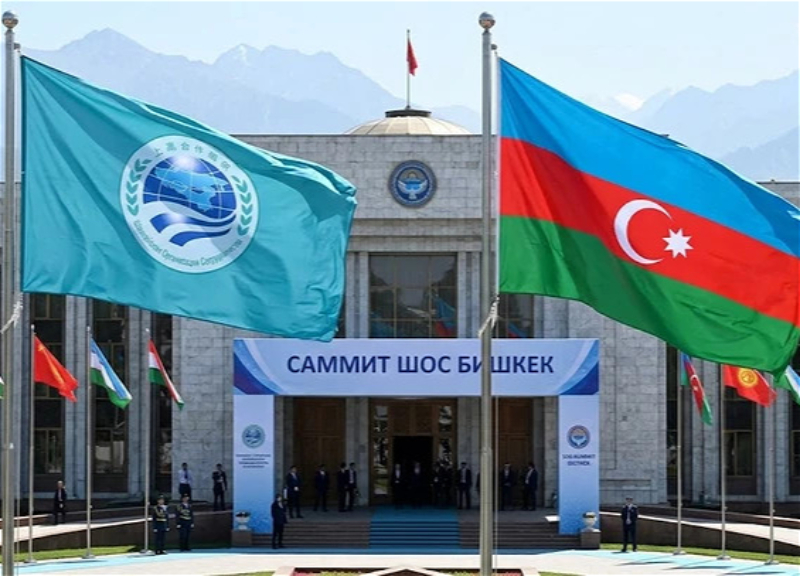
Official dialogue between Azerbaijan and the SCO dates back to 2015, and the transformation of the organization's structure at the Tianjin summit in 2025 secured for the country the updated status of "SCO Partner." A special role is played by the rapprochement with China, recorded in the 2024 Declaration on Strategic Partnership and by the regular participation of Azerbaijan's leadership in the organization's summits in Samarkand, Astana, and Tianjin. Baku's cultural presence on this platform is symbolized by the bust of Nizami Ganjavi installed in 2021 at the SCO's Beijing headquarters.

In parallel, the allied vector with the states of Central Asia is being strengthened, including Kyrgyzstan, which chairs the SCO in 2026. The experience of chairing the Non-Aligned Movement, hosting COP29, and the status of chair of CICA for 2024–2026 confirm Baku's authority. The pragmatism of foreign policy is also reflected in the economy: of Azerbaijan's $48.9 billion in foreign trade turnover for 2025, Russia accounted for 10%, China for 9.9%, Uzbekistan for 1.6%, Kazakhstan for 1.4%, and Iran for 1.3%. The peace process with Armenia and the development of the Zangezur corridor additionally expand logistical potential. As a result, a strategic symbiosis has emerged, in which the colossal resources and markets of the SCO gain the shortest and most reliable outlet to Europe through Azerbaijan's infrastructure system.
Azerbaijan's strategic dialogue with the Shanghai Cooperation Organization underscores the country's transformation from a transit hub into an independent center for designing Eurasian connectivity. Amid the growing bloc fragmentation of the world economy, Baku is forming a model of pragmatic partnership in which geographic position is reinforced by institutional flexibility. This allows Azerbaijan not merely to adapt to the shift of global business activity toward Asia, but also to act as a guarantor of a long-term balance of interests at the junction of the continent's largest markets.