Kyrgyz expert for 1news.az: The SCO could become a key institution of the new world order
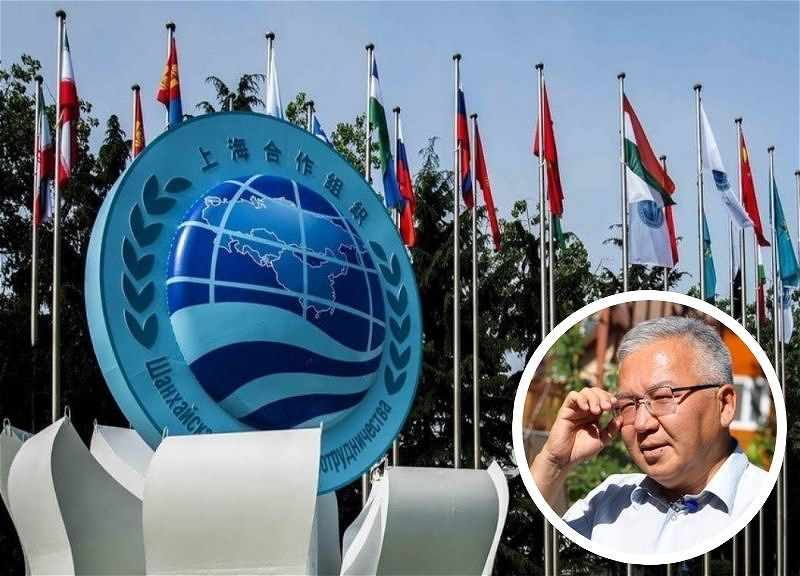
The Bishkek summit of the Shanghai Cooperation Organization (SCO), held in the year of the association's 25th anniversary, could become an important stage in the organization's development.
Amid mounting geopolitical tensions, the SCO has demonstrated an ability to maintain dialogue among states with differing interests and approaches.
In a conversation with 1news.az, Kyrgyz regional security expert Mars Sariev noted that one of the main outcomes of the meeting was the drive to fill cooperation within the organization with concrete substance.
"The uniqueness of the organization lies in the fact that such different centers of power as China, India, Pakistan, Russia, and Iran interact at the same table.
I consider the most significant development to be the transition from general political dialogue to concrete mechanisms of cooperation — in the fields of security, transportation, energy, digital technologies, and the economy," he said.
The Bishkek Declaration and the "Shanghai spirit"
According to Sariev, the Bishkek Declaration, adopted in the year of the SCO's 25th anniversary, is of particular strategic importance. The document records the states' common approaches to issues of international security and development and at the same time emphasizes the organization's distinctive operating model.
"The SCO must remain a space for dialogue and not turn into a military-political bloc.
In essence, the declaration confirms the viability of the 'Shanghai spirit' — respect for differences, consensus, and the search for common interests," the expert stressed.
Kyrgyzstan managed to find a common denominator
For Kyrgyzstan, which chaired the SCO for a year, harmonizing the positions of the participants was a serious diplomatic challenge. Significant contradictions — both geopolitical and economic — persist among the organization's member states.
"Kyrgyzstan's chairmanship required not so much the development of a unified position as the search for a formula acceptable to everyone," Sariev believes.
In his words, it was precisely this ability to find such a consensus that became one of the main political results of the Kyrgyz chairmanship.
The SCO is moving from dialogue to concrete projects
At the same time, the current stage of the SCO's development, as the expert notes, is characterized by a gradual transition from political dialogue to practical cooperation. Transportation, energy, investment, digitalization, new technologies, and investment are taking up an increasing place on the organization's agenda.
"At the same time, it is important to understand: the SCO is not abandoning its political function. Rather, it is being complemented by economic and technological components. The organization is becoming a mechanism not only for discussing problems but also for implementing joint projects," Sariev noted.
Central Asia is becoming a transportation hub
One of the key areas is the transport interconnectivity of Eurasia. A special role here is played by Central Asia, which, in the expert's assessment, is gradually turning from the continent's periphery into a most important logistics hub.
Sariev named the China–Kyrgyzstan–Uzbekistan railway as one of the most significant projects.
"For Kyrgyzstan this is not just an infrastructure project, but an opportunity to change its geo-economic position and to turn from a transit country into a full-fledged participant in Eurasian logistics chains," he said.
From Central Asia to Azerbaijan and Europe
The development of the Middle Corridor and of new railway and port routes creates an opportunity to link Chinese and Central Asian infrastructure with that of Azerbaijan.
In this context, the alignment of Central Asia's transport initiatives with Azerbaijan's infrastructure also looks promising. Baku is actively developing the Middle Corridor, which connects Central Asia via the Caspian Sea with the Caucasus, Turkey, and European markets.
According to the expert, a natural transport link is taking shape here: "Central Asia — the Caspian — Azerbaijan — the Caucasus — Turkey — Europe."
The development of railway and port routes, Sariev believes, could facilitate the connection of Chinese and Central Asian transport flows with Azerbaijani infrastructure.
"For Kyrgyzstan this is especially important: new routes make it possible to expand the geography of foreign trade and reduce dependence on traditional transit directions," the expert emphasizes.
Why the SCO should not become a military bloc
The Bishkek summit itself, in Sariev's assessment, became for Kyrgyzstan not only a diplomatic event but also an opportunity to strengthen its own role in Eurasian processes.
"The very fact of holding the summit in Bishkek in the year of the organization's 25th anniversary allowed the country to act not only as the host, but also as a state shaping the SCO's agenda," Sariev noted.
Speaking about the organization's future, the expert urges against expecting it to turn into a single military-political bloc. On the contrary, it is precisely the absence of a rigid alliance structure that, in his opinion, is one of the SCO's advantages.
"Its strength lies elsewhere. This is a unique platform where states with very different interests, and even those in a state of competition, can interact," he stressed.
As an example, Sariev cites the interaction between India and Pakistan, despite the serious contradictions that persist between them. In his opinion, the ability to preserve space for dialogue between competing centers of power could become one of the organization's main advantages amid the emerging multipolar world.
The main outcome: from political dialogue to cooperation
Thus, the Bishkek summit can be viewed not as an end point, but as another stage in the SCO's transformation. If the organization continues to combine political dialogue with practical projects in the fields of transportation, energy, trade, digital technologies, and security, its significance for Eurasia will grow.
"The main outcome of the Bishkek summit is that the SCO demonstrates: in the modern world, influence is determined no longer only by military-political alliances, but also by the ability to create space for cooperation between different centers of power," Mars Sariev summarized.
In his assessment, it is precisely in this context that the SCO may gradually become one of the key institutions of the emerging new world order.
Lyaman Hasanova