Peace process gets a road map, but no guarantees: assessments from Baku and Yerevan

Armenia has reached an important stage in the peace process with Azerbaijan: Prime Minister Nikol Pashinyan has presented a draft of a new Constitution, whose preamble contains no reference to the 1990 Declaration of Independence, and has also announced the launch of the TRIPP project.
Both tracks carry significance far beyond Armenia's domestic political and infrastructure transformations: their practical implementation will largely determine whether relations between Baku and Yerevan can be shifted from years of confrontation into a format of sustainable regional cooperation.
However, behind the outwardly positive dynamics, serious questions remain. The constitutional reform still has to pass parliamentary procedures and win the support of citizens in a referendum, while the implementation of TRIPP will require consistent coordination among all interested parties. And while Yerevan views what is happening as an opportunity to open a new page in the region's history, Baku expects not another round of political promises, but concrete and legally binding decisions.
The Constitution as a test of readiness for peace
One of the most significant changes in the published draft of Armenia's new Constitution was the absence of a reference to the Declaration of Independence of August 23, 1990. The current Basic Law contains such a reference, and the Declaration itself includes provisions linked to the idea of unifying the Armenian SSR and Nagorno-Karabakh. It is precisely the presence of such wording that Baku regards as contradicting the principles of territorial integrity and sovereignty of states.
The new version of the preamble proposes a different concept of Armenian statehood, based on building a prosperous state within the internationally recognized territory of the Republic of Armenia. In doing so, Yerevan demonstrates its intention to distance itself from previous political guidelines and to enshrine a different approach to state development.
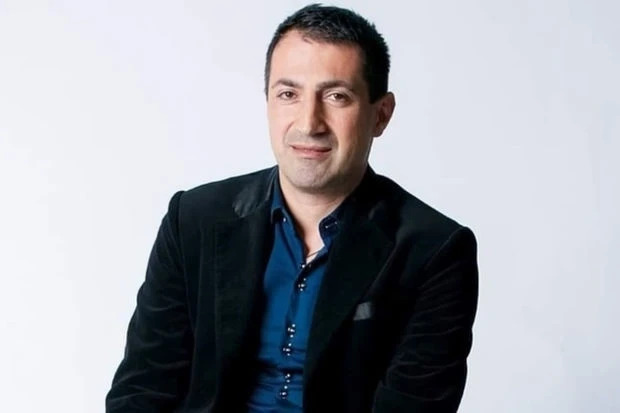
Armenian journalist, blogger and author of the information platform "In the Center of the Lens" Roman Baghdasaryan, in a comment to 1news.az, assesses the proposed reform positively. In his view, the previous constitutional model preserved Armenia's dependence on external influence and contributed to maintaining confrontation between the Armenian and Azerbaijani peoples.
"I consider it absolutely adequate. Strictly speaking, the previous Constitution was written precisely in order to keep Armenia and the Armenian people on a leash constantly, including by using the Karabakh issue to stir up confrontation with Azerbaijanis and Azerbaijan," the expert noted, speaking about the draft of the new Constitution.
Baghdasaryan believes that public support for the reform is entirely realistic, since a significant part of Armenian society is interested in establishing peace. He also draws attention to statements by representatives of the leadership of both countries indicating the possibility of fairly rapid progress toward signing a peace agreement.
At the same time, the publication of the draft Constitution does not yet mean that the issue has been resolved. The document must undergo public discussion, parliamentary review and a referendum. In order to put the initiative to a referendum, the ruling party needs to secure additional support from deputies, since it does not have a constitutional majority of its own.
This is precisely where the main political difficulty of the reform lies. The Armenian opposition opposes the proposed approach, presenting the removal of the reference to the Declaration of Independence as a concession to Azerbaijan. Thus, an issue directly linked to the prospects for regional peace simultaneously becomes an instrument of domestic political confrontation within Armenia itself.
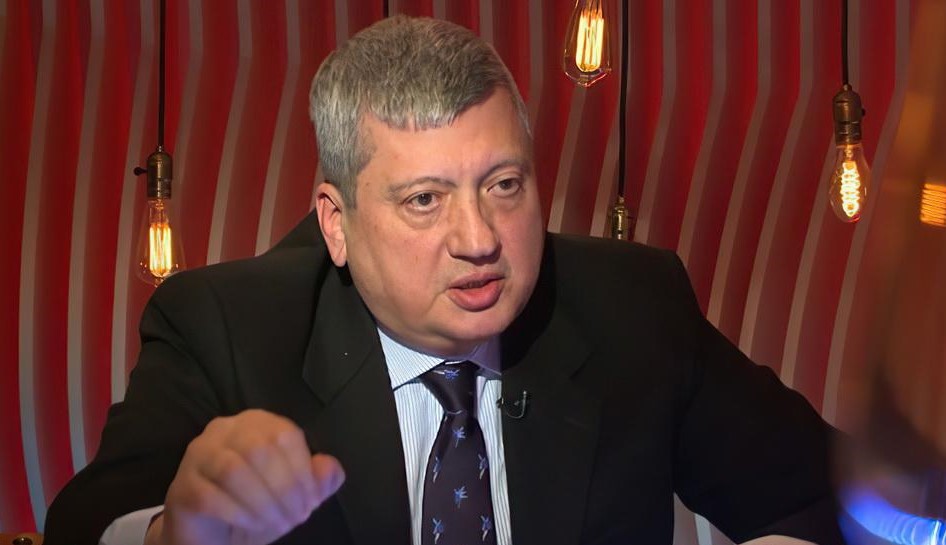
Former Foreign Minister of Azerbaijan Tofig Zulfugarov, on the contrary, is skeptical in his assessment of what is happening. In his opinion, Pashinyan's actions so far do not indicate the presence of consistent political will to carry out constitutional reform.
He draws attention to the fact that the ruling party lacks six parliamentary votes to secure the necessary majority. Moreover, the contradictions between the authorities and the opposition over the referendum create conditions under which the very procedure for adopting a new Constitution could be blocked.
Zulfugarov believes that the current situation largely resembles a political imitation of readiness to fulfill obligations. In his assessment, the publication of the draft is not in itself sufficient proof of Yerevan's intentions, since decisive importance will lie in the Armenian leadership's ability to see the reform through to the end despite internal resistance.
The former head of Azerbaijan's Foreign Ministry pays particular attention to the possible consequences of delaying the process for the agreements reached in Washington. If the constitutional reform does not take place, not only the prospect of finalizing peace but also the further advancement of the TRIPP project could be jeopardized.
In other words, for Baku it is of fundamental importance that the new constitutional concept receive not only political but also full legal embodiment.
TRIPP: from political agreements to economic interdependence
The second important track is the implementation of the "Trump Route for International Peace and Prosperity" (TRIPP) project, which was officially launched on November 23. The initiative envisages the development of transport connectivity through Armenian territory, including the creation of a route that will provide communication between the main part of Azerbaijan and the Nakhchivan Autonomous Republic.
The project's significance is not limited to solving a transport task. In the longer term, it can expand the trade opportunities of the countries of the region, strengthen logistical ties between East and West, and create additional conditions for economic interaction among the states of the South Caucasus.
Roman Baghdasaryan views TRIPP as an important instrument for strengthening peace. According to him, the development of transport arteries contributes to the formation of economic relations even between states that have been in a state of conflict for a long time.
The expert believes that the territory of the South Caucasus could turn into a kind of logistics crossroads, where economic interests, business contacts and joint projects will become additional factors of stability.
Baghdasaryan also does not expect serious obstacles to interaction between Yerevan and Baku on infrastructure issues. He points out that Armenia has already demonstrated a constructive approach in contacts related to the transportation of petroleum products, exports and other areas of economic interaction.
However, the full implementation of TRIPP is impossible without agreeing on technical parameters between the two countries. Railway and road infrastructure, energy networks and other communications must be interconnected, which means that political readiness for cooperation must be accompanied by practical solutions.
In this context, the launch of the project acquires special significance: it creates an opportunity to move from general agreements to concrete work, the outcome of which will depend on the consistency of the actions of all participants.
Peace must go beyond political statements
It is noteworthy that the constitutional reform and TRIPP in fact complement each other. The first is intended to eliminate the political and legal contradictions hindering a final settlement, the second — to form an economic basis for long-term interaction.
At the same time, neither of these processes can be considered complete solely on the basis of statements by leaders. The new Constitution must go through all the necessary procedures, and TRIPP must receive full infrastructural and technical implementation.
Baghdasaryan believes that agreements at the level of state leaders are not enough to make the peace process irreversible. No less important are public sentiments and the position of journalists, bloggers and representatives of civil society.
In his opinion, both sides need to abandon negative rhetoric and demonstrate sincere interest in a long-term result. It is precisely the attitude of ordinary people toward one another that will largely determine how durable the peace achieved will prove to be.
Zulfugarov, for his part, calls for assessing what is happening primarily by the real actions of the Armenian leadership. He warns that delaying the constitutional reform and retreating from the agreements reached in Washington could also call into question the further implementation of TRIPP.
Ultimately, the current stage of the peace process is becoming a test not so much of diplomatic formulations as of the parties' ability to move to a new model of relations. For Azerbaijan, the final elimination of the legal grounds for territorial claims is of fundamental importance; for Armenia, it is the opportunity to consolidate a new state and economic agenda based on security and regional cooperation.
The South Caucasus is getting a chance to move beyond years of confrontation. But a lasting peace will emerge not when the parties once again declare their commitment to it, but when these declarations become part of legislation, infrastructure, the economy and public consciousness. This is precisely what will become the real test for Baku and Yerevan.