A new constitution as the price of peace: Pashinyan stakes his future

Armenia has finally produced a document around which one of the main political intrigues of recent years has revolved — the one linked to the conclusion of a peace treaty with Azerbaijan.
Prime Minister Nikol Pashinyan has unveiled a draft of a new constitution whose preamble no longer contains a reference to the 1990 Declaration of Independence. For Yerevan, this is an attempt to open the road to a final peace with Azerbaijan; for Baku, it is an opportunity to test how far the Armenian leadership is prepared to go from words about a peaceful future to a legal renunciation of its former territorial claims.
The content of the new preamble deserves particular attention. While the current constitution begins with a reference to the Declaration of Independence, which contains a provision on the "reunification of the Armenian SSR and Nagorno-Karabakh," the draft proposes an entirely different formula. "We, the people of the Republic of Armenia, in the name of the continuity and development of our statehood, guided by the mission of building a prosperous state on our internationally recognized territory, and by the mission of passing it on from generation to generation, adopt the Constitution of the Republic of Armenia," the published text states.
The difference is fundamental. In the first case, the constitutional preamble preserves a political and legal link to a document that enshrines the idea of uniting Armenian lands, including the territory of Azerbaijan. In the second, state-building is directly tied to Armenia's own internationally recognized territory. It was precisely the elimination of such contradictions that Baku sought throughout the peace process, pointing out that it is impossible to simultaneously declare a commitment to peace and retain, in the foundations of the state system, provisions that allow for territorial claims against a neighbor.
From a political promise to a constitutional test
The publication of the draft is a notable event, but it is of course premature to view it as a final resolution of the constitutional question. The document still has to go through public discussion, then government and parliamentary review, and after that receive the approval of citizens in a referendum. Arusyak Manavazyan, head of the parliamentary faction of the ruling Civil Contract party, said the discussions would continue until the spring of 2027. Another representative of the ruling party, Alkhas Kazaryan, emphasized that the authorities do not intend to rush the process.
Thus, Yerevan itself has outlined a lengthy period during which the draft may become the subject of political bargaining, pressure, and attempts at revision. And this is despite the fact that constitutional reform has long gone beyond the framework of an internal legal procedure, since the prospect of signing a final peace agreement with Azerbaijan depends directly on its content and results.
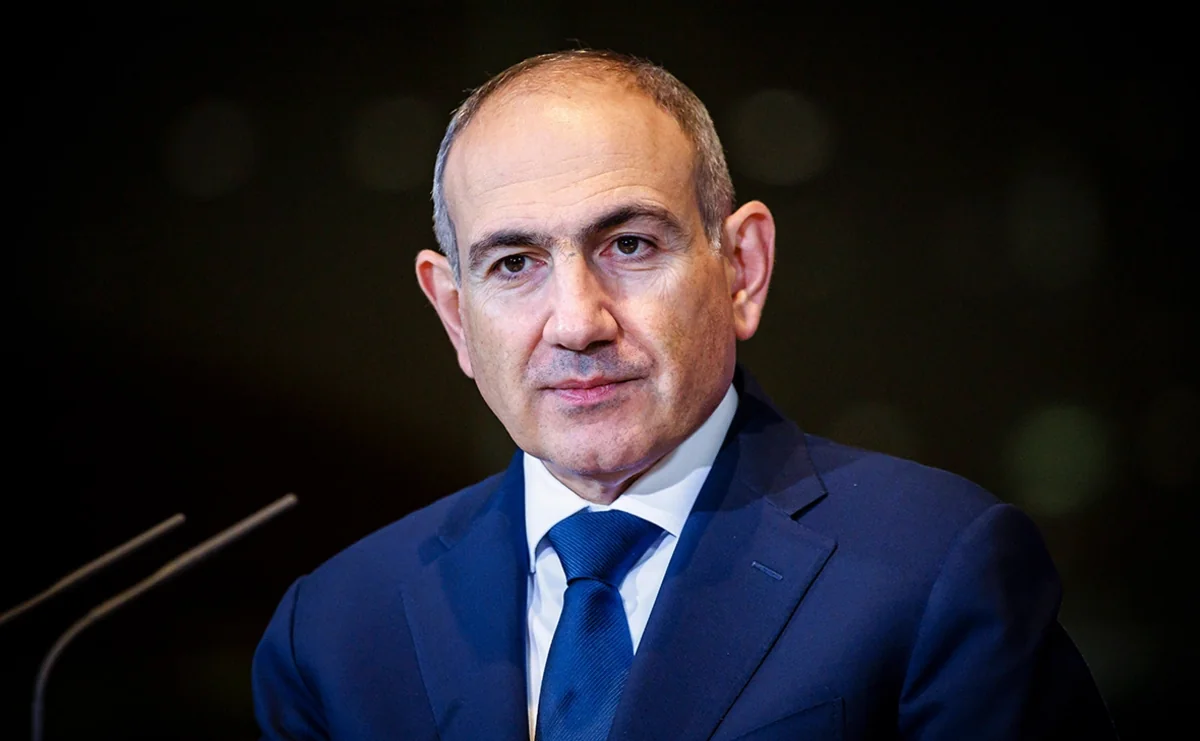
Judging by his statements, Pashinyan understands perfectly well the political price of the upcoming vote. Even before the draft was published, he proposed that the opposition support putting it to a referendum, and then effectively tied his own political future to the outcome of the vote. If citizens reject the new constitution, the prime minister promises to resign. If they support it, he has said he will not run for the post of head of government in the next elections.
Even more significant was his promise that, after the adoption of the new constitution, the peace agreement with Azerbaijan would be signed and ratified. Speaking in the National Assembly, Pashinyan said he was ready to stake all of his political capital, guaranteeing the establishment of an institutional and irreversible peace. In an address to citizens, he also spoke of his "moral, political, and human reliability."
Such a framing of the issue is noteworthy. The prime minister effectively acknowledges that constitutional reform is directly related to removing obstacles on the path to a peace agreement. In other words, an issue that the Armenian side previously tried to present exclusively as an internal matter of the state is now being linked by Pashinyan himself to the prospect of settling relations with Azerbaijan.
However, the head of government's political promises still have to be turned into a legal result. Moreover, the prime minister cannot single-handedly ensure the adoption of the draft. To put the constitution to a referendum, at least 70 votes of the deputies of the National Assembly are required. The ruling party does not have such a constitutional majority, so it will have to seek support from at least part of the opposition.
The opposition is against, and society is between two agendas
This is precisely where the most difficult part of the story begins. Armenian opposition forces have already made it clear that they do not intend to make Pashinyan's task easier. Their objections have a quite specific political orientation. The parliamentary faction Armenia rejected the prime minister's proposal to support the referendum, declaring: "We do not negotiate with terrorists." The faction's secretary, Artur Khachatryan, linked this position to the authorities' actions against opposition leaders.
Representatives of I Have Honor also spoke out against the draft. The faction's secretary, Tigran Abrahamyan, drew attention to the absence of a reference to the Declaration of Independence in the preamble and called this confirmation that the document had been imposed by Azerbaijan. Samvel Karapetyan's political force announced its intention to defend the current constitution.
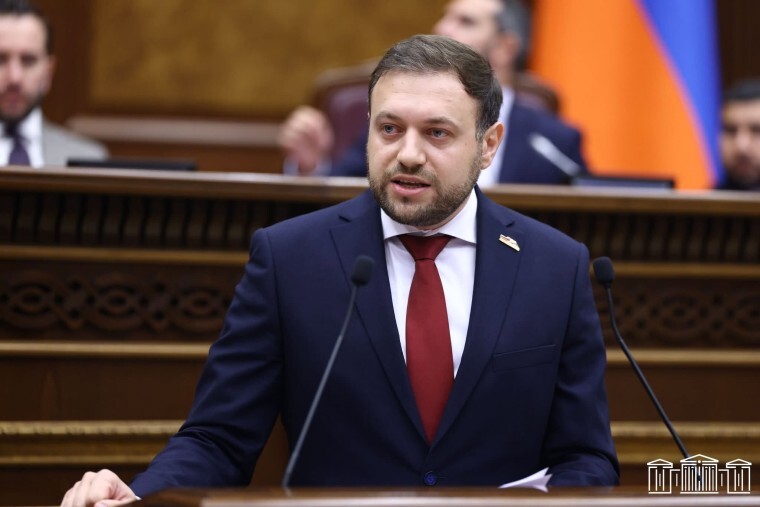
In essence, the Armenian opposition is trying to present the abandonment of the former constitutional formula as a concession to external pressure. In this logic, preserving the reference to the Declaration of Independence has been turned into almost a matter of national dignity, while the removal of a provision linked to territorial claims against Azerbaijan is presented as a defeat.
But such an interpretation substitutes the subject of the discussion. The point is not to deprive Armenia of the right to fantasize on the theme of "historical memory" or to independently determine the structure of its state. The point is the conformity of its basic law with internationally recognized borders and the elimination of legal formulations that contradict the declared course toward peaceful coexistence with its neighbors. Azerbaijan's demand in this respect is quite specific and clear: if Armenia truly intends to build relations with Azerbaijan on the principles of mutual recognition of territorial integrity and sovereignty, this must also be reflected in its legal system.
Pashinyan is trying to use the upcoming referendum as a tool of pressure on his opponents. He proposed that they support putting the draft to a vote, warning of the possibility of early elections and stating that otherwise the opposition forces risk losing their parliamentary representation. Such tactics show how closely constitutional reform has become intertwined with the struggle for power. For the prime minister, this is simultaneously a matter of the peace agenda and a test of his ability to retain the political initiative.
But this strategy has a vulnerability. If the referendum is perceived by a significant part of society as a vote to abandon national interests under pressure from Azerbaijan, Pashinyan's opponents may gain the opportunity to mobilize the protest electorate. But if the prime minister manages to convince citizens that the new constitution enshrines the reality of internationally recognized borders and opens the way to a lasting peace, it will be much harder for his opponents to explain why they oppose such a choice.
Peace is tested not by promises
For Baku, it is fundamentally important that the constitutional reform does not end with the publication of a document and loud statements. The draft must pass through all the prescribed procedures, and the new constitution must definitively enshrine the renunciation of the legal grounds for territorial claims. Only after that will it be possible to speak of this requirement having been fulfilled in full.
At the same time, two different issues should not be conflated. The signing of a peace agreement and the elimination of constitutional contradictions are interrelated but separate stages. Pashinyan promises that the adoption of the new basic law will lead to the signing and ratification of the agreement. However, the final result will depend not on his personal assurances, but on concrete decisions by both sides and the fulfillment of agreed-upon obligations.

Azerbaijan, as the initiator of the peace process, is of course sincerely interested in the final conclusion of peace — an agreement based on mutual recognition of sovereignty, territorial integrity, and the inviolability of international borders. For this, declarations about a new era and assurances of the irreversibility of peace are not enough. It is necessary to eliminate all provisions that preserve conflict logic in state policy and to enshrine the corresponding principles at the level of the basic law.
The publication of the draft constitution shows that Yerevan is compelled to move in this direction. But now it must pass the test of its own society, parliament, and political forces, for which the former territorial attitudes still remain a convenient instrument of mobilization. Pashinyan has staked his career, but the stakes are far higher than his personal political future. Whether the current peace process becomes truly irreversible or once again becomes bogged down in internal struggle and contradictory promises depends on whether Armenia manages to part once and for all with the constitutional legacy of the "former ones."