PACE publishes report on parliamentary elections in Armenia
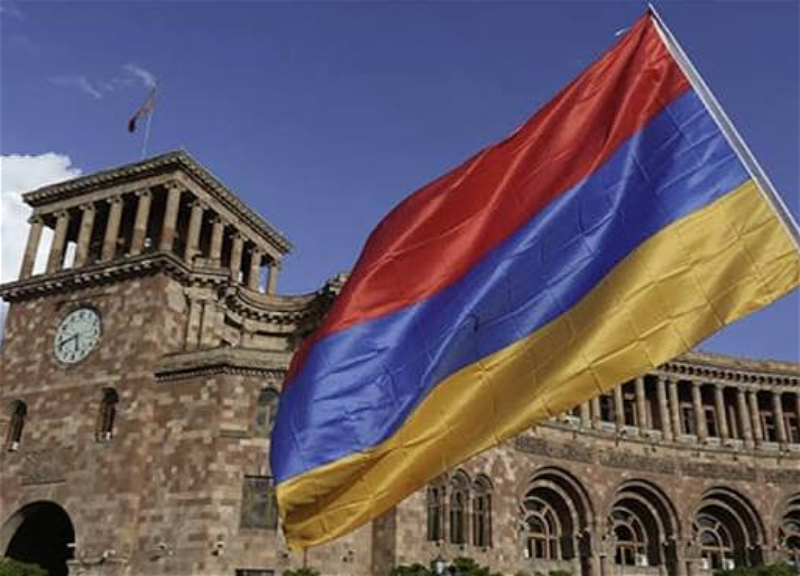
In its report on the June 7 parliamentary elections in Armenia, the Parliamentary Assembly of the Council of Europe (PACE) called the annulment of the voting results at three polling stations the most contentious issue, as a result of which the Prosperous Armenia party (of the arrested businessman and politician Gagik Tsarukyan) failed to enter the country's parliament.
The report notes that these were the first elections to the legislative body after Armenia's transition to a parliamentary form of government. They took place against the backdrop of large-scale geopolitical changes that followed the process of normalizing Armenia's relations with Azerbaijan, a deep crisis related to the displacement of the Armenian population from Karabakh, and a noticeable cooling of relations with Russia.
It is stated that the ruling Civil Contract party, led by Prime Minister Nikol Pashinyan, "sought to strengthen the pro-European course." Meanwhile, the opposition, including the Strong Armenia and Armenia blocs, as well as the Prosperous Armenia party, built their election programs on issues of security, sovereignty, and deepening cooperation with Russia and the Eurasian Economic Union.
"The situation inside the country was characterized by deep polarization of society and mass protests. Trust in state institutions and belief in the possibility of political change through elections had been undermined by years of confrontation, as well as by ongoing legal and organizational reforms. Additional tension was created by unusually sharp disagreements between the government and the leadership of the Armenian Apostolic Church, as well as by the initiation of criminal cases, including the application of pretrial detention as a measure of restraint against a number of prominent opposition and religious figures," the text says.
It is noted that many candidates reported direct threats against themselves or their supporters, both from state bodies and from foreign actors. Public sector employees reported that they were forced or pressured to attend Civil Contract rallies; observers also documented several cases of pressure by business managers on their employees to compel them to participate in opposition rallies.
The authors of the report drew attention to the fact that more than 200 criminal investigations were initiated into vote-buying and related electoral crimes, mainly directed against the opposition, which created the impression of selective law enforcement. The publication on the internet of private telephone conversations of candidates who had become targets of prosecution raised additional concerns about political surveillance.
"Recent state social programs introduced shortly before the elections, such as targeted debt write-offs and the easing of fines for traffic violations, were seen as de facto campaign tools, despite their technical compliance with electoral legislation," the text notes.
The report says that a number of expensive pre-election events (in particular, concerts) financed by major banks were perceived by the public as a form of indirect support for the ruling party. The use of state resources for campaign events, as well as the selective approach of supervisory bodies to assessing the social programs of the opposition and the government, contributed to the formation of perceptions of bias.
"In recent years, there has been an increase in the use of law enforcement agencies against opposition candidates and activists, mass criminal proceedings over vote-buying, almost all of which are directed against opposition or opposition-leaning business circles," the document says.
Its authors note that at the time the report was compiled there were no convictions in such cases, which raises questions in terms of compliance with due process and pre-election impact (on the opposition).
PACE drew attention to the fact that reports by international and local NGOs note a disproportionate number of cases of pretrial detention and the intimidation of protest leaders.
Public television and a number of key private broadcasters demonstrated clear bias in favor of the ruling party and covered the activities of leading opposition parties negatively, while other media invariably presented the government in a critical light.
External influence
The report notes that the elections were accompanied by "unprecedented and alarming external interference."
This refers primarily to Russia's embargo on agricultural products from Armenia, the possibility of a revision of the gas price, and harsh diplomatic rhetoric from Moscow — "in order to tilt the outcome of the elections in favor of opposition or anti-government parties."
At the same time, PACE also drew attention to the "open and demonstrative support for the ruling party from Western and European officials — including the president of the United States, the president of France, and high-ranking EU representatives."
The authors of the report describe them as predominantly declarative and lacking "a powerful element of coercion, as in the case of Russia's actions." However, they were also perceived as external interference.
The key contentious issue — the result of Prosperous Armenia
The report considers this to be the Central Electoral Commission's decision to declare invalid the voting results at a number of polling stations.
"According to some calculations, had these data been taken into account, the Prosperous Armenia party could have overcome the 4 percent threshold, obtained parliamentary mandates, and prevented the ruling party from obtaining a three-fifths majority of votes. The CEC justified its decision with a single phrase, stating that 'declaring the results at these polling stations invalid did not affect the overall outcome of the elections,' and refused to schedule a repeat vote. Such a justification of the decision appears extremely insufficient, especially given the significance of its consequences," the report says.
The authors draw attention to the fact that in his subsequent statement the chairman of the Central Electoral Commission referred to an urgent report by the Venice Commission concerning the annulment of election results by constitutional courts, which notes the potential risks of tactical voting when repeat elections are held.
"However, this report does not rule out the possibility of a repeat vote in cases where the disenfranchisement of voters could radically change the distribution of mandates and the level of representativeness of the parliament," the text notes.
In addition, the court proceedings concerning the exclusion of voting results at individual polling stations and the loss of mandates by the Prosperous Armenia party did not lead to the restoration of rights. This happened in part because of restrictions concerning the right to apply to the court and strict procedural deadlines.
Observers believe that there is a risk that a significant part of the electorate will be left without effective representation, given how close the result shown by the PAP is to the 4 percent electoral threshold.
Conclusions
Despite all the indicated and other shortcomings, the authors believe that on the whole "the election results indicate that the people of Armenia have chosen the pro-European path. Society demonstrated its commitment to democratic values and resilience, despite the identified shortcomings and unprecedented external pressure," the report says.
At the same time, PACE believes that the further development of democracy in Armenia requires urgent institutional and legal reforms, especially in such areas as campaign financing, the use of the state apparatus for party-political purposes, legal mechanisms for resolving electoral disputes, and resilience to external threats.
The parliamentary elections in Armenia were held on June 7, 2026. According to the official results, three political forces entered the National Assembly: the Civil Contract party (led by Nikol Pashinyan) received 49.7456% of the votes (726,819 votes), the Strong Armenia bloc — 23.2710% (340,060 votes), and the Armenia bloc — 9.9231% (144,983 votes).
Source: Sputnik Armenia