Offshore "righteous" anger: How Turkish business earns money in Israel while Turkish media "save" Baku
If one is to believe certain Turkish media outlets and hyperactive bloggers, the main threats to the world right now are the Azerbaijani school dress code and Baku's diplomacy.
True, the intensity of their "righteous anger" rises strictly on schedule: as soon as passions over Israel subside on social media, "hijab-fighting" Baku urgently comes to the rescue.
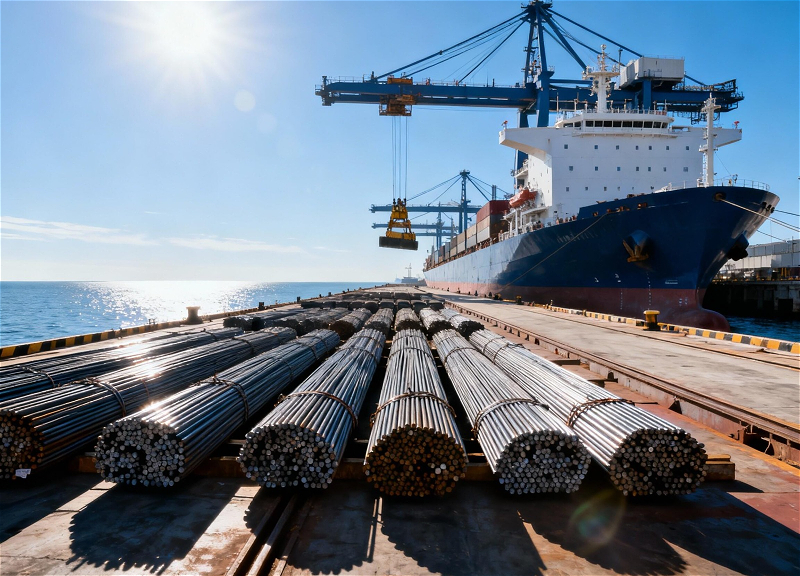
A remarkable concern for the morality of a neighboring country - especially against the backdrop of Turkish dry cargo ships under Panamanian flags quietly and with deep spiritual reverence continuing to carry cement and steel straight into Israeli ports.
Judging by the nature of the publications and the activity on social media, this is no longer a matter of isolated critical remarks. Azerbaijani subject matter is turning into a convenient instrument of pressure, while complex issues of domestic policy and international relations are presented in a simplified, emotionally charged form. Accusations, threats, and calls to "exert influence" on Baku are being employed. In such an atmosphere, facts often fade into the background: it is far more important to provoke outrage, cement the desired image, and portray Azerbaijan as a party that must supposedly justify itself to someone for its own political choices. No one, of course, tries to delve into legal wording or the meaning of secular education. It is much easier to declare an entire school regulation a "war against Islam" and, with a sense of duty fulfilled, demand "repentance" from Baku.
However, behind this bubbling "sanctity" lies the simplest media trick. When real arguments for political pressure are lacking, a tried-and-true emotional lever is pulled. Azerbaijan is assigned in advance the role of an eternal debtor who must endlessly justify itself before outside teachers for its own sovereignty, for its choices, and for its laws. Yet the lecturers have clearly forgotten to check their own logistics. It is far more convenient to pass moral verdicts on neighbors when no one asks questions about what is happening in your own ports.
Equilibristics with statistics: Where did the "Israeli code" disappear to?
The key to Turkish media's "righteous anger" lies not in the realm of religious ethics, but in the dry accounting of maritime freight transport. Official Ankara proudly reports a complete freeze of trade with Tel Aviv and "zero" indicators. It sounds uncompromising, beautiful, and very monumental - right up until international analytical systems and databases such as UN COMTRADE or Israel's Central Bureau of Statistics (CBS) get involved.
There, the figures live their own, rather eventful life. By some incredible means, Israeli importers continue to receive products of Turkish origin worth hundreds of millions - and by some estimates, billions - of dollars. So how does this magic of "zero exports" work? The answer lies in the banal clerical equilibristics of the Turkish Statistical Institute (TÜİK).
In order not to spoil the stern anti-Israeli rhetoric, statistics officials simply removed the official code "Israel" from the reports. Now those very same thousands of tons of rolled metal, rebar, and cement are elegantly processed either under the heading of "secret country" or written off as "humanitarian aid to Palestine."
The scale of this "aid" boggles the imagination. If TÜİK's paperwork is to be believed, the modest Palestinian territory today absorbs such volumes of heavy rolled steel, construction materials, and industrial raw materials as if it were rebuilding the entire infrastructure of the Middle East three times a day. In reality, it is perfectly clear to everyone that the Palestinian market is physically incapable of digesting such a gigantic flow of industrial imports. The dry cargo ships unload right on the Israeli shore, while the Palestinian theme serves merely as a convenient screen for preserving multimillion-dollar profits.
A flotilla of hypocrisy: Foreign flags for one's own income
Yet rewriting the figures in reports is only half the job. The situation at sea looks far more interesting. Having banned vessels under the Turkish national flag from entering Israeli ports, Turkish shipowners and logistics hubs did not halt the established conveyor belt for a single minute.
The maritime business displayed an astonishing flexibility of spirit. The enormous merchant fleet owned by Turkish companies or effectively managed from Turkish ports instantly changed its flags to Panamanian, Maltese, Liberian, or those of the Marshall Islands. The flag on the stern changed - the routes, owners, loading ports, and profit recipients remained absolutely the same.
Within this well-oiled scheme, a vessel moors in a Turkish port, fills its holds with metal or cement, raises the Liberian flag, and races at full steam to Haifa or Ashdod. Then, in the ports of third countries - be it Greece, Romania, Bulgaria, or Egypt - the bills of lading and accompanying papers are promptly rewritten through free economic zones. As a result, on paper the sending country is clean, trade has supposedly been "zeroed out," and the Israeli construction and military industry continues to receive Turkish raw materials without interruption.

And against this backdrop, certain Turkish commentators find within themselves the strength to be sincerely outraged by Azerbaijan's diplomatic independence! Those who see the speck in another's eye but refuse to see the log in their own send daily caravans of dry cargo ships with raw materials for Israeli industry under the flags of distant island offshore zones, and for some reason consider themselves entitled to lecture Baku. This is no longer even a double standard - it is the highest aerobatics of political sanctimony, where with one hand they stamp out curses and with the other accept bank transfers for shipped steel.
Secular sovereignty versus loudspeakers
The attempt to shift the focus from trade sleight of hand to Azerbaijani schools looks frankly helpless. In Baku, people remember their history perfectly well and do not need outside instructions on how to balance between traditions and a secular state system. The Azerbaijani model of coexistence between religion and the state has operated successfully throughout the country's entire period of sovereign development, and without prompts from social media or foreign media studios.
When a school dress code is turned into a pretext for whipping up hysteria and online threats, it becomes clear that the matter is not at all about protecting the rights of believers. The defense of convictions ends where banal inadequate interference in the internal affairs of a neighboring country begins. Azerbaijan has never built its domestic policy with an eye to whether it will please bloggers from neighboring countries, and it certainly does not intend to do so now. First and foremost, Baku pursues an honest and open policy, without concealing its foreign policy vectors and without adjusting its actions to momentary circumstances. In addition, Azerbaijan does not, on principle, trade away its positions behind the scenes while declaring the opposite from high rostrums. Finally, Baku always respects the sovereignty of its partners, but strictly puts a stop to any attempts to speak to it from a position of moral superiority.
Alliance means equality, not mentorship
Azerbaijan and Turkey are bound by deep, time-tested allied relations. The Shusha Declaration, large-scale economic integration, joint defense projects - this is a foundation that is beyond question. But an alliance is a two-way street based on mutual respect for sovereignty, not a hierarchical structure in which one side suddenly appropriates for itself the right to impose disciplinary penalties on the other.
Genuine friendship has nothing in common with a didactic tone and attempts to dump one's own internal contradictions onto a neighbor. Meanwhile, attempts by individual media outlets to turn allied ties into an instrument of pressure strike first and foremost at trust between the societies of the two countries.
Azerbaijan is not obliged to justify itself before those who confuse emotional slogans with real politics.
Before loudly demanding reports from Baku regarding its domestic or foreign agenda, the fighters for purity of intentions should learn to live up to their own loud statements. If trade with Israel has been halted - show not rewritten TÜİK reports, but empty berths. If the "zero level" is real - explain why Liberian and Panamanian dry cargo ships carrying Turkish cement continue to unload in Israeli ports. And as long as the answers to these questions are replaced by evasion and the search for "hijab bans" in Baku, these information attacks are worth precisely nothing.