Anachronism in international relations — the diagnosis given to Western institutions in Baku
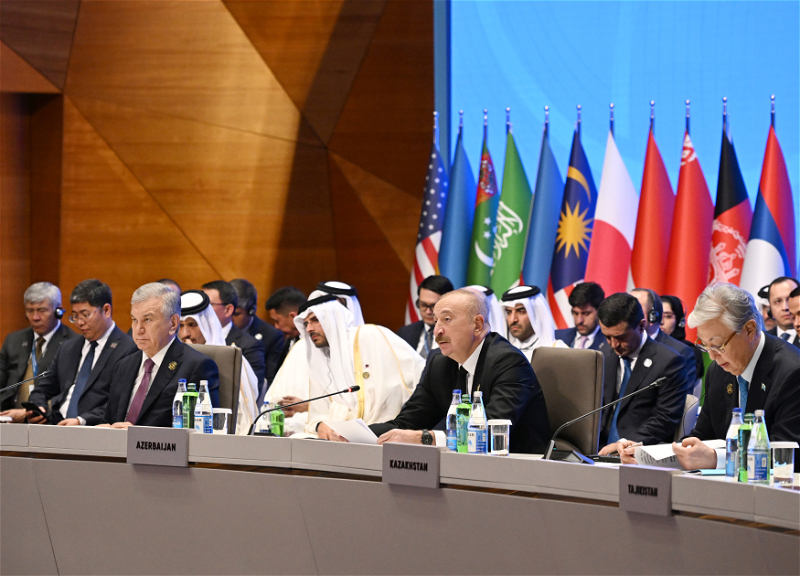
Anachronism is a word usually used to describe something hopelessly outdated.
And what if the subject is international organizations accustomed to lecturing states, discussing law and handing out political assessments, yet unable to secure the implementation of their own decisions? Then this can already be attributed to the question of professional competence.
At the 7th summit of the Conference on Interaction and Confidence Building Measures in Asia (CICA), held the day before in Baku, Azerbaijani President Ilham Aliyev gave an assessment that sounded far harsher than the usual diplomatic formulations. He called the European Parliament and the Council of Europe "two examples of anachronism and atavism in international relations," accusing these structures of having targeted Azerbaijan, which became a victim of aggression, for many years and of encouraging Armenia. No less critically, the head of state spoke about the OSCE Minsk Group, created to settle the Armenian-Azerbaijani conflict, but which never coped with its task.
Behind these assessments lies an experience that is hard to write off as ordinary diplomatic disagreements. For decades, Azerbaijan faced a situation in which international institutions demonstrated enviable activity in words, but did not deliver practical results. Decisions were adopted, negotiations continued, statements multiplied — and the occupation remained a reality. At a certain point, a natural question arises: if an organization is incapable of carrying out what it was created for, what exactly justifies its claim to special international authority?
Mediation without result
The history of the OSCE Minsk Group is perhaps the most vivid answer to this question. Created in 1992 to facilitate the settlement of the Armenian-Azerbaijani conflict, for decades it remained the central element of international mediation. Russia, the United States and France, represented in the co-chairmanship format, possessed significant political capabilities. It would seem that the combination of their influence should have helped advance toward peace.
However, the presence of influential mediators does not in itself guarantee a result. In Ilham Aliyev's assessment, the Minsk Group was "monopolized by the co-chairs, whose activities were aimed at freezing the conflict, which ultimately led to the paralysis of its work."

This is precisely the main paradox of many years of mediation. The negotiation process continued, but its very continuation gradually came to substitute for solving the problem. Meetings and diplomatic statements created the appearance of movement, while Azerbaijan's territorial integrity remained unrestored. The conflict seemingly turned into a permanent item on the international agenda, whose existence required new meetings, but not necessarily a final result.
Was it convenient for someone to preserve the existing situation? Such a question inevitably arises when assessing three decades of fruitless efforts. But to conclude that mediation failed, there is no need to attribute a single secret design to all the participants. It is enough to compare the stated goal with the outcome: the format was created for the sake of a settlement, yet it did not deliver one.
Azerbaijan ultimately restored its territorial integrity on its own. This became not merely a turning point in regional politics, but also a verdict on the former model of mediation. The Minsk Group ceased to exist, and with it the illusion that the endless prolongation of negotiations is by itself capable of leading to peace became a thing of the past.
When criticism becomes a one-sided instrument
The president spoke even more harshly about the European Parliament and the Council of Europe. In his assessment, these structures targeted Azerbaijan, although the country itself was a victim of aggression, and thereby encouraged Armenia. This is a claim that goes far beyond individual resolutions or statements by European politicians.
International institutions have the right to criticize states, demand compliance with obligations and point out violations. But their authority rests on consistency. If principles are proclaimed universal, they cannot turn into an instrument of selective political pressure — depending on who has become the object of criticism and how convenient that party is for external players.
For Azerbaijan, the problem is especially obvious. For decades, the country faced the consequences of occupation, the mass expulsion of the population from their native lands and the destruction of cities and villages.

At the same time, international decisions demanding the elimination of the conflict's consequences did not deliver a corresponding result. Against this backdrop, the constant claims against Baku from European structures inevitably raise the question of the criteria they are guided by. For instance, in the Russian-Ukrainian conflict these organizations from the outset, quite logically and fairly, took the side subjected to aggression. But what logic accommodates their support for Armenia during the years of its occupation of 20 percent of Azerbaijan's territory — this raises questions and casts doubt on their assessments.
The truth inconvenient for these institutions is that political authority cannot be secured by statements of commitment to values alone. If attention to violations turns out to be selective, and demands on some participants in international relations differ substantially from demands on others, trust gradually gives way to suspicion of double standards.
That is precisely why the words "anachronism" and "atavism" in this context do not sound like an abstract metaphor. They point to the discrepancy between the claims of international structures and their practical role. The world is changing, states independently determine their foreign policy priorities, regional balances are being rebuilt, while some institutions continue to act as if the former political order must be preserved regardless of the results of their own work.
The UN: resolutions that remained on paper for too long
The UN deserves a separate discussion. It is important to consider this topic more broadly than the criticism of the Security Council's inaction voiced at the summit. This is about a systemic problem of implementing international decisions.
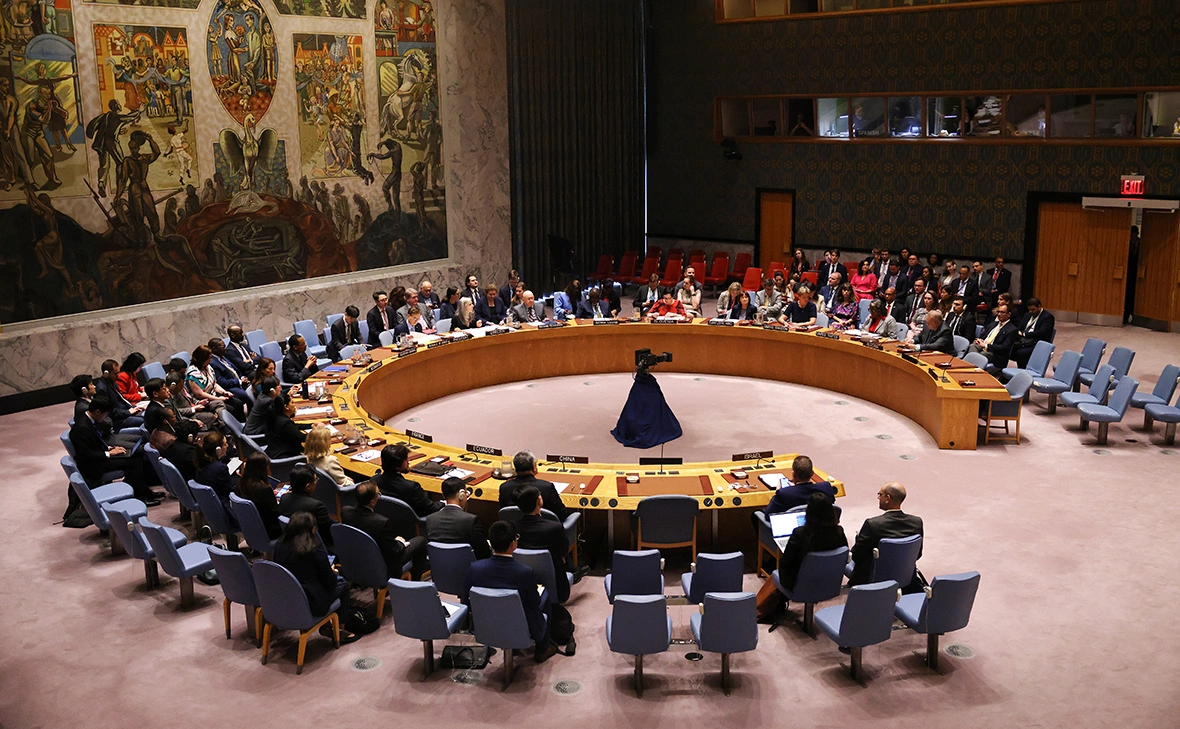
In 1993, the UN Security Council adopted four resolutions on the Armenian-Azerbaijani conflict. They demanded the immediate, complete and unconditional withdrawal of Armenian forces from the occupied territories of Azerbaijan. However, these decisions by themselves did not lead to the end of the occupation. For decades their demands remained unfulfilled.
Ilham Aliyev has repeatedly addressed this contradiction: "As is known, in some cases Security Council resolutions are implemented within several days, and perhaps several hours. However, when it comes to us, resolutions remain on paper for many long years."
This phrase contains the essence of Azerbaijan's grievance against the international system. The problem lay not in the absence of a legal basis, nor in the international community being unaware of the conflict. Four decisions of the UN's highest body existed, but it proved impossible to achieve their implementation. As a result, a chasm formed between proclaimed international law and the actual state of affairs, one that the long-running negotiation process was never able to bridge.
The president used the comparison with other UN Security Council decisions, which in certain cases were implemented within hours or days, precisely as an argument against a selective approach. At the same time, the speed of implementation depends on specific circumstances, the nature of the resolution and the political will of states. But this does not remove the main question: why did demands concerning the restoration of Azerbaijan's territorial integrity remain without practical result for so long?
The consequences of such inaction extend far beyond a single conflict. When a violating state (read: Armenia) sees that an international decision can be ignored for years, the very binding nature of such decisions is called into question. The violator gains an incentive to play for time, while the injured party has grounds to doubt the ability of international institutions to ensure justice.
Azerbaijan ultimately resolved this task on its own, restoring its territorial integrity and sovereignty. This does not mean that international law has lost its significance. On the contrary, the Azerbaijani experience shows how dangerous the gap is between recognized legal principles and the absence of mechanisms for their practical enforcement.
Authority is not granted indefinitely
The European Parliament, the Council of Europe, the OSCE Minsk Group and the UN system differ in their powers, structure and functions. Reducing them to a single category would be a simplification. However, Azerbaijan's experience makes it possible to pose a common question to them: in what way does an international institution confirm its own necessity if its decisions are aimed — in the case of our conflict — either at supporting the aggressor, or at the absence of any result at all, which also plays into the aggressor's hands?
The age of an organization by itself proves nothing. What makes it an anachronism is the inability to respond to the challenges of a changed world; what makes it an atavism is the habit of reproducing old approaches, even when their failure has already become obvious.
International institutions cannot demand unconditional trust merely on the grounds that they were created for the sake of peace, security or the protection of rights. Their authority must be confirmed by consistency, effectiveness and an equal attitude toward the obligations of states. Otherwise, loud declarations will increasingly resemble a ritual concealing the absence of real levers of influence.