From "football" to "academic": diplomatic déjà vu in relations between Ankara and Yerevan
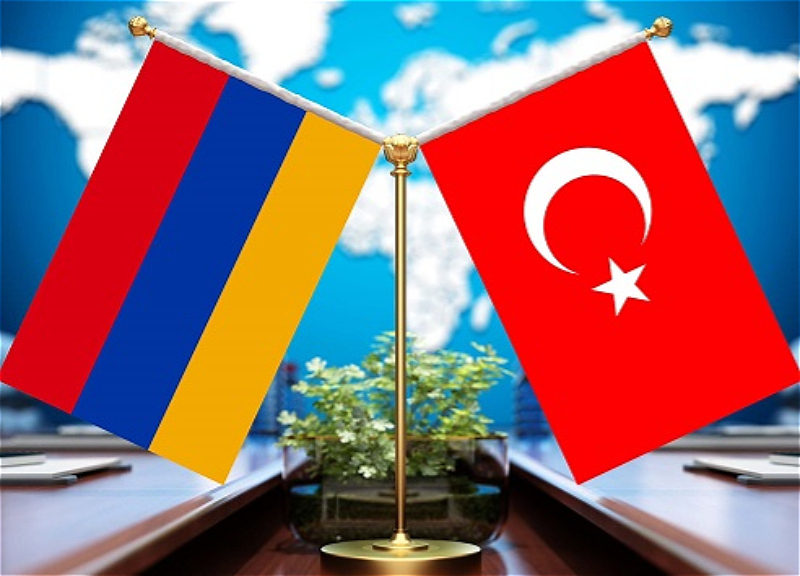
It seems that Turkish-Armenian relations are once again sinking into a state of illusory optimism.
The process of normalizing relations between Ankara and Yerevan, which for years had been in a state of unhurried consultations, has suddenly begun to take on emphatically rapid, almost demonstrative forms.
It is no longer merely a matter of protocol statements — the parties are approaching the drafting of the first bilateral documents, trying to make the process irreversible at the level of humanitarian and social ties.
Behind the humanitarian facade — a political "thaw"?
Deputy Speaker of the Armenian parliament Vahagn Aleksanyan stated on air on Armenia's Public Television that Yerevan and Ankara have reached an agreement on academic exchange: "The border is closed, but we have reached an agreement on academic exchange. Students from Armenia will travel to study in Turkey, and students from Turkey will come to study in Armenia," Armenian media quoted Aleksanyan as saying.
Incidentally, within Armenian society itself this news provoked a far from unambiguous reaction. The opposition Dashnaktsutyun party declared the inadmissibility of "turning young people into an instrument of foreign policy propaganda," demanding that the authorities disclose the details of the program, record the obligations of the Turkish side and "rule out any risks capable of jeopardizing historical memory or national interests."
Given the history of Turkish-Armenian relations, a broader question arises: where does academic cooperation end and politics begin? Although student exchange in itself is quite a common phenomenon, in conditions of incomplete diplomatic normalization even humanitarian initiatives acquire political significance. It would be naive to assume that Ankara did not take this into account.
Especially since the matter is not limited to student exchanges. These days, "on the table" are the restoration and launch of the Gyumri–Kars railway line and power transmission line, contacts between business communities, humanitarian initiatives and regular meetings of special representatives. All this is gradually forming the infrastructure of future bilateral relations — even before the border is fully opened.
In Yerevan they no longer conceal that such a scenario could materialize fairly soon. Armenian Foreign Minister Ararat Mirzoyan stated that the dialogue has reached such a degree of maturity that a decision on opening the border to passenger and freight traffic could be taken "at any moment." "We may wake up tomorrow and see that both sides are already talking about opening the border," he said.
Ankara responds with similar rhetoric. Turkey's Minister of Agriculture and Forestry Ibrahim Yumaklı stated yesterday in Yerevan that since March 2026 the normalization process has received new impetus, and that President Recep Tayyip Erdogan's contacts with Armenian Prime Minister Nikol Pashinyan are intended to bring it to a new level.
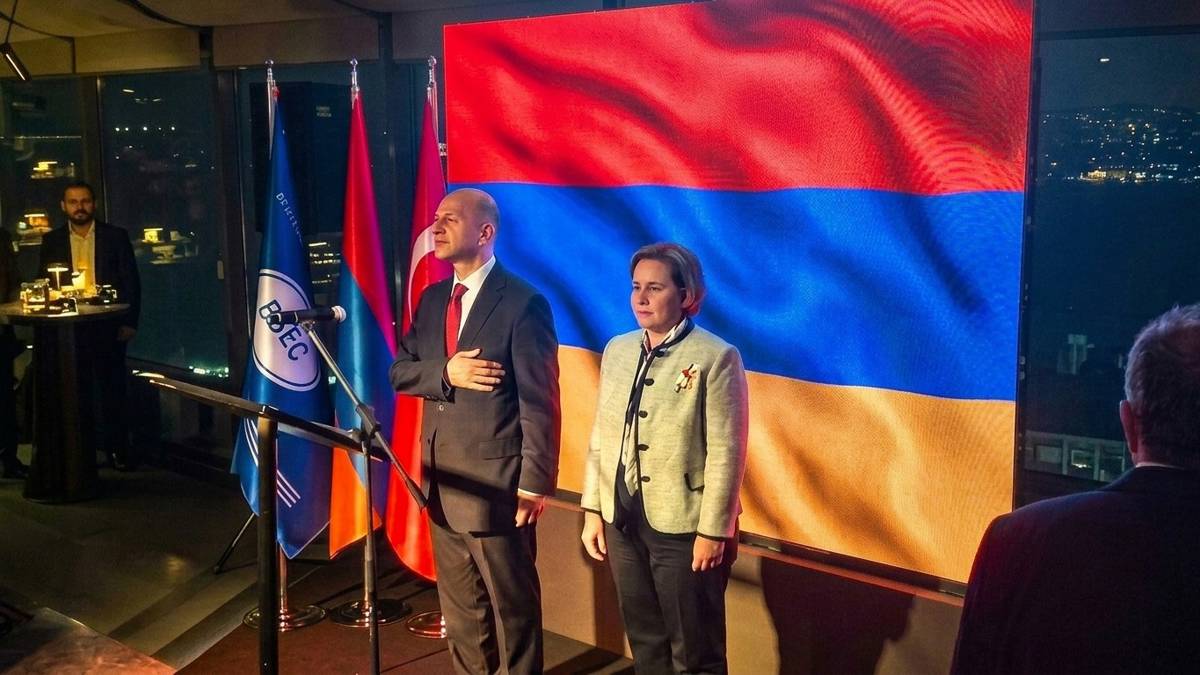
Symbolic gestures accompany practical steps. On October 14, an official reception was held in Istanbul on the occasion of the 35th anniversary of Armenia's independence. For the first time in nine years, the event was held at such a level: Turkey was represented by Deputy Foreign Minister Berris Ekinci. Among the participants were Ankara's special representative for the normalization of relations with Yerevan Serdar Kılıç, diplomats and representatives of the Armenian community. The Armenian side regarded the reception as a "symbol of rapprochement," and Ekinci confirmed Turkey's intention to "achieve full normalization," including in trade, transport and energy.
Lessons of history
Looking at this diplomatic activity, it is hard to shake off a persistent sense of déjà vu. The current "academic diplomacy" copies the algorithms of 2008 with surprising precision.
Back then, within the framework of the "Zero problems with neighbors" concept, Ankara and Yerevan already went through the stage of "football diplomacy." The exchange of visits by Presidents Abdullah Gül and Serzh Sargsyan to national team matches in Yerevan and Bursa culminated in 2009 in the signing of the "Zurich Protocols," which envisaged the opening of borders and the establishment of diplomatic relations.

However, that "diplomatic optimism" quickly collided with political reality. The initiative provoked loud protests in Turkey and serious dissatisfaction in Azerbaijan. Ankara's attempt to play a game bypassing the interests of its ally — Azerbaijan — ran up against Baku's firm and principled position. As a result, the ratification of the protocols was blocked, and the process itself collapsed.
Of course, the current situation is not an exact copy of the events of seventeen years ago. The region has changed, as have the conditions in which foreign policy decisions are made. But the lesson has remained the same: bilateral agreements, however promising they may seem, do not exist in a political vacuum.
Ankara's words about synchronizing the processes of Armenian-Turkish and Armenian-Azerbaijani normalization are once again beginning to diverge from its deeds. If Ankara is truly committed to its alliance with Azerbaijan and intends to promote sustainable peace in the region, then it should back up its declarations with concrete steps. Otherwise, all the talk about regional cooperation risks turning into a convenient formula behind which one of the participants pursues its own goals.
Academic diplomacy may prove to be no less attractive a signboard than football diplomacy. But signboards do not guarantee results. Before finally launching "academic diplomacy" and building illusions of an imminent opening of borders, Ankara would do well to reread recent history and recall how and why "football" diplomacy ended.