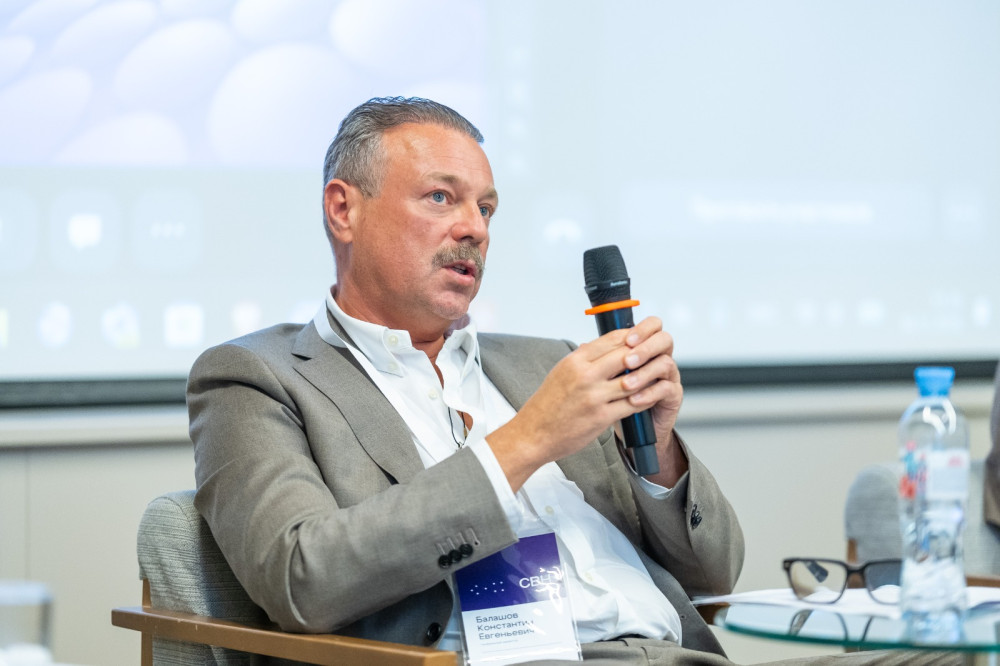
Caspian Business Hub: A New Model for International Business Cooperation in the Caspian Region - PHOTO

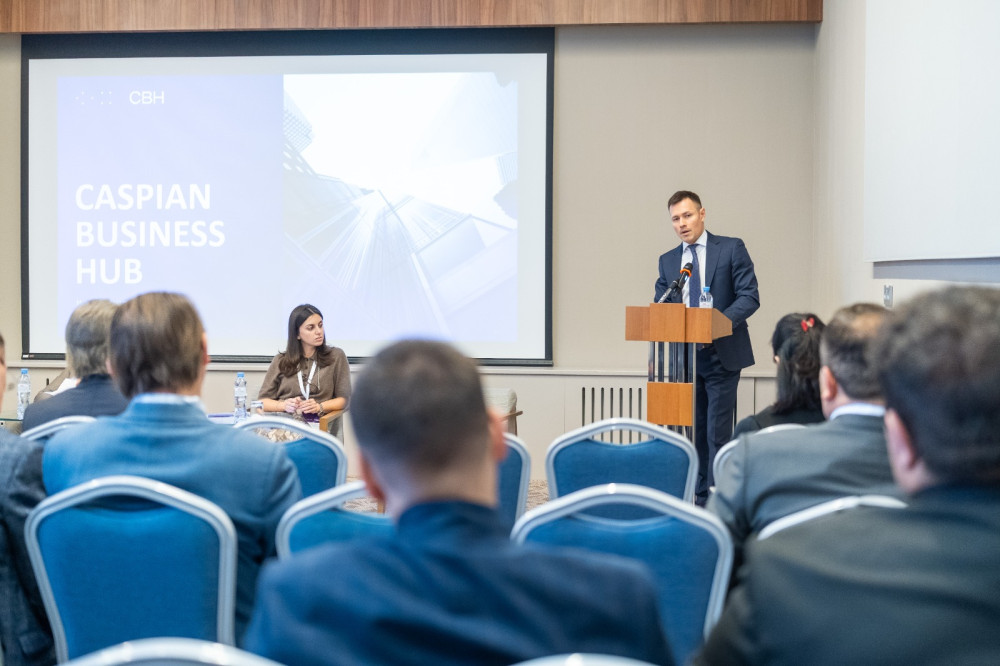
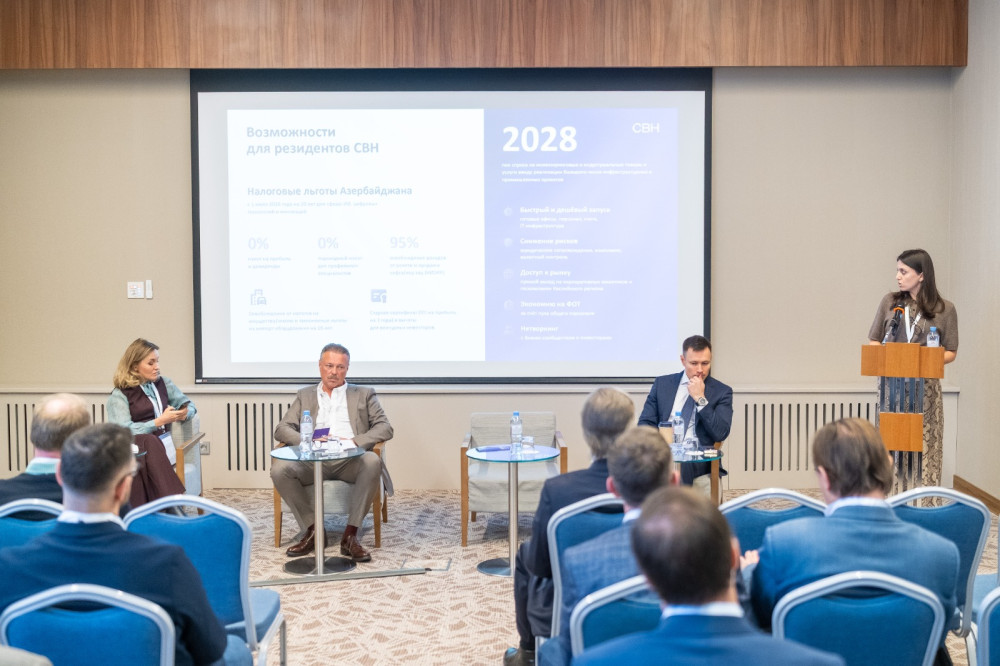
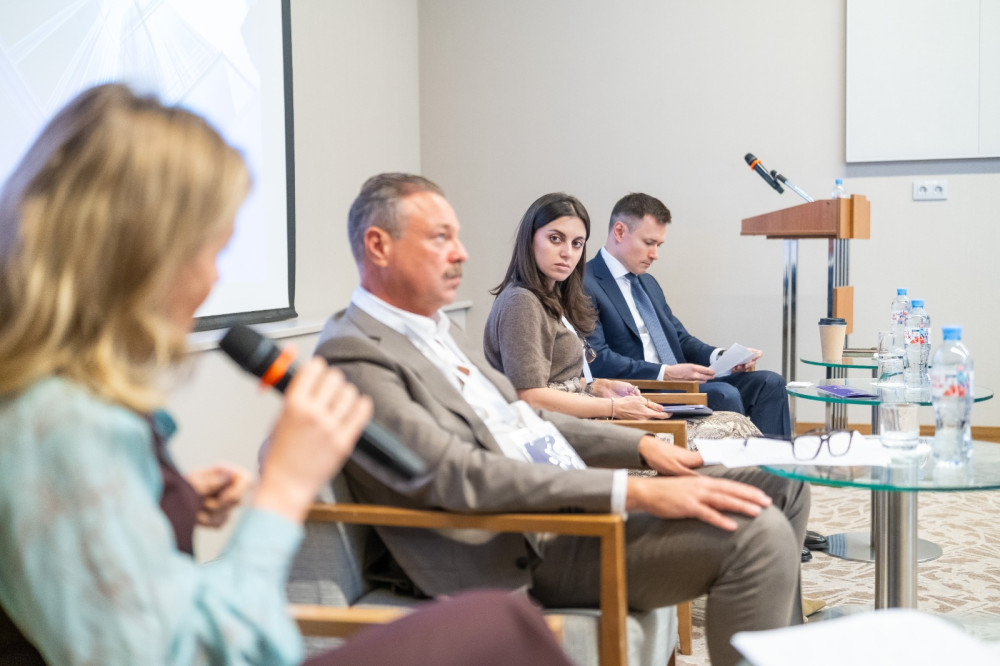
An official Demo Day for Caspian Business Hub (CBH), a new international project launched by tpe to foster business cooperation across the Caspian region, was held in Moscow with the support of the Azerbaijan-Russia Business Council.
The event brought together business leaders, investors and members of the professional business community interested in expanding their international presence, finding strategic partners and pursuing joint investment and industrial projects.
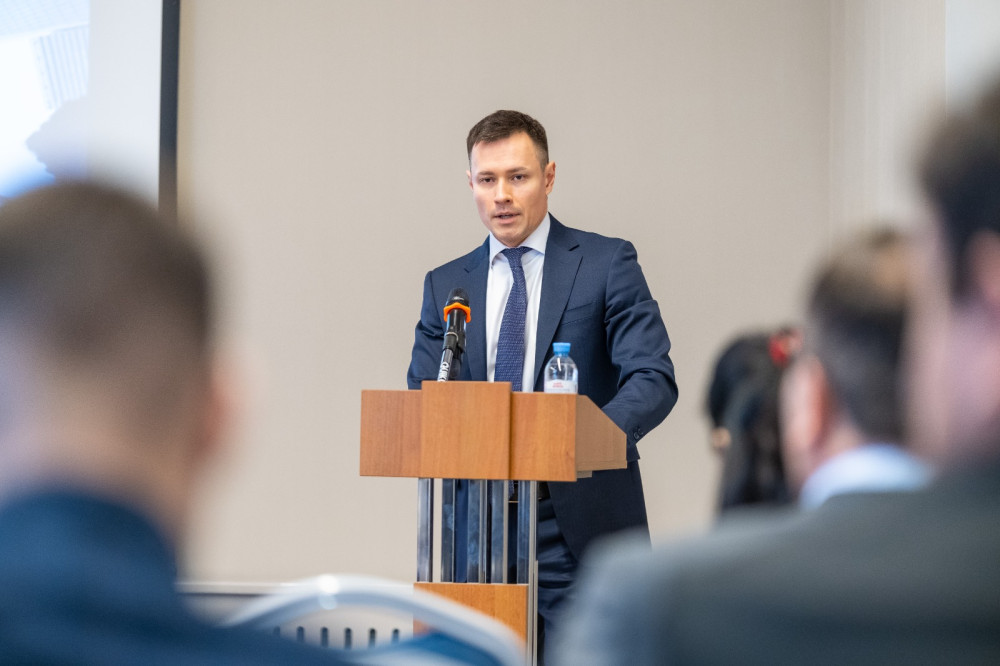
Stanislav Aleksandrov, Adviser to the Chairman of the Board of the Azerbaijan-Russia Business Council, delivered the opening remarks. He noted that Russian-Azerbaijani economic cooperation rests on a solid foundation and offers considerable scope for further growth. He also highlighted the consistent engagement at the highest governmental level as a key factor in shaping the strategic direction of cooperation between the two countries. According to Mr Aleksandrov, thanks to the attention paid by Ilham Aliyev, President of the Republic of Azerbaijan, and Vladimir Putin, President of the Russian Federation, the development of trade and economic ties, mutual investment and industrial cooperation remains high on the bilateral agenda.
At the end of 2025, trade turnover between Russia and Azerbaijan amounted to nearly USD 5 billion. Nevertheless, Stanislav Aleksandrov believes that economic cooperation between the two countries has significant potential for further expansion.
“Our task is to help move beyond individual commercial engagements towards systematic industrial and technological cooperation. We see considerable potential for strengthening business ties by involving small and medium-sized enterprises in this process. These companies often possess unique expertise, agility and innovative solutions, yet face certain challenges when entering new markets and taking part in major international projects. This is where initiatives such as Caspian Business Hub become particularly important,” Stanislav Aleksandrov said.
During the presentation, Narmin Jafarova, Head of Caspian Business Hub, explained that the project was conceived as a single point of entry for companies seeking to grow their businesses and implement projects in Azerbaijan and the wider Caspian region.
“Our goal is to bring together professional services, local expertise, business contacts and potential project opportunities within a single business environment. We want companies entering the region to gain more than a set of separate consulting services. We aim to provide access to an integrated system that helps them establish a market presence, find the right partners, build project teams and move forward with the practical implementation of their plans,” Narmin Jafarova said.
According to Ms Jafarova, what fundamentally sets the CBH model apart is its approach to organising cooperation among project stakeholders. The model is built around the early and parallel engagement of the expertise required, bringing key participants together in a shared working environment from the initial stages of an initiative.
“Key stakeholders and specialists join projects much earlier and work in parallel. Rather than passing tasks sequentially from one contractor to another, we create an environment of continuous collaboration, bringing all the necessary expertise together around a common goal. This is the cooperation infrastructure we aim to build through Caspian Business Hub,” the Head of CBH added.
A competitive product and an attractive price are important, but they are not the only prerequisites for successful entry into an international market. In practice, the delivery of an industrial project depends on a range of factors: the quality of preliminary preparation, an understanding of local market requirements, the ability to engage with design and engineering organisations, well-organised logistics and reliable contractors. A lack of local connections and expertise can become a significant barrier, even for companies with many years of industry experience.
For small and medium-sized industrial businesses, therefore, access to professional infrastructure in a new market—without having to build it from scratch—is particularly valuable.
One company taking this approach is VODEH, a Russian engineering business specialising in the development and implementation of solutions for industrial cooling and recirculating water supply systems. The company sees Azerbaijan as a promising direction for its international growth and plans to become a Caspian Business Hub resident in early 2027.
“We expect that joining the ecosystem will enable us to develop our business in Azerbaijan and the Caspian region in a structured and consistent way. At the initial stage, it is important for us to build a comprehensive understanding of the market and identify the most promising industries and potential areas for cooperation. With the support of the Caspian Business Hub team, we have already held several substantive meetings with prospective clients, including industrial companies and project engineering organisations interested in our solutions. Our next step is to discuss specific technical challenges and opportunities to participate in industrial projects. We can already see the value of professional support, which allows us to move forward in a more informed and consistent manner. We view this work as an investment in the quality of future solutions and in laying the foundations for a long-term presence in the market,” said Konstantin Balashov, CEO of VODEH.
While VODEH sees its participation in CBH as an opportunity to prepare systematically for entering a new market, another Russian company, KVOiT Group, which specialises in tank solutions and related infrastructure, shared its first-hand experience of working with the Hub.
According to Ilya Gorbunov, the company’s CEO, when exploring opportunities in Azerbaijan, it was essential for KVOiT Group to find not simply new business contacts, but a partner with a thorough understanding of the local market—one willing to engage with real business needs and help organise joint efforts.
“With the support of Caspian Business Hub, we found a partner in Azerbaijan. The Hub’s team helped us establish contact and build a working relationship. What began as an introduction developed into substantive discussions about potential cooperation and, subsequently, an agreement to work together. This cooperation has already led to a tangible next step: together with our Azerbaijani partner, we are participating in a tender for an industrial project. In this way, CBH helped us move from an initial introduction to a practical step towards joint cooperation. This, in my view, is the real value of an ecosystem of this kind: it bridges the gap between a potential opportunity and concrete joint action,” said Ilya Gorbunov, CEO of KVOiT Group.
The companies’ experience shows that successful entry into a new market depends not only on the prospect of securing contracts, but also on access to reliable information about the business environment, local expertise and professional networks. Working with local partners helps companies better understand client requirements, competitive conditions, the specifics of project delivery and established business practices. This is the kind of knowledge that cannot be fully obtained from public sources; it is built through direct professional engagement and working together.
Caspian Business Hub is designed to provide precisely this kind of environment for collaboration and support for international business development—from the first introduction to the market and the search for partners to the formation of project teams and the delivery of joint initiatives. Its overarching goal is to turn the potential of international cooperation into tangible economic and industrial outcomes for businesses across the Caspian region.