Dushbara, gurza, manti… The favorite dish of the East and its "journey" along the Great Silk Road - VIDEO
Jiaozi, shuijiao, baozi, wontons, mantou, manti, manta, chuchvara, pelmeni, dushbara, gurza, khinkali.
So many names – and so many varieties of a single dish.
The history of the remarkable transformation of these appetizing filled dough products begins in China, then passes through Central Asia, the South Caucasus and reaches Europe, Euronews writes.
Parallel to the history of the Great Silk Road runs what could be called the "Dumpling Belt" — a kind of culinary route along which these simple dishes traveled together with trade caravans, changing their names, shapes and cooking methods as they moved westward.
Tracing this path, one can see how the dough products familiar to everyone gradually changed as they crossed borders, regions and countries.
According to Chinese tradition, the story begins with the legendary physician Zhang Zhongjing, who almost two thousand years ago, during a harsh winter, prepared small pieces of dough filled with lamb, medicinal herbs and warming spices to help villagers suffering from frostbitten ears. He gave the products the shape of a human ear.
From Chinese steaming baskets, dumplings headed west together with traders, nomads and caravans.
As they traveled, they adapted to new climatic conditions, tastes and traditions. In Central Asia they turned into larger and heartier varieties — manti, which were generously filled with lamb and onion and cooked over steam.
Moving further along the ancient routes, the dish continued to change. In Uzbekistan the delicate chuchvara and manti appeared, in Kazakhstan its own varieties of manti became widespread, and in the South Caucasus such characteristic Azerbaijani dishes as dushbara and gurza took shape.
Each variety reflected local ingredients, cooking methods and the culinary traditions of its people. Thus a simple idea — to wrap a meat filling in thin dough — turned into a true gastronomic traveler, which every culture throughout history reinterpreted in its own way.
In the kitchens of Azerbaijan
In Azerbaijan, two unique varieties of dumplings — dushbara and gurza — occupy a special place. At first glance they may seem quite simple, however both dishes are renowned for requiring exceptional precision and skill.
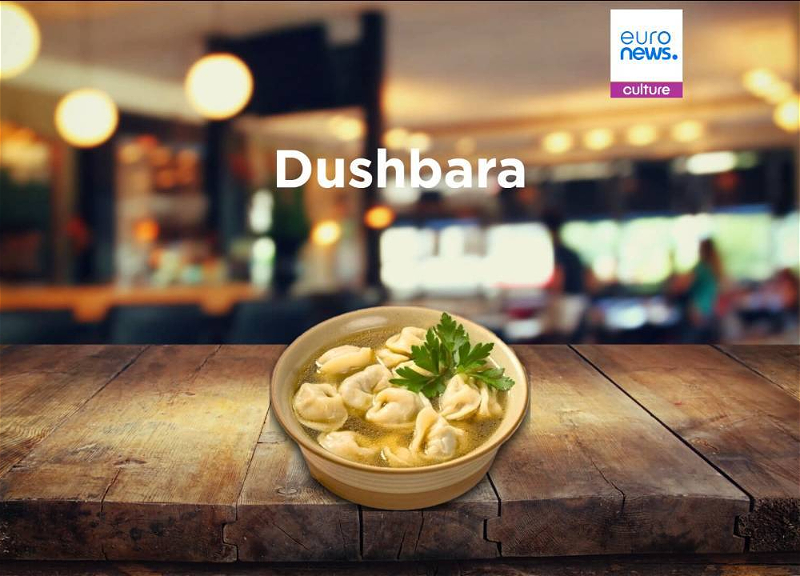
Dushbara are the famous miniature dumplings filled with minced lamb, which are served in a fragrant broth. They are so small that, according to tradition, several dozen such dumplings should fit on a single spoon.
Gurza, on the contrary, is slightly larger. It is pinched on top with a characteristic braided fold resembling a plait, similar to the gurza snake, which is where the name of the dish comes from.
Both dishes are made from simple ingredients — thin dough, seasoned with meat, sometimes herbs, in broth. However, their real value lies in the preparation technique and the patience required to shape them. This mastery is often passed down from generation to generation in Azerbaijani families.
Today modern chefs continue to carefully preserve these traditions, while at the same time bringing their own ideas into the recipes, thanks to which dushbara and gurza remain an inseparable part of Azerbaijan's culinary identity.
Source: Euronews