Indian expert exclusively for 1news.az — on mosque demolitions and the situation of minorities
The U.S. Commission on International Religious Freedom (USCIRF) has once again drawn attention to the situation of religious minorities in India, citing systematic, ongoing, and egregious violations of freedom of religion.
In its annual report for 2026, the commission recommended that the U.S. State Department designate India as a Country of Particular Concern (CPC).
USCIRF also called on Washington to consider imposing targeted sanctions against representatives of the Indian organization Rashtriya Swayamsevak Sangh (lit. “National Volunteer Union,” RSS) and Indian officials whom the commission links to violations of religious rights. Possible measures include asset freezes and visa restrictions.
The occasion for the commission's new statement was, in particular, the visit to the United States of RSS chief Mohan Bhagwat. USCIRF Chair Asif Mahmood stated that the situation with freedom of religion in India continues to deteriorate, and that violence and incitement to it are being used to persecute religious minorities. In his words, Washington should consider sanctions against RSS members and Indian officials involved in violations, including the possible revocation of Bhagwat's visa and a ban on his future entry into the United States.
The commission also asserts that under the government of Prime Minister Narendra Modi, led by the Bharatiya Janata Party (“Indian People's Party,” BJP), the country's policies are increasingly tied to the ideology of Hindutva, which USCIRF considers systematically discriminatory toward religious minorities. This concerns above all Muslims, Sikhs, and Christians, as well as Dalits (or “untouchables,” Hindus from the lowest castes — ed.).
The commission devotes separate attention to violence by vigilante groups, the persecution of representatives of minorities, restrictions on the activities of religious organizations, and so-called “bulldozer justice” — the practice of demolishing homes and other properties connected with members of minorities without full judicial proceedings. The report also speaks of cases of alleged transnational repression against Sikh activists.
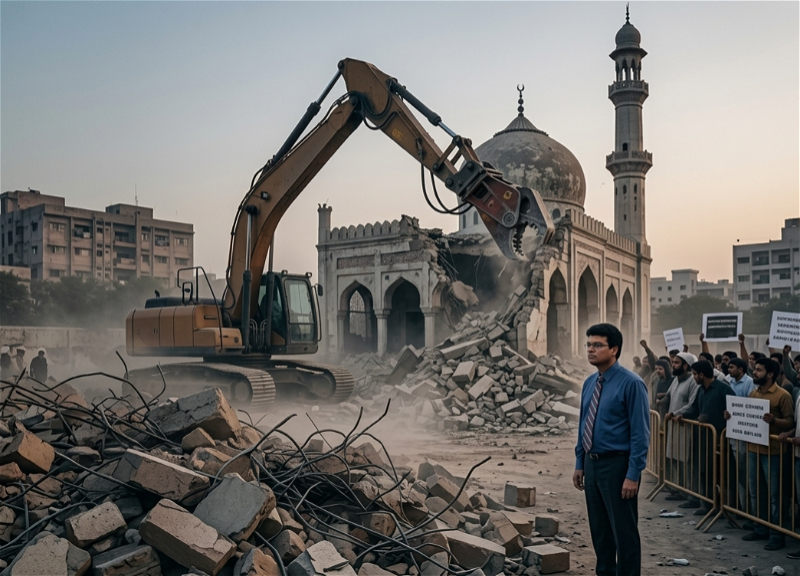
One of the most visible manifestations of this problem remains the disputes surrounding Islamic religious sites. In early September of this year, in the city of Saharanpur in the state of Uttar Pradesh, a historic mosque located on the grounds of the collectorate was demolished. The Indian authorities explained the decision by saying that the structure was an illegal construction on state land. Representatives of the mosque, for their part, stated that the court ruling provided for an eviction procedure, not the demolition of the building, and asserted that the mosque had existed for around 150 years and that the plot was registered to the Muslim community.
This is not the only such case. In January 2024, the Akhoondji Mosque was demolished in New Delhi; according to media reports, it was believed to have been built more than 600 years ago. The authorities called the site an illegal structure on the territory of a forest reserve. Representatives of the mosque stated that they had received no prior notice of the demolition, and that graves located nearby were destroyed along with the mosque.
Such cases are becoming part of a broader discussion about how consistently the Indian authorities apply legislation with regard to religious structures, and whether the campaign against illegal construction is truly conducted in the same way toward representatives of different faiths.
Indian expert, research fellow at the Center for Central Eurasian Studies of the University of Mumbai and president of the ALFAAZ cultural and educational society Shoaib Khan told 1news.az more about what is happening.
The expert believes that the concerns of international organizations are well founded.
“The report contains a recommendation for the U.S. government to impose targeted sanctions, including asset freezes and entry bans, against the Rashtriya Swayamsevak Sangh (RSS) and India's Research and Analysis Wing (R&AW) in connection with alleged serious violations of freedom of religion.
In 2025, the RSS marked its centenary. In connection with this, the organization announced a global expansion of its activities. However, the RSS's global presence is already very extensive today. The RSS is the largest, wealthiest, and most successful far-right network in history. Through the strategic creation of 2,831 intermediary organizations in more than 40 countries, it has contributed to the normalization of far-right mobilization.
The “Hindutva” ideology adhered to by the RSS presents Hindus as a superior group, while constructing Muslims as “outsiders” and “others.” The Hindu nationalist organization Vishva Hindu Parishad (“World Hindu Council,” VHP) is part of the Sangh Parivar (“Family of the Union”) — a collective name for Hindu nationalist organizations connected with the RSS. In 1992, militants led by the VHP destroyed the 16th-century Babri Mosque in the northern city of Ayodhya, claiming that the Hindu god Rama was born on that site. The unrest that followed the destruction of the mosque led to the deaths of around 2,000 people, predominantly Muslims. In 2022, when Narendra Modi held the post of chief minister of the state of Gujarat, the VHP again organized violence, as a result of which around 1,000 people died, also predominantly Muslims.
Hindu nationalist groups that enjoy impunity from the state for inciting violence against Muslims and Christians include members of organizations connected with the RSS,” Shoaib Khan stated.
Speaking about the current situation of minorities, the expert emphasizes that the problem extends far beyond individual incidents.
“The human rights situation of religious and other marginalized minorities in India, including Muslims, Sikhs, Christians, and Dalits (Hindus from the lowest castes — ed.), remains the subject of close attention both within the country and internationally. Numerous independent human rights organizations and international bodies have expressed serious concern about systemic discrimination, legislative measures, and physical violence directed against these groups,” he noted.
At the same time, Shoaib Khan believes, the Indian authorities do not always effectively prevent, investigate, and punish those responsible for attacks on representatives of minorities.
He separately speaks about violence by vigilante groups, carried out under the pretext of enforcing strict Indian anti-conversion laws, which predominantly affect Christians and representatives of other religious minorities. In the expert's opinion, such norms predominantly affect Christians and other religious minorities and create additional conditions for pressure on them.
“The authorities have also carried out forced expulsions of Muslim citizens from the state of Assam under the National Register of Citizens (NRC) and the Citizenship Amendment Act (CAA). In addition, under the BJP government, the space for civil society activity has shrunk. The proposed amendments to the Foreign Contribution Regulation Act (FCRA) pose a threat to the ability of religious organizations to continue their activities in the country.
India's religious diversity is under threat due to the spread of religious intolerance by non-state actors acting with impunity,” he emphasized.
The expert links the growing tension to political changes after the BJP came to power in 2014. In his words, over the past decade there has been a noticeable shift in India's public discourse, accompanied by growing hostility toward religious minorities.
“The RSS, the ideological wing of the BJP promoting a Hindu nationalist agenda, seeks to polarize Indian society, consistently dividing communities along religious lines. This causes the country's religious minorities to feel concern about their future,” Shoaib Khan believes.
He separately dwelt on the demolitions of mosques and other Islamic sites. In his words, such decisions may indeed be connected with legal disputes over land and illegal construction, but, in his opinion, one cannot limit oneself to this explanation alone.
“In India, disputes around the demolition of mosques and other Islamic structures have attracted significant attention both within the country and internationally,” the expert noted.
He divides such cases into two main categories: administrative and legal measures against illegal land seizure or the implementation of infrastructure projects, and disputes around historic sites, which are considered within the framework of civil court proceedings.
At the same time, Shoaib Khan asserts that there is a problem of selectivity in the application of such measures.
“Campaigns against illegal land seizure are often conducted selectively: neighborhoods or structures connected with religious minorities come under attack, while similar illegal buildings elsewhere are left unattended,” he stated.
As an argument, the expert cites data according to which, in the period from June 2024 to February 2026, 20 cases of demolition of properties connected with Muslims were recorded in India, and in 11 of them the grounds were complaints or public interest litigation with claims of “illegal construction.” He also refers to data from the Association for Protection of Civil Rights (APCR), according to which in 2025 alone, 69 Islamic religious sites were bulldozed or declared illegal.
Particular concern, in the expert's words, is caused by the absence of uniform standards.
“Human rights organizations are expressing alarm over the acceleration of mosque demolitions in India. Within five days, three mosques were demolished under various pretexts. Among them were two mosques in the northern state of Uttar Pradesh — Masjid Mustafa Qadri in Sambhal and the Shahid Azgaib Mosque in Varanasi — as well as the Noorani Mosque in Jaipur, state of Rajasthan.
In the case of the Shahid Azgaib Mosque in Varanasi, it had been operating for the past 200 years, and there had been no complaints about alleged illegal occupation of others' land. The authorities do not apply the same standards when considering issues connected with mosques and Hindu temples: many Hindu temples are built on roads, sidewalks, and in public parks, and are subsequently expanded into larger structures. Yet they are not demolished,” Shoaib Khan asserts.
Speaking about the reaction of the Muslim community, the expert notes that the problem is perceived not only as a question of property or urban planning legislation. The demolitions of homes, mosques, madrasas, and other sites are perceived by part of society as a manifestation of a broader policy of pressure.
“Many foreign governments and international organizations have condemned the BJP's discrimination against Muslims, highlighting in particular the situation in Kashmir, the Citizenship Amendment Act, and anti-Muslim rhetoric.
Critics assert that BJP representatives have systematically ignored cases of recent violence against Muslims. ‘During Modi's first five-year term, attacks on Muslims occurred constantly, which gave the community a feeling of being under siege,' says Ghazala Jamil, associate professor at Jawaharlal Nehru University in New Delhi. ‘The impression was created that if you are a Muslim, you can be attacked anywhere and at any time.' The spread of hate speech and disinformation on the internet has also contributed to violence against Muslims.
The inability of law enforcement agencies and the judicial system to respond effectively to violence against Muslims further intensifies the feeling of social insecurity. As a result, Muslims in India face economic and social isolation, deaths and injuries, and the destruction of property.
The growth of polarization in India has created an environment in which Muslims often become targets of discrimination and hatred. Recently, Karnataka High Court judge Srishananda found himself at the center of attention after calling one of the districts of Bangalore “Pakistan” solely because it is inhabited by a predominantly Muslim population.
Such statements, especially coming from a person holding a constitutional office, raise serious questions regarding the impartiality of the judicial system. A judge who has a biased attitude toward a particular community cannot be considered capable of ensuring fair justice, especially when representatives of that community face legal problems. This not only undermines trust in the judicial system but also jeopardizes its authority and integrity,” Shoaib Khan emphasized.
In this connection, it is worth noting that, according to USCIRF data, about 70% of prisoners in India are awaiting a court verdict. Muslims and Sikhs are represented among them disproportionately to their share of the population. The situation is aggravated by the high burden on the courts: tens of millions of cases remain unheard.
Shoaib Khan also refers to the position of the international non-governmental organization Amnesty International (also known as “International Amnesty”), which previously called on the Indian authorities to halt the “illegal” demolitions of Muslim-owned property, calling them a form of extrajudicial punishment.
“Having called these demolitions a form of extrajudicial punishment, the human rights organization demanded adequate compensation for all those affected, since as a result of the demolitions hundreds of people, most of them Muslims, were left without housing and livelihoods. Major Muslim organizations of India, such as the All India Muslim Personal Law Board, have also expressed serious concern over the recent wave of demolitions that has affected mosques, madrasas, dargahs, and residential homes.
The Rampur Development Authority ordered the demolition of 38 of the 40 buildings of Mohammad Ali Jauhar University in Rampur, state of Uttar Pradesh, citing the absence of approved construction plans. Students, graduates, and various political figures held protests and criticized the administration's actions.
The American federal commission, citing data from local NGOs, stated that in 2023 alone, 687 cases of violence against Christians were recorded, who ‘continued to be subjected to detention under various state anti-conversion laws.' Local authorities in India from time to time demolish churches, declaring them unauthorized or illegal structures, which leads to acute conflicts between local authorities and Christian communities. According to members of one of the churches, an independent church in the western Indian state of Maharashtra was demolished during a nighttime operation by municipal authorities, despite a court injunction in force and just a few hours before the hearing of the case by a local court on September 7,” the expert told us.
In Shoaib Khan's opinion, such actions intensify the feeling of insecurity among minorities.
At the same time, the problem, as the expert emphasizes, concerns not only Muslims. According to the data he cites, Christian communities also face attacks, detentions, and conflicts with local authorities over religious sites.
“Despite the existence of secular constitutional mechanisms, problems persist, including in connection with political movements that may give preference to one religion over others, which leads to rising tensions. The strengthening of religious nationalism has sparked discussions about the true nature of India's secular order and how to effectively ensure a balance between the rights of the majority and minorities,” the expert stated.
Under these conditions, Shoaib Khan believes, India needs to take concrete steps to prove to the international community its commitment to the principle of equality of religious communities.
First and foremost, this should involve the uniform application of laws against incitement to hatred, regardless of the political or religious affiliation of the offender. The expert also considers it necessary to review, at the state level, laws restricting conversion to another religion, as well as certain provisions of migration and civil legislation, for their compliance with international human rights standards.
“India should demonstrate the existing constitutional guarantees of diversity, key Supreme Court decisions protecting the rights of minorities, and the country's multi-faith cultural heritage,” Shoaib Khan noted.
In his opinion, the Indian authorities must also give substantive responses to the conclusions of international organizations and take corrective measures where violations have indeed been identified.
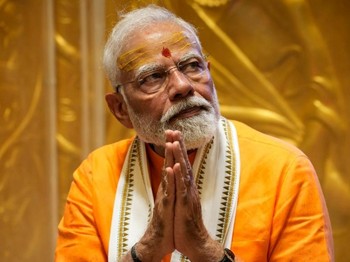
“Since the last review of the human rights situation in 2017, India has experienced a serious regression in the sphere of human rights under the government of Prime Minister Narendra Modi, led by the Hindu nationalist BJP party. The government has increased pressure on independent and democratic institutions and uses harsh anti-terrorism and national security laws to persecute and pressure human rights defenders, journalists, students, government critics, and participants in peaceful protests. The number of attacks, discrimination, and incitement to violence against religious minorities is growing. The traditionally marginalized communities of Dalits (Hindus from the lowest castes — ed.) and Adivasis (indigenous tribal communities — ed.) are deprived of proper judicial protection and equal protection from the state.
At least 21 countries have called on India to improve the protection of freedom of religion and the rights of religious minorities; several states have expressed concern over the growth of violence and hate speech, as well as the government's adoption of discriminatory measures such as “anti-conversion” laws.
The Indian government needs to respond to the concerns voiced by other member states within the framework of the Universal Periodic Review (UPR), which are widely shared by human rights organizations and a number of UN bodies, and to take immediate steps to correct the situation and protect the rights and dignity of all people, as human rights organizations demand,” our expert concluded.
Thus, the dispute around the situation of minorities in India extends far beyond individual conflicts between religious communities. The USCIRF report, the cases of demolition of Islamic sites, and expert assessments point to a broader question — whether the Indian state is capable of ensuring equal protection of citizens regardless of their religion, origin, or belonging to a socially vulnerable group.