BRICS in New Delhi: from expansion to practical cooperation
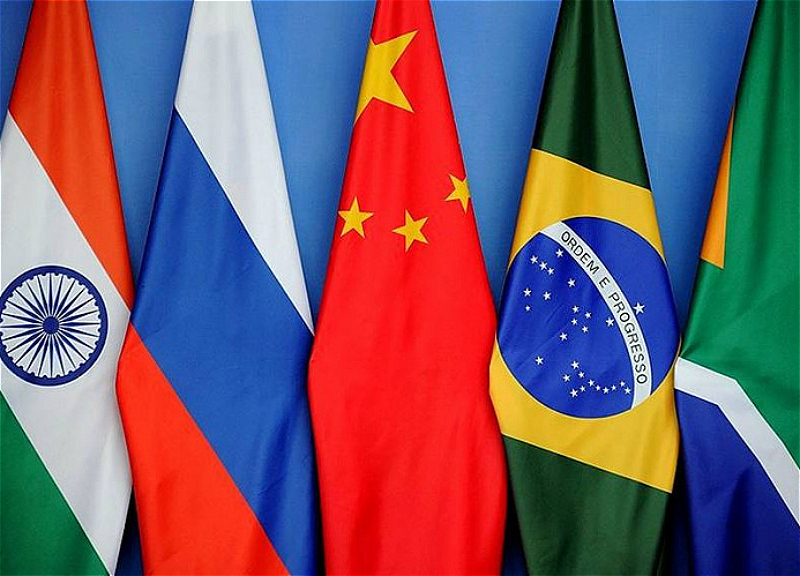
On September 12, the first day of the 18th BRICS summit concluded in New Delhi. The meeting is taking place under India's chairmanship and in the year of the association's 20th anniversary. The main outcome of the first day was the adoption of the New Delhi Declaration, in which the participants set out common positions on the reform of global governance, international trade, sanctions, financial cooperation and the use of national currencies.
Against the backdrop of persistent tensions in world politics, the summit became a test for the expanded BRICS of its ability to work out joint decisions. In the declaration, the countries reaffirmed their commitment to the principles of sovereign equality, mutual respect, solidarity, democracy, openness, inclusiveness, cooperation and consensus, and also advocated broader representation of the countries of the Global South in international institutions.
Over two decades, BRICS has noticeably changed its position on the world stage. As Russian expert Andrei Gorokhov, candidate of political sciences and editor-in-chief of the journal "Russian Political Science," noted in a comment to 1news.az, during this time the association has traveled a path from a discussion club to an independent macroeconomic center of power.
"BRICS today is not an ideological union, but an architecture of common interests and a philosophy of development in the conditions of a multipolar world: settlements in national currencies, joint infrastructure projects, and most importantly — the absence of sanctions diktat.
This is precisely the essence of the appeal of BRICS for the Global South. Against the backdrop of tariff wars, the rupture of logistics chains and the growing fragmentation of the world economy, BRICS offers what the West has long failed to provide — cooperation without preliminary political conditions and diktat. For most countries of the multipolar world, especially for the countries of the Global South, this is today the only real alternative," the expert noted.
One of the central areas of focus was the reform of the global governance system. Indian Prime Minister Narendra Modi called for not postponing the reform of the UN Security Council and proposed preparing ten proposals that should form the basis of a road map for BRICS reforms.
"The current structure of global governance resembles a pyramid: power and decision-making are concentrated at the top, while the lower levels are occupied by countries that are affected by these decisions but cannot influence their formulation," Modi stated.
According to him, this model must be transformed into a "platform of partnership," where the countries of the Global South will be able not only to implement already existing rules, but also to participate in shaping them. The Indian prime minister also paid special attention to artificial intelligence, cyberspace, space, biotechnology and other critically important technologies.
It was precisely the expansion of the role of the Global South that became one of the leitmotifs of the first day. At the same time, New Delhi seeks to preserve BRICS as a platform for interaction, rather than turn it into a military-political or anti-Western bloc.
As Indian expert Khwaja Danish Hameed, Assistant Professor of Modern History & International Relations of Department of Humanities and Social Sciences at Integral University, Lucknow (India), noted in a comment to 1news.az, India views the association precisely in this light:
"India sees BRICS as a platform for strategic autonomy and a stronger Global South voice, not an anti-Western bloc. Its key priorities are economic cooperation, reform of global institutions, technology, energy and food security, and counter-terrorism."
De-dollarization: this is not about a single currency
In the economic part of the declaration, further work on cross-border payments and settlements in national currencies holds particular significance. The BRICS countries confirmed their intention to study the compatibility of payment channels and financial information systems, and the New Development Bank was called upon to expand financing in national currencies.
At the same time, this is not about creating a single BRICS currency. India has previously consistently opposed such a model, preferring a gradual diversification of settlements.
Thus, de-dollarization in the current BRICS format implies above all a reduction of dependence on the dollar, and not its one-time displacement from the world economy.
"De-dollarization is not necessarily about destroying the dollar; it is about reducing dependence on it. For emerging powers, particularly within BRICS, it represents an attempt to create greater financial and strategic autonomy in an increasingly multipolar world" the Indian expert explained.
The Russian side places emphasis in this area on the creation of independent financial infrastructure. Russian President Vladimir Putin recalled the Russian proposals on independent payment and settlement-depository infrastructure, an investment platform, a reinsurance mechanism and a BRICS grain exchange.
Russian expert, political scientist and lecturer at the Faculty of Social Sciences and Mass Communications of the Financial University under the Government of the Russian Federation Farhad Ibragimov noted that the current summit differs from previous ones in its transition from the simple expansion of the association to an attempt to build practical mechanisms of cooperation.
"The main significance of the current summit lies in the fact that multipolarity is finally ceasing to be a theoretical construct and is turning into political and economic practice. The BRICS countries are already discussing not only the general principles of the new world order, but also quite concrete mechanisms, namely the expansion of settlements in national currencies, the interfacing of payment systems, an increase in financing in local currencies through the New Development Bank, and the strengthening of the resilience of trade and energy chains," he noted.
Trade, sanctions and the global economy
Another important provision of the New Delhi Declaration was the call to lift unilateral and secondary sanctions, which, in the participants' view, contradict international law and the UN Charter. At the same time, the countries spoke out against the growth of unilateral tariff and non-tariff measures capable of disrupting world trade and global supply chains.
The document also confirmed the need to reform international institutions and to create a fairer system of global governance. BRICS advocated broader participation of developing states in decision-making, including at the UN, and supported African countries' aspiration to obtain permanent representation on the Security Council.
International agenda
The New Delhi Declaration also covers issues of international security. The participants expressed concern over the growing risks of nuclear conflict, the increase in military spending and the general fragmentation of the international system.
A separate section is devoted to the situation in the Middle East. The BRICS countries called for reducing tensions, ensuring the protection of the civilian population and infrastructure, and continuing the search for a long-term solution by diplomatic means. The document also reaffirmed support for Palestine's full membership in the UN.
Chinese President Xi Jinping separately advocated a political settlement of the crises in the Middle East and called for a ceasefire, respect for the sovereignty of states and dialogue.
In the economic part, the participants also agreed to continue work on resilient supply chains, including those of critically important minerals, and to expand cooperation in the sphere of technologies and ICT. The declaration notes both the opportunities of artificial intelligence for sustainable development and the risks associated with the distortion of knowledge, cultural heritage and values.
What the first day showed
The main difference between the current meeting and previous summits is the change in the very task of BRICS. After the expansion of the association, its participants now need not so much to discuss a further increase in the number of members as to achieve effective interaction between the states already belonging to it.
At the same time, the differences between the countries have not disappeared anywhere. This is especially telling in the financial agenda: within BRICS there is no single approach to the scale of de-dollarization, however there is agreement on the need to expand settlements in national currencies and to create more resilient cross-border financial mechanisms.
According to the assessments of our experts, it was precisely the ability to find compromises amid persisting disagreements that became one of the main results of the meeting.
"It is also fundamentally important that the participants spoke out against unilateral sanctions and trade restrictions, while simultaneously confirming the need to reform the IMF, the World Bank and the WTO. This is not about creating yet another closed bloc, nor about mechanical confrontation with the West. BRICS offers a more representative model of global governance, in which the states of the world majority receive the right to participate in the development of rules, and not only to carry out decisions taken without them," Farhad Ibragimov emphasized.
Thus, the first day of the summit in New Delhi demonstrated the aspiration of BRICS to move from political declarations to concrete instruments of cooperation — above all in finance, trade, technology and international governance. The New Delhi Declaration recorded a common position on key issues, however the further result will depend on the extent to which the declared mechanisms can be implemented in practice.
The leaders' work does not end there: on September 13 the second day of the summit will take place in New Delhi, within the framework of which the participants will continue the discussion of practical steps to implement the agreements reached and will hold meetings with partner countries. Following the Indian chairmanship, the baton will pass to China: in 2027 Beijing will host the 19th BRICS summit, opening the next stage in the development of the association.
Lyaman Hasanova