Temples and stones of Karabakh: to whom does the truth of Caucasian Albania belong?
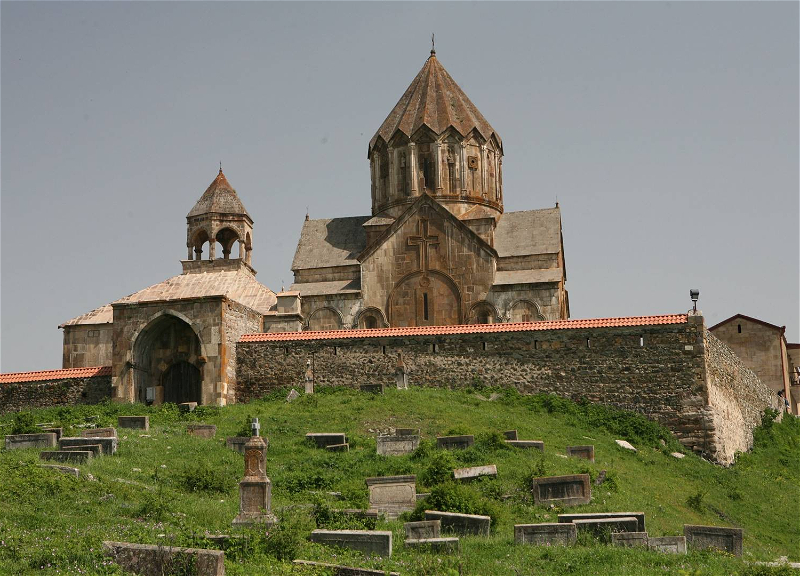
The ancient monasteries of Caucasian Albania – they preserve a history that reaches deep into the centuries and needs no modern reinterpretations.
They are also found on Karabakh soil, keeping the memory of what was later so diligently attempted to be erased. But stone does not forget what was created here by generations – that is precisely why the chronicle carved upon it cannot be crossed out by new inscriptions and alien interpretations.
Today, against the backdrop of the restoration of historical justice in Karabakh, it is fundamentally important to turn to its authentic spiritual and cultural stratum – the centuries-old heritage of Caucasian Albania. Ignoring or attempting to distort this stratum founders upon the irrefutable data of academic scholarship, primary sources, and the very immutable geography of the region.
The foundation of history
The geographical and historical reality of the region is uncompromising – Karabakh at all times was an inseparable part of Caucasian Albania, and subsequently of various Azerbaijani states. Not a single serious historian undertakes to dispute the fact that the space between the Kura and the Araz was the cradle of the Albanian ethnos, in time becoming the spiritual center and principal residence of the Albanian Church.
Albania's thousand-year political existence was built on a delicate diplomatic balance. For about a thousand years Albania preserved its political existence, maneuvering between empires. A vivid example of this is the activity of the Albanian ruler Javanshir, who, in order to preserve independence, pursued a balanced policy between the neighboring empires and acted as a mediator between them. What is especially important – he acted on behalf of Albania, and not Armenia.
Even after the Arab Caliphate abolished the independence of Caucasian Albania at the beginning of the 8th century, the dynasty of Albanian rulers managed to preserve and revive statehood on a more compact territory. Historical confirmation of this is the Albanian feudal state formed in Karabakh.
The golden age and spiritual autonomy
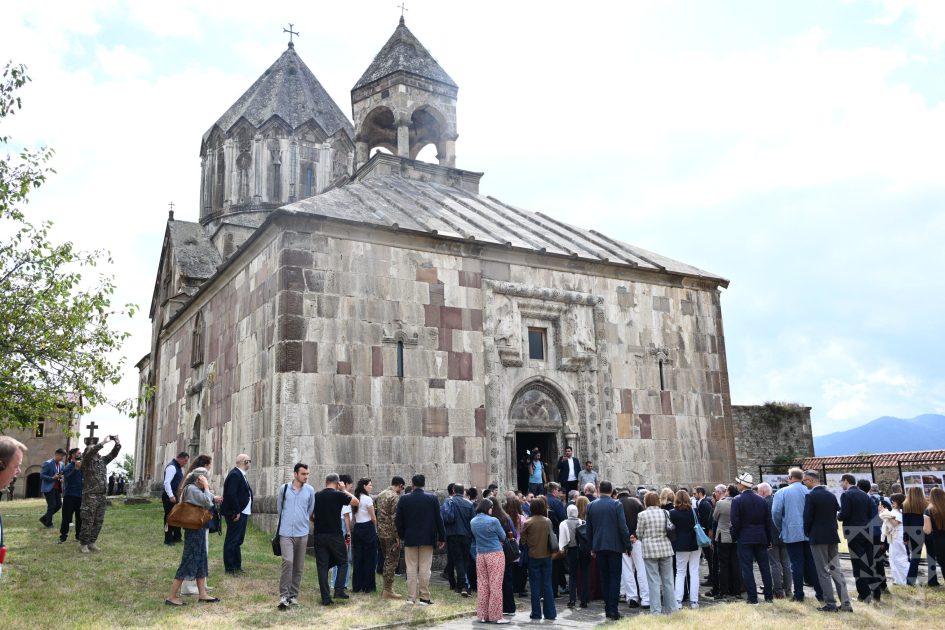
The period of the 9th–13th centuries was marked by a brilliant revival of Albanian statehood, national culture, and traditions. Thus, under the ruler Hasan Jalal Dovla, the construction of the monumental Ganjasar – one of the masterpieces of Albanian Christian architecture – was undertaken.
The continuity of this identity is attested by the "Albanian Chronicle" of the theologian Mkhitar Gosh, as well as by the works of Moses of Kalankatuk, who described the history of Albania. It is noteworthy that Moses of Kalankatuk himself proudly emphasized his origin from the Albanian region of Utik, located in the Kura-Araz lowland.
The persistence of this self-awareness and identity can be traced right up to the modern era. In the 18th century, the Christians of Karabakh, in a message to the Russian Tsar Peter I, called themselves Aghvans of the Udi ethnos. At the same time, the Karabakh meliks, in a letter to Prince Potemkin, directly declared themselves to be the direct descendants of the Albanian monarchs. In this same period, a brief history of Albania was also written.
The very toponymy of the region knew no Armenian roots – it reflected a polyethnic, mosaic order in which local tribes, including Turkic ones, predominated. After the arrival of the Arabs, the name of Albania took the form "Aghvan," and – what is important – it was never called Hayastan.
The name "Artsakh" likewise goes back to ancient Albanian roots – such was the name of an Albanian province. This name is first encountered in the "Avesta" – the sacred book of Zoroastrianism. To this day, toponyms of Aghvan origin are encountered in the region. The objectivity of these connections was also confirmed by independent researchers, in particular the Armenian scholar Iosif Orbeli, whose works were later subjected to destruction for their inconvenient truth.
It is also no accident that the title of the Albanian ruler Hasan Jalal Dovla in the chronicle of Ganjasar is designated as "atabek" – a title that belonged to the Turkic and Albanian elites, but was alien to the Armenian tradition.
Caucasian Albania possessed its own unique identity, political unity, religious autonomy, culture, and alphabet. In 1938, during excavations near Mingachevir, the original 52-letter Albanian alphabet, created on the basis of the Gargar language, was discovered. The Albanians spoke and wrote in this language right up until the Arab invasion, without using Armenian linguistic matrices. However, the subsequent centuries – from the 8th century to the beginning of the 20th century – encountered the systematic destruction of Albanian written sources, documents, and works of art – as if history itself were conducting a merciless revision.
Nevertheless, genetically the overwhelming majority of Albanians merged with the indigenous Turkic tribes, forming the solid foundation of the ethnogenesis of the Azerbaijani people, who are the lawful successor of this ancient culture. Occupying an honored place among the ancestors of modern Azerbaijanis, they laid the basis for historical continuity, thanks to which it is precisely the Azerbaijani people who today act as the lawful keeper and successor of this ancient cultural heritage.
At the dawn of the centuries
Being the first state on Azerbaijani lands, Caucasian Albania adopted Christianity at the state level in 313, also encouraging the population to do so. The origin of the Albanian church has its roots in a much earlier period.
A disciple of the Apostle Thaddeus – Elisha, appointed Albanian Catholicos in Jerusalem, laid the foundations of the first church in the village of Kish in Albania, and in this respect the Albanian Church, which was directly connected with Jerusalem, is considered the most ancient church of the South Caucasus. Thus, the first catholicoses were appointed by Jerusalem, and subsequently the Albanian clergy elected them themselves.

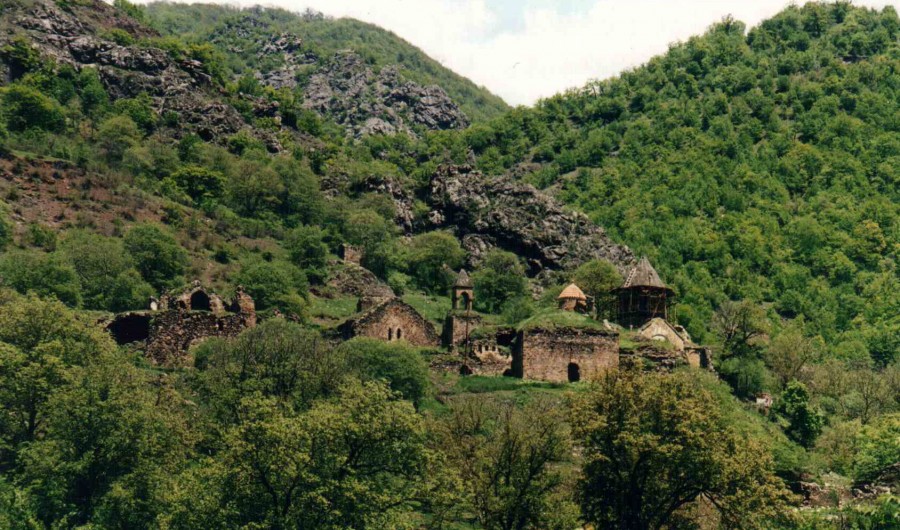
The Albanian Church preserved its centuries-old autonomous existence. The Albanian (Aghvan) Catholicosate existed continuously for fifteen centuries. In various periods of history – from the 5th century to the 19th century – the residences of the Albanian patriarchs, after Chola and Barda, were Ganjasar, as well as the Agoglan and Khudavang monasteries of the Albanian Patriarchate.
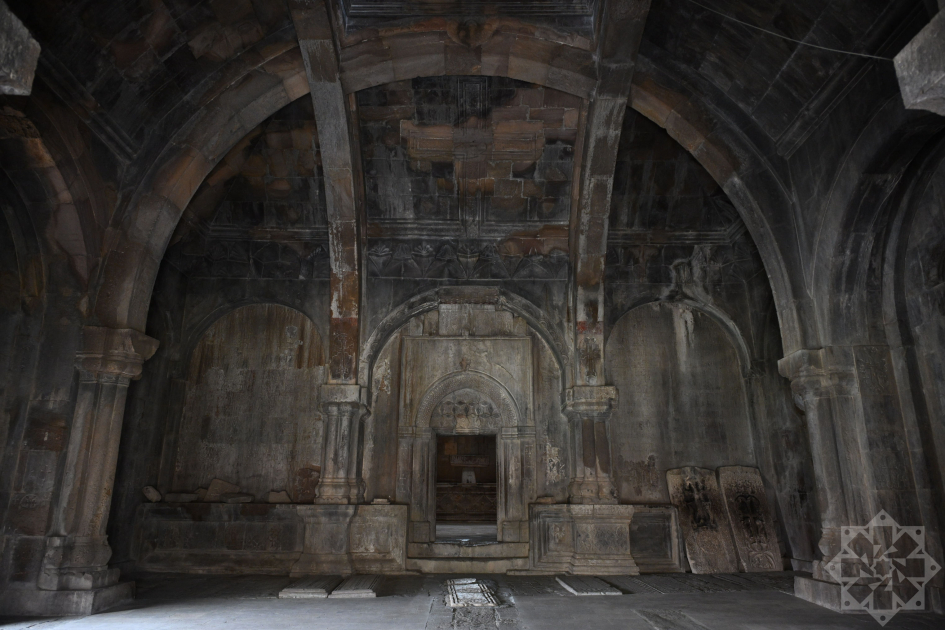
The Albanian catholicoses bore the title of patriarch – one of the highest hierarchical ranks in the Christian tradition. On a wall inscription in Ganjasar, dated 1240, the words are carved: "In the period of the patriarchate of Nerses, Catholicos of the Albanians." This means that in that period the Albanian Church was independent and preserved its autocephaly.
However, this centuries-old institution was broken by external administrative arbitrariness. In 1815, by tsarist decree, the position of Albanian patriarch-catholicos was abolished, and in 1836 Emperor Nicholas I signed a special "Regulation" that definitively liquidated the Ganjasar Patriarchate. The desperate resistance of the Albanian clergy proved fruitless. This led to the administrative assimilation and attribution of the flock of the Albanian Church to the Armenian confessional space. And the destruction in 1909–1910 of the surviving archives of the Albanian Church became a deliberate act of erasing undesirable traces.
The inevitability of truth
The methodology of appropriating the Albanian spiritual and cultural heritage in Karabakh was accompanied by crude interference: stone slabs with alien inscriptions were hung on ancient temples, and the facade epigraphy of Ganjasar was subjected to alteration. On the outer walls of the temple, inserts of multicolored slabs with later Armenian texts appeared.
In the Khudavang monastery, rare frescoes with depictions of rulers from the line of Hasan Jalal were destroyed. A symptomatic finale of this vandalism came in September 2023, when the Armenian priests leaving the monastery demonstratively took away with them even the relics of Saint Dadi.
***
The stones remember everything, and they weigh more than volumes of later falsifications. And no matter how many attempts are made to rewrite the landscape and the chronicles of the region, the authentic Albanian Christian heritage of Karabakh remains an inseparable chapter of the great Azerbaijani history – a history that cannot be expunged either by artificial inscriptions or by stolen relics.