New contour of the Turkic world: economy, routes, security
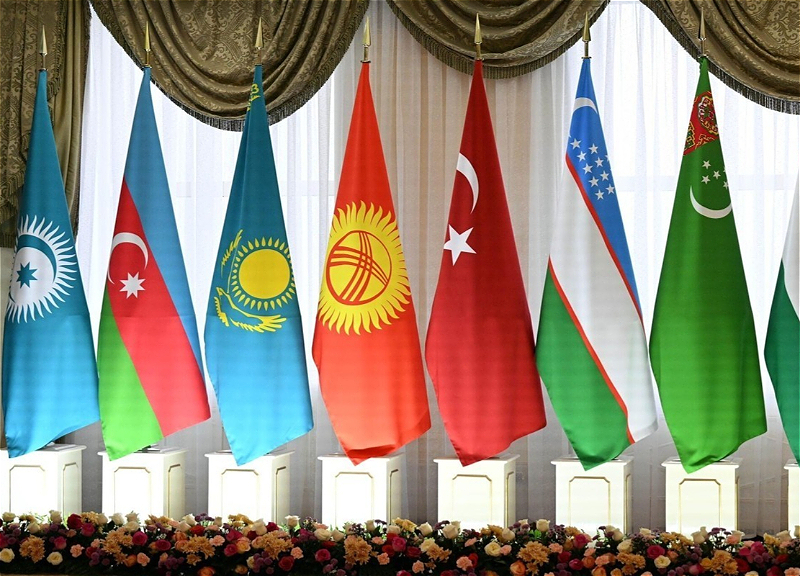
Until relatively recently, Central Asia, the Caucasus, and Turkey looked on the political map — and were perceived in the world — as neighboring rather than interconnected regions.
Today this picture is changing: among the states of this space, united by common Turkic roots, the number of joint projects is growing, trade ties are expanding, new transport routes are taking shape, and coordination in the field of security is being added to economic and humanitarian cooperation.
The Organization of Turkic States is gradually becoming an increasingly substantive format of interaction. Its potential is made up of geographical location, natural resources, transport opportunities, growing economies, and a common historical and cultural foundation. It was precisely this combination of opportunities that President of Azerbaijan Ilham Aliyev outlined at a meeting with senior security officials of the OTS member states.
From Nakhchivan to a permanent political dialogue
The OTS was established in 2009 by Azerbaijan, Kazakhstan, Kyrgyzstan, and Turkey, and in 2019 Uzbekistan became a full member. Over this time, the organization's agenda has expanded considerably and today covers a wide range of interaction.
This week alone, two significant OTS events were held in Baku: the 7th meeting of the Council of Muslim Religious Leaders and, a day later, the 5th meeting of the secretaries of the security councils of the organization's member states. Speaking about this, President Ilham Aliyev emphasized the breadth of the formats of cooperation: "All this is evidence of active interaction within our organization, and it also shows that the Organization of Turkic States is an organization that enjoys very great international authority, since the issues discussed in various formats cover both international matters, issues related to international security, and issues related to multiculturalism, trade, transport, and humanitarian cooperation in general."
On Azerbaijan's initiative, the heads of the OTS states have also begun holding informal summits. The first took place in Shusha on July 6, 2024. This format allows the leaders to coordinate positions more often on issues that change rapidly and do not always fit within the framework of the annual official summits.
Economy, transport, and energy
One of the main factors of rapprochement remains the economy. According to data presented in September 2026 by the Center for Analysis of Economic Reforms and Communication, the combined GDP of the OTS member states exceeds $2.1 trillion. The average growth rate of the economies of the organization's members was estimated at 6.86%.
The OTS's potential is even more clearly manifested in the transport sphere. The Middle Corridor connects Central Asia with the Caucasus, Turkey, and Europe, and Azerbaijan occupies the position of one of the key transit hubs in this system. In 2024, 11 million tons of cargo from Turkey and the countries of Central Asia were transported through Azerbaijan. The throughput capacity of the Baku-Tbilisi-Kars railway has been increased, following the investments made, from 1 to 5 million tons per year, and the capacity of the Alat International Sea Trade Port is planned to be raised from 15 to 25 million tons. The Azerbaijani merchant fleet numbers more than 50 vessels.
Transport is directly linked to energy. Azerbaijan acts simultaneously as a supplier of its own energy resources and as a transit link for Central Asian resources arriving across the Caspian. In 2025, Azerbaijan and SOCAR supplied more than 25 billion cubic meters of gas, about 13 billion cubic meters of which went to consumers in EU countries.
That is why Ilham Aliyev links the transport and energy components with a broader security system. "Today, without energy security and transport connectivity, it is in principle impossible to speak of security as a whole. Our countries possess great natural resources, and this is also a big advantage. And these natural resources serve the cause of strengthening our states, improving the well-being of our peoples, and also play an important role for the entire world," the Azerbaijani leader noted.
In Azerbaijan's case, geographical location is thus turned into a concrete economic resource, in which railways, port infrastructure, energy routes, and ties with Central Asia form a single system.
Bilateral relations as the foundation of a common space
The multilateral cooperation of the OTS rests on a dense network of bilateral relations. Azerbaijan is bound by allied treaties and declarations with Turkey, Kazakhstan, Kyrgyzstan, and Uzbekistan. Joint investment funds operate with Kazakhstan, Kyrgyzstan, and Uzbekistan. According to Ilham Aliyev, Azerbaijan's investments in the economies of the OTS countries have already exceeded $20 billion, with the bulk of them going to Turkey. Therefore, the definition of the Turkic world as the main foreign policy priority reflects an already established practice.
"Our country's bilateral agenda is primarily oriented toward the countries of the Turkic world. And this is our main foreign policy priority... The Turkic world is our family, and we have no other family," the President of Azerbaijan emphasized.
Cultural closeness in this case acquires quite practical content. The commonality of history and language facilitates political dialogue, but the sustainability of ties is increasingly determined by concrete economic, transport, and investment interests.
Security and internal resilience
In the sphere of security, OTS interaction is acquiring a new dimension. In his address to the participants of the fifth meeting of the secretaries of the security councils, the Azerbaijani leader linked this work with cyber threats, terrorism, cross-border crime, illegal drug trafficking, religious extremism, hybrid threats, and the protection of critical infrastructure.
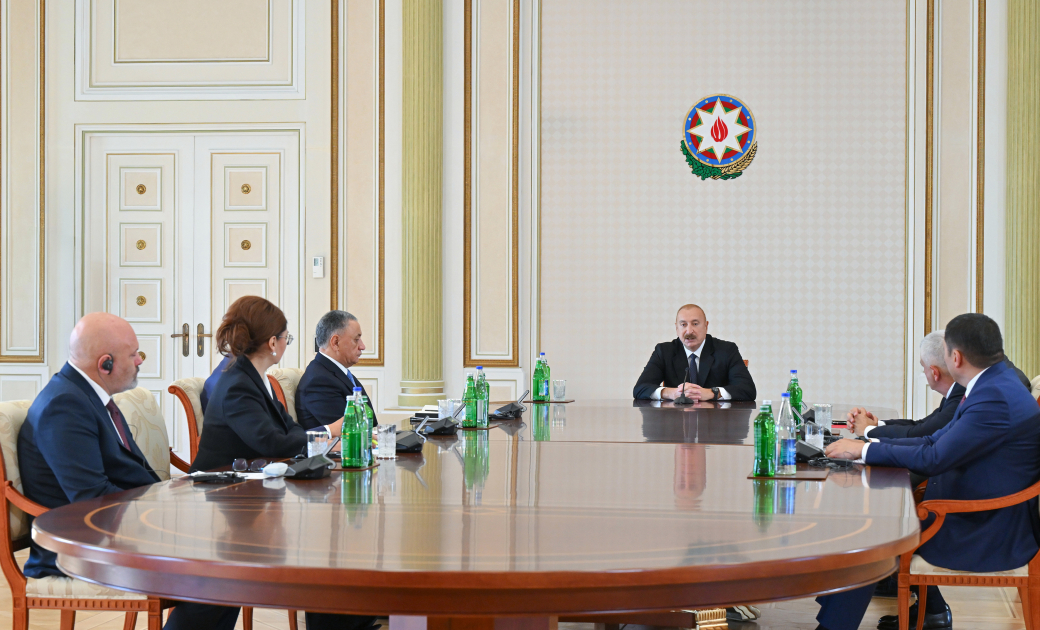
At the same time, this is not only about interaction between security agencies. The president separately pointed to the need to expand contacts between youth organizations of the OTS countries, hold joint forums, and strengthen ties between young citizens.
"In order to ensure the steady development of our countries and the protection of the constitutional order, it is necessary to jointly combat all kinds of ideological subversion against our countries and peoples," the head of the Azerbaijani state noted.
Thus, security is viewed more broadly than the protection of borders — as the ability of states to counter informational, digital, and transnational threats as well. No less important a condition remains stability.
"Without stability, without security, the development of any country is impossible. Neither investment, nor technologies, nor innovations will come to any country if a stable situation does not exist in that country," the president noted.
Demography as a long-term resource
Another factor is human potential. According to OTS data, the combined population of the member states and observer countries amounted to about 178.8 million people in the first quarter of 2026. At the same time, demographic trends within individual countries differ.
Ilham Aliyev links overall population growth with development prospects, while at the same time drawing attention to the need to create appropriate economic opportunities for it.
Demographic growth in itself, of course, does not yet guarantee an economic result. Its significance depends on education, employment, infrastructure, and the ability of economies to create new opportunities for the young population.
The lesson of Karabakh and international law
For Azerbaijan, the issue of international law has special historical significance. The four resolutions adopted by the UN Security Council back in 1993, which demanded the unconditional and immediate withdrawal of Armenian armed forces from the occupied territories of Azerbaijan, remained unfulfilled for almost 30 years. Until Azerbaijan implemented them on its own in 2020 and in 2023 by the force of its arms.
It is precisely this experience that Ilham Aliyev links with the problem of the effectiveness of international institutions: "If international mechanisms had worked, and if the UN system had functioned normally... we would not have had to win back our territories by force. There would not have been so many casualties."
For Baku, a fundamental conclusion follows from this: the existence of international legal norms does not in itself guarantee their implementation. Therefore, the development of cooperation within the OTS in the field of security is also viewed as a mechanism for strengthening sovereignty and the ability of states to defend their interests. At the same time, the OTS itself, in its founding documents, declares its commitment to the UN Charter and the principles of international law, including the sovereign equality of states and territorial integrity.
In the years since the Nakhchivan Agreement, the organization has accumulated considerable potential. Now the main question is how effectively it will be turned into joint decisions and projects.
"Through joint efforts, we must strive to turn the OTS into one of the leading international institutions, into one of the leading international organizations. (…) There are all the opportunities for this," the Azerbaijani leader emphasized.
For Azerbaijan, this task is directly linked to the further strengthening of relations with Turkey and Central Asia, the development of the Middle Corridor, energy cooperation, and coordination in the field of security. For the OTS itself, it is linked to the transition from expanding contacts to closer practical coordination among states whose interests are becoming increasingly interconnected.
It seems the main question for the Turkic world is now no longer whether it has potential. That is obvious. The question is different — whether the OTS will be able to turn the accumulated potential into a system of interaction that can no longer be bypassed when key decisions are made in Eurasia.