
Space garden: China successfully grows more than 20 varieties of plants in space
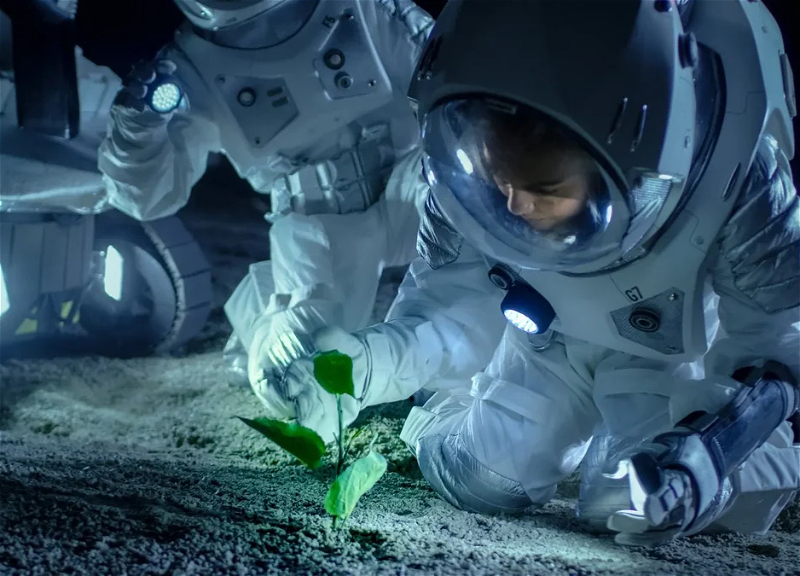
To date, China has grown on orbit more than 20 varieties belonging to 14 plant species, the Astronaut Center of China reported, calling it a milestone that lays the groundwork for large-scale plant cultivation aboard the space station.
This technical breakthrough was noted at the First National Conference on Aerospace Medical Engineering in the city of Tianjin (North China). Zhang Hongzhang, a crew member of the manned spacecraft "Shenzhou-21," shared photographs and video of the thriving "space garden" on the Chinese space station, which showed, among other things, lettuce, carrots, sunflowers, potatoes and wheat.
For China, the era of long-duration manned space flights began in October 2021, when the crew members of "Shenzhou-13" Zhai Zhigang, Wang Yaping and Ye Guangfu moved into the core module of the Chinese space station "Tianhe."
"A long stay in space requires us to reduce dependence on the delivery of supplies from Earth. So the experiments we are conducting on creating a controlled ecological life support system (CELSS) are aimed at creating an ecosystem in space that can regenerate water, air and food, reducing dependence on Earth and ensuring the achievement of even self-sufficiency," said Bian Qiang, an expert at the Astronaut Center of China.
CELSS technology uses an artificially built, closed and controlled ecosystem to provide highly efficient recycling and regeneration of air, water and food for astronauts in orbit, creating a life support and health protection system suitable for long-term human habitation.
According to Bian Qiang, two types of plant-growing installations are currently operating continuously aboard the space station: one based on substrate culture, and the other using the aeroponic method. Together they provide researchers with valuable experience in creating a basic life support system that relies mainly on physical and chemical recycling, while biological regeneration plays a supporting role.
"The more efficient aeroponic installation was sent to the space station in 2025. Since then we have completed a full cycle of growing wheat in orbit, and a second round of cultivation has already been organized using its seeds. The plant is growing well, and the harvest is near," the expert said.
He does not rule out that, as the lunar program advances, China will also have a "garden" on the Moon.