Baku prepares CICA for a new stage of international cooperation in Asia
Asia is increasingly becoming a space where the interests of the largest centers of power, transport routes, energy projects, and new formats of international cooperation intersect.
At the same time, the very configuration of the continent is changing faster than the mechanisms created for interaction among its states. Against this backdrop, the work of the Conference on Interaction and Confidence Building Measures in Asia (CICA), which brings together 28 states and covers about 90 percent of Asia's territory, takes on special significance.
Today, Baku is hosting the first CICA Media Forum on the topic "Building Trust through Media in a Polarized World." Holding it immediately before the organization's seventh summit, which will take place on October 15 in Baku, has a quite specific political meaning. The Media Forum itself was initiated by Azerbaijan within the framework of its chairmanship of CICA. In his address to the participants of the event, President Ilham Aliyev noted that holding the forum on the eve of the summit is of particular importance for drawing attention to the role of the organization and to the activities carried out during the period of the Azerbaijani chairmanship.
The topic of the forum was also not chosen by chance. At a time when the information space is increasingly becoming part of interstate contradictions, the issue of trust goes far beyond relations between mass media outlets. As the special representative of the president of Azerbaijan, Khalaf Khalafov, stated at today's forum, the media is one of the priority directions of the agenda of the Azerbaijani chairmanship.
At the same time, Baku views information cooperation as only one component of much broader work.
A chairmanship with concrete priorities
Azerbaijan assumed the chairmanship of CICA for 2024–2026 in December 2024. Its program is based on the motto "Stronger CICA: Connectivity, Digitalization and Sustainable Growth in Asia." Among the main tasks of the chairmanship are advancing the transformation of CICA into a full-fledged international organization, the effective implementation of confidence building measures, and the expansion of interaction with other international and regional structures.
This direction is of fundamental importance for the organization itself. The decision to transform CICA into a full-fledged international organization was taken back at the sixth summit in Astana in 2022. In 2023, the foreign ministers approved a road map for the corresponding changes. Under the current chairmanship, work continues on the draft CICA Charter, which is to become the legal basis of the new institutional structure.
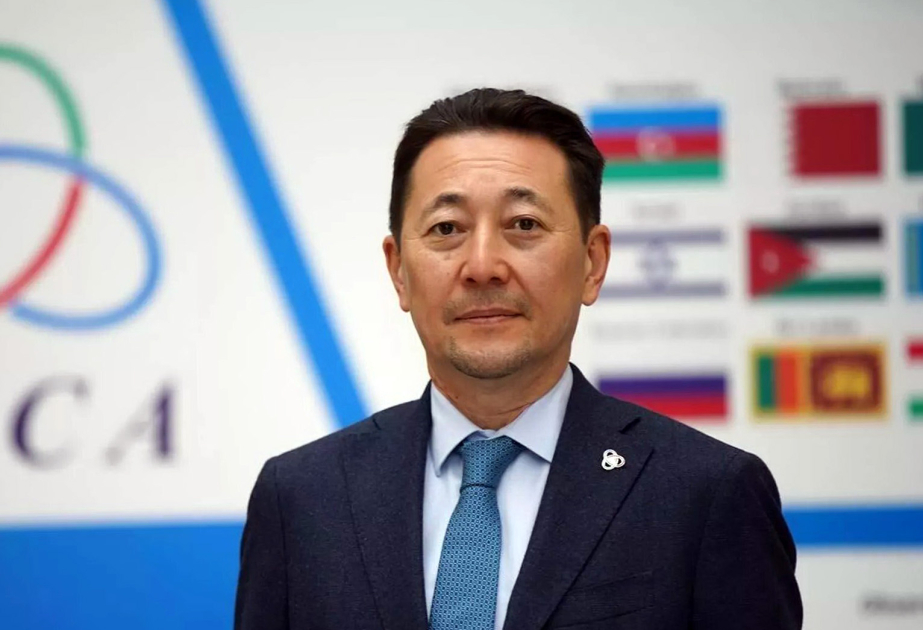
It is precisely this process that will become one of the important topics of the upcoming summit in Baku. In April, during the visit of CICA Secretary General Kairat Sarybay to Azerbaijan, the parties separately discussed the preparation of the draft Charter and the need to continue consultations with member states in order to reach consensus.
At the same time, Azerbaijan seeks to fill CICA's work with practical content. During the period of the chairmanship, such areas as financial cooperation, expanding the participation of women in decision-making, transport connectivity, digitalization, and the climate agenda have been launched or advanced. In September 2025, at the meeting of foreign ministers in New York, the Women's Council and the CICA Financial Summit were established as new consultative bodies of the organization.
It is telling that in September of this year, a conference of CICA port administrations was held in Baku. Its participants discussed the development of transport corridors, sustainable supply chains, multimodal transportation, and digital solutions. Azerbaijan, meanwhile, acts as the coordinator of the priority area related to the development of safe and efficient transport corridors.
Thus, transport connectivity on the CICA agenda is already going beyond general declarations. For Azerbaijan, this is a particularly natural direction given its participation in shaping transport links between Europe and Asia. However, this is not about promoting a single national route, but about a broader approach to the connectivity of the continent's states.
From dialogue to practical cooperation
This is perhaps the most interesting aspect of the current chairmanship. CICA was created as a platform for strengthening trust and interaction between countries, each of which follows its own path. Today the structure faces the task of preserving this function while simultaneously making cooperation more substantive.
The participants of CICA are states whose interests by no means always coincide. Within one platform, China, Russia, India, Iran, Turkey, the states of Central Asia, and other countries of Asia interact. Therefore, the organization can hardly be a mechanism capable of eliminating the contradictions existing among them. Its significance lies rather in something else — in preserving space for dialogue where the direct alignment of positions often proves difficult.
That is why the emphasis on confidence building measures remains the foundation of CICA's activities. At the same time, new directions are emerging that make it possible to translate political dialogue into concrete spheres of interaction. Transport, finance, digitalization, climate, youth and humanitarian cooperation are becoming those areas where common interests can be sought even in the presence of serious disagreements on other issues.

Azerbaijan, during its chairmanship, is betting precisely on this practical component. CICA Secretary General Kairat Sarybay noted today the significant volume of work carried out during Azerbaijan's chairmanship, which has led to considerable progress in the activities of this structure. Earlier, he also emphasized that Baku's strategic vision had received broad support from the member states.
It is also telling that preparations for the summit are proceeding in several directions at once. In addition to political and institutional issues, specialized events were held throughout the year in the spheres of transport, digital security, finance, the climate agenda, and other areas. For October 14, the day before the summit, a meeting of the Committee of Senior Officials is scheduled, which is to review the documents submitted to the meeting of leaders.
All of this makes it possible to perceive the upcoming summit not simply as another meeting of heads of state. It will address the question of what CICA itself will be at the next stage and how far the organization will be able to advance in its institutional transformation.
For Azerbaijan, this question has special significance. It is not the first time Baku has assumed the leadership of a multilateral format, but in the case of CICA, this concerns a space that is geographically much wider than the South Caucasus. Here the interests of Central, South, and East Asia, the Middle East, and states connected with the European direction converge.
Therefore, Azerbaijan's participation in CICA can no longer be reduced to formal membership in yet another international structure. The chairmanship gives Baku the opportunity to promote those areas of cooperation that correspond to its own understanding of modern Asia, above all connectivity, the development of transport communications, digital interaction, and sustainable growth.
It is against this backdrop that today's Media Forum should also be viewed. The information environment is becoming part of international interaction not in and of itself, but because without a reliable exchange of information it is increasingly difficult to maintain trust between states. It is no coincidence that the organizers of the forum placed trust and the role of the media in strengthening it at the center of attention.
Two weeks after today's discussion, the heads of state and government — participants of the seventh CICA summit — will gather in Baku. At the official level, its task has been formulated as the confirmation of commitment to dialogue, mutual trust, and constructive cooperation, as well as the further development of mechanisms related to peace, security, stability, and sustainable development.
The results of the summit will show how far CICA will be able to advance from the format of political dialogue to a more sustainable institutional system. For Azerbaijan, this will be simultaneously the culmination of its two-year chairmanship and an opportunity to consolidate those directions that Baku considers most in demand in a changing Asia.