Nigar Arpadarai: Azerbaijan speaks less and does more in advancing the peace process
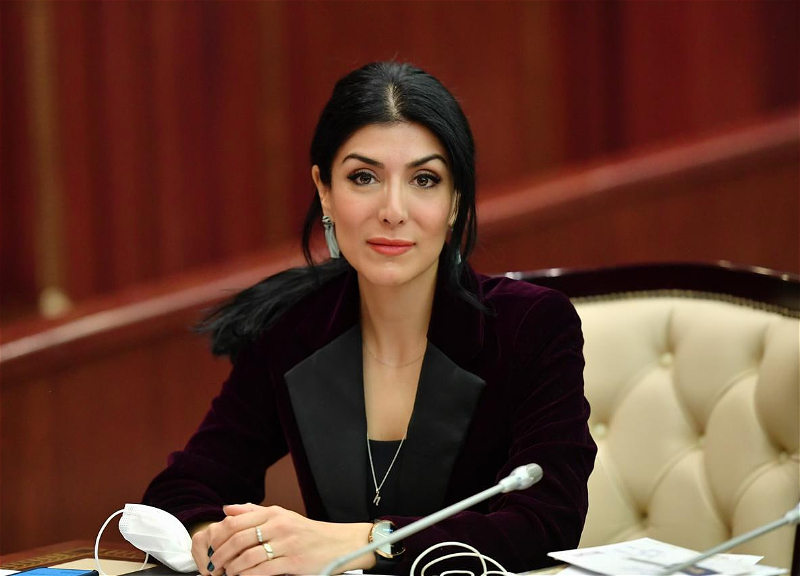
A year after the signing in Washington of documents related to the peace process between Azerbaijan and Armenia, positive momentum persists in relations between the two countries. At the same time, Baku places its main emphasis on practical steps aimed at building a real environment of cooperation.
Milli Majlis deputy Nigar Arpadarai said this in a comment to 1news.az, assessing the results of the past year and the dynamics of relations in the Azerbaijan–Armenia–U.S. triangle.
According to her, in analyzing the changes that have taken place during this period, it is important to compare the geopolitical situation a year ago and today, considering separately three directions: Azerbaijani-Armenian, Azerbaijani-American, and Armenian-American relations.
“If we talk about relations between Azerbaijan and Armenia, we can state that the process is developing in line with the scenario that took shape a year ago. Azerbaijan is consistently and thoughtfully taking steps aimed at advancing the peace process,” the deputy noted.
According to Nigar Arpadarai, the positive momentum that has formed is being maintained, and Azerbaijan’s actions are predominantly practical in nature.
As examples, she cited the organization of cargo transit toward Armenia through Azerbaijani territory, the resolution of logistics and trade issues, as well as visits by Armenian sports delegations to Azerbaijan.
“These are concrete steps aimed at creating a real atmosphere of cooperation,” the parliamentarian emphasized.
At the same time, in her assessment, the actions of the Armenian side so far have been largely symbolic in nature. These include statements by officials calling for reconciliation, Prime Minister Nikol Pashinyan’s acknowledgment of the erroneousness of previous approaches to the Karabakh issue, as well as statements by former parliament speaker Alen Simonyan that the topic of Karabakh is already a closed page.
“The difference between the two approaches is obvious: Azerbaijan speaks less and takes more practical steps. Armenia makes more statements, but practical results so far remain limited,” Nigar Arpadarai said.
At the same time, the deputy believes that such a situation is partly explained by objective factors: Armenia’s geographic, economic, and demographic capabilities and, accordingly, its room for maneuver are significantly more limited compared to Azerbaijan.
Connection with Nakhchivan and the issue of Armenia’s Constitution
Nigar Arpadarai emphasized that one of Azerbaijan’s key expectations remains unchanged — ensuring reliable transport communication between the country’s main territory and Nakhchivan.
According to her, this issue is one of the important elements of lasting peace. Along with it, the issue of Armenia’s Constitution remains unresolved.
“Armenia does not in principle reject this issue, but neither is it hurrying to take the necessary steps to resolve it. This also leads to a slowdown in the process,” the deputy noted.
She recalled that a year ago Armenia’s leadership explained the caution of its actions by the upcoming elections. Today the elections are already behind, and the government has received a new mandate.
In Nigar Arpadarai’s opinion, domestic political processes in Armenia show that Pashinyan’s government is advancing the peace agenda largely in accordance with society’s demand.
“With a high degree of probability, the majority of Armenian society no longer wants a new war. However, such an approach is not characteristic of the entire political elite. A certain part of the Armenian diaspora and political circles still uses the Azerbaijani-Armenian confrontation to achieve domestic political goals,” she said.
According to the deputy, if Nikol Pashinyan is truly a supporter of peace, he should accelerate this process and strive for the earliest possible conclusion of a full-fledged peace agreement.
Azerbaijan–U.S.: positive momentum continues
Separately, Nigar Arpadarai dwelled on relations between Baku and Washington, noting steady positive momentum.
“Over the past two years, the parties have consistently taken steps aimed at improving bilateral relations,” she said.
At the same time, the deputy drew attention to the fact that in recent months a significant part of the American administration’s attention has been focused on the Middle East, in particular on events around the Strait of Hormuz.
Against this background, in her opinion, Azerbaijan’s balanced policy takes on special significance.
“While developing constructive relations with Washington, Baku is not becoming, either directly or indirectly, part of any geopolitical confrontation between the U.S. and Iran. It is precisely this approach that is an indicator of Azerbaijan’s independent foreign policy course,” Nigar Arpadarai emphasized.
According to her, expanding cooperation with the U.S. is important for Azerbaijan, but preventing a situation in which the country could become an instrument in a regional confrontation between other states is of equally fundamental importance.
The deputy believes that in the near term, American diplomacy’s interest in the South Caucasus will grow again.
“Over time, Washington will achieve a certain stabilization of the agenda related to Iran and will be able once again to devote more attention to other strategic directions. The South Caucasus and Central Asia retain significance for the U.S. for a number of reasons — both in the context of diplomatic processes surrounding the Russian-Ukrainian conflict and from the standpoint of regional security related to Iran,” she noted.
Therefore, the parliamentarian believes, in the coming period one can expect U.S. diplomatic activity in the region to move to a new stage.
The Strategic Charter is already producing practical results
Speaking about Azerbaijani-American relations, Nigar Arpadarai particularly noted the significance of the Strategic Charter signed between the two countries several months ago.
According to her, the document creates an important institutional foundation for the further development of bilateral cooperation and opens up additional opportunities for implementing new projects.
“Just a few months after the signing of the Charter, a high-ranking American governmental and business delegation visited Baku. Within its framework, the first Economic Dialogue between Azerbaijan and the U.S. was held and a large package of economic agreements was signed,” the deputy recalled.
She noted that the agreements cover investment projects and areas of economic cooperation worth billions of dollars, which indicates that the provisions of the Strategic Charter are moving into the practical plane.
At the same time, the significance of the document, Nigar Arpadarai emphasized, is not limited to the economy.
“The Charter opens broad opportunities for new joint initiatives in the sphere of energy security, transport and logistics, digital development, regional connectivity, investments, and other strategic areas. Therefore, the main result of the Charter is not simply the signed document itself, but the long-term platform of cooperation between Azerbaijan and the U.S. being formed on its basis,” concluded Milli Majlis deputy Nigar Arpadarai.