Scientists create an eco-friendly alternative to conventional balloons
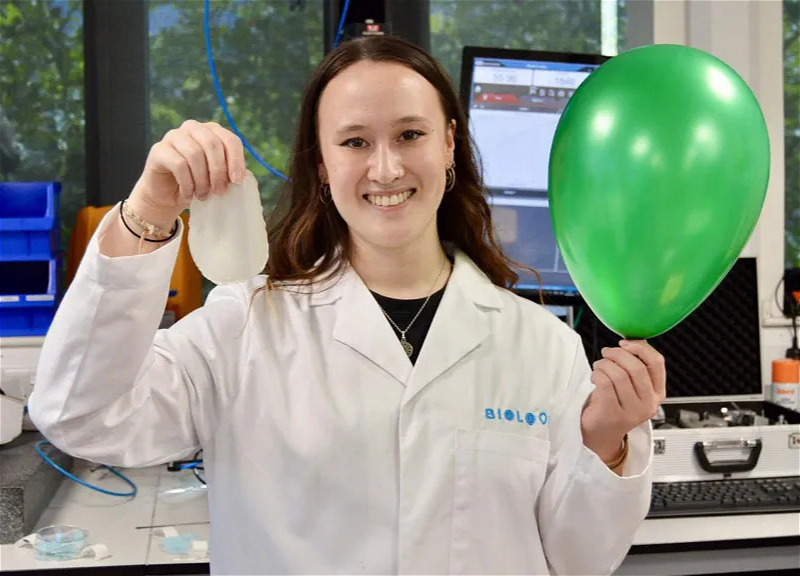
Researchers from Imperial College London have announced the creation of what they claim is the first fully biodegradable party balloon.
The developers believe the new technology will help reduce the amount of waste that ends up in the environment after mass events and that poses a particular threat to marine animals.
The new product is called Bioloon. According to the scientists, in a natural environment it is capable of decomposing completely in about nine months. At the same time, the developers claim that the cost of such a balloon will not be higher than the price of a regular one, and that inflating it is even easier.
The creators of Bioloon drew attention to the problem associated with traditional balloons. Ordinary products can persist in the environment for years, gradually breaking down into smaller fragments and releasing chemical substances.
According to 29-year-old Juliana Cumming, a postgraduate student at Imperial College London and one of the authors of the development, the problem is linked to the technology used to manufacture ordinary balloons.
“Ordinary balloons are treated in a special way to make them strong and elastic,” the researcher explained. According to her, it is precisely this treatment that prevents the material from fully decomposing and may contribute to harmful chemicals entering the environment.
The development came about in part thanks to a request from the event organization industry. The research was partly funded by party organizer Charlotte Melia, who wanted to find a way to reduce the amount of balloon waste and its impact on marine fauna.
According to Melia, the use of balloons in event decoration has become especially popular in recent years. One of the common decorative elements has become large-scale “balloon arches.” According to her, interest in such decoration is fueled by photographs and videos from parties held by influencers and celebrities.
However, along with the popularity of such decor, the amount of waste is also growing. After events end, balloons can end up on the streets, in bodies of water, or directly in the sea. The disintegrated products pose a danger to animals, which may mistake their fragments for food.
Scientists are particularly concerned about the impact of balloons on seabirds. According to a study published in the scientific journal Scientific Reports, balloon fragments are among the most dangerous types of marine debris for birds in terms of the risk of death after ingestion.
The authors of the work found that balloons and their fragments were 32 times more likely to lead to a fatal outcome after ingestion than hard plastic objects.