Russia in the South Caucasus: withdrawal or a change of tactics?
Just a few years ago, any conversation about Russia's presence in the South Caucasus almost inevitably began with Armenia.
The Russian military base in Gyumri, Moscow's involvement in regional security, allied relations with Yerevan, the presence of Russian border guards — all of this created a familiar picture in which Russia was perceived as one of the region's main military and political players.
Today that picture has changed noticeably. Armenia is increasingly talking about independence in matters of security and foreign policy, Georgia remains in a state of acute but frozen political conflict with Moscow, and Azerbaijan is building relations with Russia based on its own understanding of national interests. And yet, to conclude from this that Russia is simply leaving the South Caucasus would be too hasty.
The events of recent days actually make one look at the situation from a different angle. On September 1, a meeting between Vladimir Putin and Nikol Pashinyan took place in Bishkek on the sidelines of the Shanghai Cooperation Organization summit. The Russian president emphasized Moscow's interest in developing friendly and mutually beneficial relations with Armenia based on strategic partnership and alliance. At the same time, as early as September 3, Pashinyan stated that Yerevan does not consider the presence of the 102nd Russian military base to be vitally necessary. According to him, if Russia itself decides to withdraw the base, the Armenian side will not object; if Moscow wishes to keep it, this issue can be discussed. Pashinyan particularly emphasized that the question of withdrawing the base was not discussed directly with Putin.
At first glance, this is yet another sign of the weakening of Russian positions. But something else is more important: the substance of Russian-Armenian relations is changing. Moscow is interested in preserving economic ties, while Yerevan is expanding relations with the European Union, the United States, and other centers of power. At the same time, the positions of Moscow and Yerevan diverge on the question of the compatibility of a course toward the EU with membership in the EAEU. Putin stated that Armenia's accession to the European Union is incompatible with its membership in the EAEU, whereas Pashinyan maintains that Yerevan has not so far violated its obligations to Russia and the EAEU.
At the same time, political distancing does not automatically mean an economic rupture. Russia retains significant weight in the Armenian economy, trade, and energy sector. Therefore, a possible change in the status of the Russian military base does not in itself mean the end of bilateral ties. Rather, it is a matter of revising their former structure.
But Armenia is only one of the three countries of the South Caucasus. Georgia demonstrates an entirely different model of relations with Moscow.
Moscow has had no diplomatic relations with Tbilisi since the 2008 war. Russia recognized the independence of Abkhazia and South Ossetia and maintains a military presence there. In August of this year, the European Union once again stated that it considers the presence of Russian troops in these territories a violation of international law and of Moscow's obligations under the agreement of August 12, 2008.
At the same time, Russian-Georgian relations cannot be reduced to a frozen conflict. Despite the absence of diplomatic contacts and continuing disagreements over the issue of Georgia's territorial integrity, trade, transport, and tourism links between the two countries continue. Russia remains a notable participant in Georgia's foreign trade: according to GeoStat, in January-February 2026 Russia accounted for 13.1% of Georgian imports, behind Turkey and ahead of China.
Tbilisi has not joined Western sanctions against Russia over the war in Ukraine, explaining its position by national interests and a desire to avoid additional economic risks. As a result, political confrontation with Moscow coexists with close economic ties.
Georgia is also important to Russia for geographical reasons. The country's Black Sea coastline makes it part of the transport system linking Russia with Turkey and the Middle East region. Therefore, even in the absence of political trust, Moscow and Tbilisi are forced to take mutual economic interests into account.
Azerbaijan represents a third model. Baku does not belong to Russian military-political and economic blocs and pursues an independent foreign policy, simultaneously developing relations with Turkey, Russia, Iran, Central Asia, China, Europe, and the United States. That is, cooperation between Moscow and Baku is built on the coincidence of specific interests.
On September 7, this model received new confirmation. Vladimir Putin called Ilham Aliyev. The presidents discussed issues of trade, economic, and humanitarian cooperation and agreed to step up bilateral contacts at various levels.
For Moscow, the Azerbaijani direction has significance that goes beyond bilateral trade. Azerbaijan is an important link in the international "North-South" transport corridor connecting Russia with Iran and, through it, with the markets of the Persian Gulf and the Indian Ocean. For Baku, the Russian direction also remains part of a multi-vector economic policy.
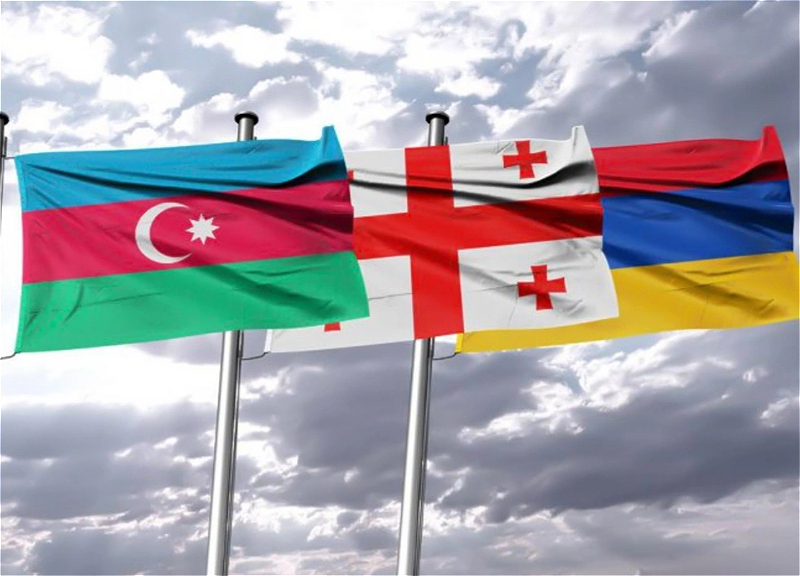
Thus, the three countries of the South Caucasus demonstrate three different models. In Armenia, the former military-political structure of relations with Moscow is being revised. In Georgia, political conflict does not prevent the preservation of significant economic ties. In Azerbaijan, Russia cooperates with a state that does not belong to its system of alliances and at the same time consistently pursues an independent foreign policy.
Against this backdrop, the thesis of "Russia's loss of the South Caucasus" looks overly simplistic. Moscow is indeed losing part of its former levers, but it continues to remain an important participant in the region's economy, transport, and politics. At the same time, the conditions of its presence are changing: the South Caucasus can no longer be regarded as a space of exclusive influence of any single power.
For Russia, this means the need to compete for its place in the region in a far more complex environment. Turkey is strengthening its positions in Azerbaijan and Central Asia, Iran seeks to preserve its own influence, and the United States and the EU are taking part in shaping new political and economic ties. Transport routes linking the Caucasus with the Caspian, Central Asia, Turkey, Russia, and Iran are acquiring ever greater importance.
Therefore, the question today is not so much about Russia's return or departure as about Moscow's ability to adapt to the new configuration and effectively make use of the trade, transport, and economic opportunities of the new South Caucasus.