"Artsakh" in Almaty: a mistake or a provocation?
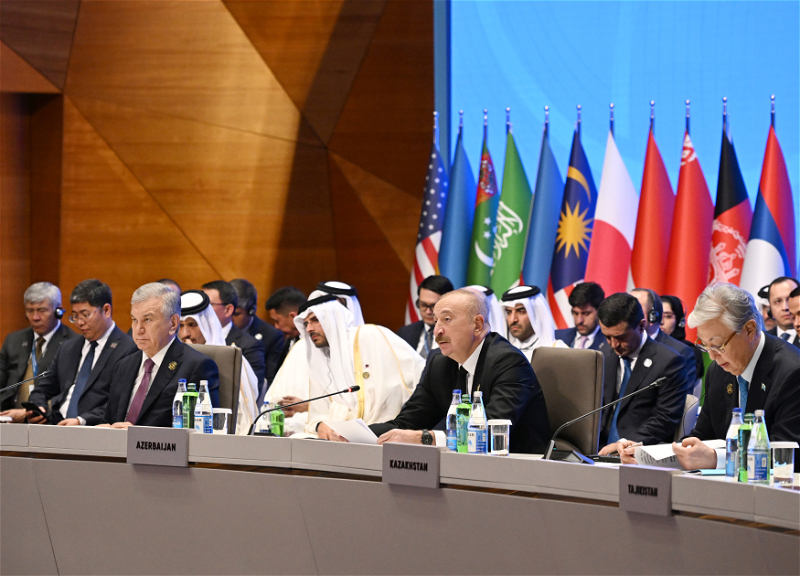
In international relations, symbols sometimes speak no less loudly than official statements.
This is especially true during periods when a complex process of restoring trust and shaping a new agenda is underway between states. What in one context may be perceived solely as an element of culture can, in another, acquire a quite definite political resonance.
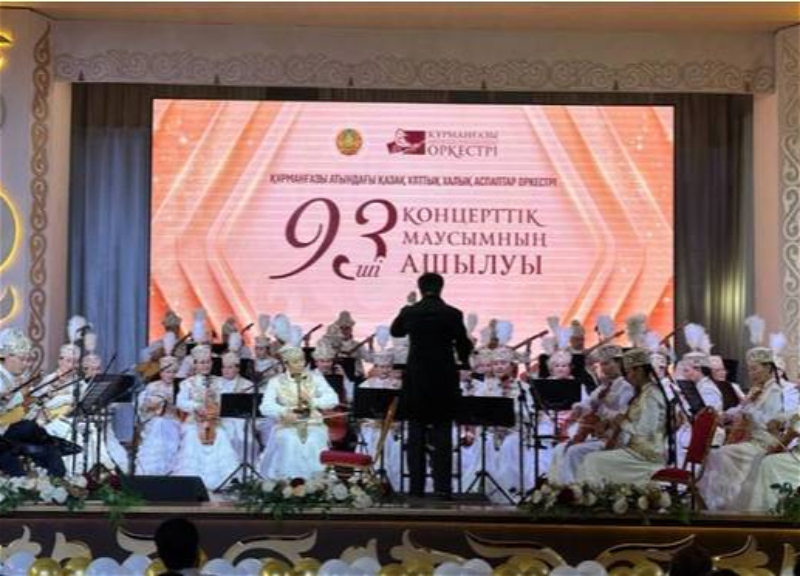
That is precisely why a recent episode that took place at a concert venue in Almaty attracts particular attention. On the stage of one of Kazakhstan's leading musical ensembles, a piece titled "Artsakh" was performed — a term that for decades was used by Armenian separatist forces with reference to the internationally recognized territory of Azerbaijan. Amid the ongoing process of Azerbaijani-Armenian normalization, such a choice is hard to view solely outside of the political context.
All the more so when it comes to Kazakhstan — a country with which Azerbaijan is bound by a strategic partnership, shared Turkic and historical roots, and a notable rapprochement in recent years. That is exactly why what happened in Almaty raises not only questions but also particular concern in Azerbaijan.
So what happened?
On September 11 in Almaty, at the opening of the 93rd concert season of the Kurmangazy Kazakh National Orchestra of Folk Instruments, timed to coincide with City Day, the rich concert program, among works by various composers, also featured the composition "Artsakh" by Armenian composer Ara Gevorkyan.
The performance of a musical work in itself is, of course, part of cultural life. However, in this case the title of the composition and the political context surrounding the term "Artsakh" give this episode an entirely different meaning. In Azerbaijan, the use of this name in relation to Karabakh is a politically sensitive issue, since this word denoted one of the symbols of Armenian separatism and territorial claims against Azerbaijan.
Therefore, the appearance of "Artsakh" on the stage of one of Kazakhstan's leading national musical ensembles raises legitimate questions. Especially against the backdrop of the fact that Armenian revanchists continue to use the cultural and historical agenda to preserve the false notions about Karabakh that they have imposed. Any such symbolic step under current conditions can objectively be used by those forces that oppose the final Azerbaijani-Armenian normalization.
Particular frustration is also caused by the circumstance that this episode occurred precisely in Kazakhstan. Azerbaijan has ceased to be surprised by such provocations staged at Western and Russian venues; it expects them and, within its capabilities, takes preemptive measures to curb them in a timely manner. But Kazakhstan is an entirely different case.
Azerbaijan and Kazakhstan are bound not only by a strategic partnership but also by deep historical, cultural, and fraternal relations. In recent years, Baku and Astana have grown significantly closer, consistently developing cooperation in the political, economic, transport, humanitarian, and cultural spheres. Kazakhstan has, moreover, repeatedly demonstrated support for the principle of the territorial integrity of states.
That is precisely why the appearance in Almaty of a work titled "Artsakh" is perceived especially painfully. A quite natural question arises: what was this — a mistake out of ignorance or a deliberate provocation? Negligent carelessness on the part of the organizers of the concert program, or a conscious step capable of playing into the hands of forces opposed to Azerbaijani-Armenian reconciliation?
It would be premature to answer this question definitively without official explanations. However, it is also impossible to ignore the political sensitivity of such a work under current conditions. All the more so since the Azerbaijani-Armenian peace process is going through a difficult period, and any actions that can be used by revanchist forces to sustain the previous rhetoric objectively do not contribute to strengthening trust between the parties.
Another point is also important: this is not about an attempt to restrict cultural exchange between peoples. On the contrary, it is precisely culture that should promote mutual respect and the rapprochement of societies. But cultural exchange must not turn into a platform for promoting political narratives capable of once again bringing painful pages of the conflict to the fore.
In this connection, the Kazakh side should provide clear explanations of what happened. The public has the right to know who included the composition "Artsakh" in the concert program, by what criteria the repertoire was formed, and whether the politically sensitive context of this work was taken into account.
For Kazakhstan itself, such an episode particularly requires clarification. It is precisely a timely and clear explanation that would make it possible to rule out any assumptions that a political design lies behind what happened.
The floor is Kazakhstan's…