Security, energy, transportation: how Baku is strengthening the Turkic space
The Turkic world is rapidly moving beyond cultural and historical closeness, shifting toward pragmatic integration in which issues of security, logistics, and economic sovereignty converge into a single framework.
In this architecture, Baku is becoming one of the key connecting centers of the Organization of Turkic States (OTS), ensuring the alignment of the interests of states across a vast geography.
The Turkic family today is already a dynamically developing actor in world politics. And the fact that it is precisely Baku that sets the tone in developing joint approaches to security underscores its special place in this system. Azerbaijan is consistently creating a space in which OTS states can coordinate their positions on the most pressing issues of the global agenda.
Security and energy, transportation and the economy are increasingly coming together into a single system of interconnections, where the resilience of one area directly depends on the state of the others. It is here that Baku's role acquires a practical dimension — the Azerbaijani capital regularly becomes the venue for discussing sensitive issues affecting the common interests of Turkic states.
The consistency of this policy already makes it possible to speak not of isolated diplomatic initiatives, but of the formation of a stable role for Baku in the system of OTS cooperation.
It was precisely in this logic that the key points made by Azerbaijani President Ilham Aliyev were voiced at yesterday's meeting with security officials of the member states of the Organization of Turkic States.
The head of state drew attention to the potential of the organization and the strategic significance of its geography, through which the most important energy and transportation routes pass: "The potential of our countries is quite substantial and tends to grow stronger. We are located in a very vast geographical space. The most important energy and transportation routes and corridors pass through us, which today play an important role not only for our countries, but for a broader geography as well."
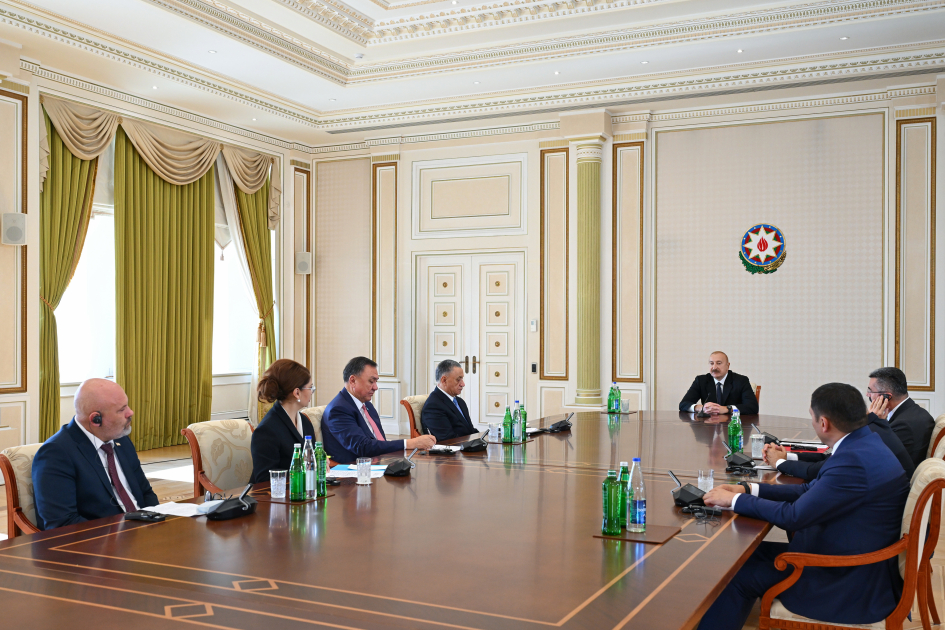
This is no longer merely about the geographical proximity of the OTS states. Their location forms a space through which routes connecting various markets and regions pass, and therefore it directly affects issues of international connectivity and security.
That is precisely why, the president continued, interest in strengthening the OTS extends far beyond the organization itself: "To the west and to the east of the OTS region, they are also watching with great interest the strengthening of our organization and its positive role in international affairs, including in matters related to connectivity, transportation security, energy security, and security in general."
This is a fundamental framing of the issue. Security today is not limited exclusively to the military-political sphere. A state may possess the necessary resources and capabilities, but in the absence of stable transportation routes and reliable energy infrastructure, its economic and strategic resilience turns out to be limited.
For the OTS states this has particular significance. Their geographical position is simultaneously an advantage and a challenge. On the one hand, the organization possesses significant natural resources and is located at the intersection of major trade routes. On the other hand, the full use of this potential requires reliable links between the individual parts of the common space.
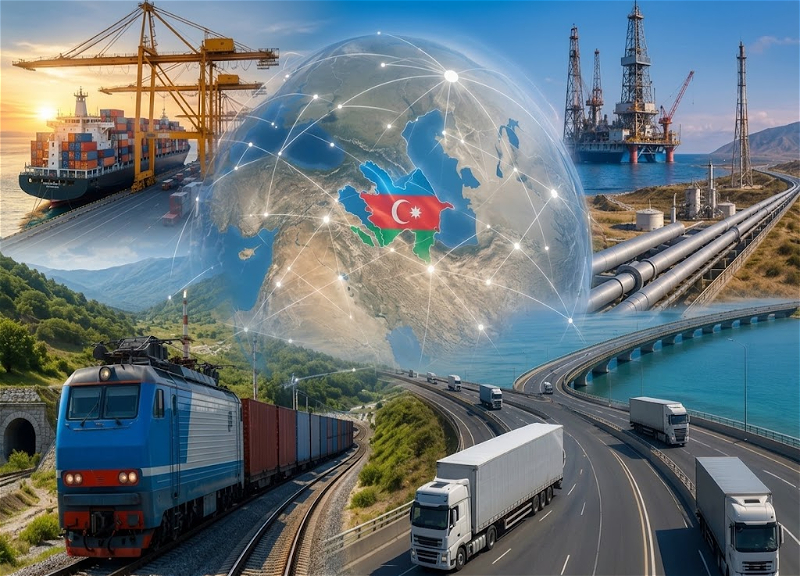
In this global logistical mosaic, Azerbaijan plays the role of a key link. The Caspian Sea turns the country into a natural link between Central Asia and the western direction. Energy resources and goods from the countries of Central Asia can reach international markets via the Caspian and then through the territory of Azerbaijan. In the opposite direction, access to the markets and economic opportunities of Central Asia is being formed.
Thus, this is not merely about transit as an economic component. Transportation infrastructure is gradually becoming one of the important instruments of strategic cooperation among Turkic states.
That is precisely why the energy and transportation agenda of the OTS is acquiring ever greater importance. It cannot be separated from issues of common security, since the stability of energy supplies, the uninterrupted operation of transportation communications, and the possibility of access to foreign markets directly affect the economic stability of states.
The synergy of the resource potential of the Turkic states forms an important foundation for Eurasia's energy security. The president of Azerbaijan directly views the natural resources of the OTS countries as an important factor capable of serving both the development of the states themselves and the fulfillment of broader international needs: "Our countries possess large natural resources, and this too is a great advantage. And these natural resources serve the cause of strengthening our states and improving the well-being of our peoples, and they also play an important role for the entire world. Especially in today's environment that is taking shape along the perimeter of our borders, issues related to energy security acquire particular significance."

In this regard, Azerbaijan acts simultaneously in two interrelated capacities — as a supplier of energy resources in its own right and as a transit country for the transportation of resources from Central Asia. "As for Azerbaijan, we are both suppliers of energy resources to the world economy and transiters of energy resources from the countries of Central Asia across the Caspian and further on to international markets. And thereby the geographical position of Azerbaijan, which is located at the junction of Europe and Asia and has active cooperation both with the countries of Central Asia — members of the OTS — and with Türkiye, of course presupposes the role that we play in order to implement transportation and energy security projects with maximum benefit for all our countries," is how Ilham Aliyev speaks about this.
This role of Azerbaijan did not take shape all at once. It is the result of the consistent development of relations both within the OTS and at the bilateral level.
For Baku, the Turkic world is one of the main foreign policy priorities. President Ilham Aliyev has repeatedly formulated this position with utmost clarity: "The Turkic world is our family; we have no other family."
The practical content of this policy has included not only multilateral contacts within the OTS, but also the deepening of bilateral relations and their elevation to the level of alliance.
This is also important for understanding the current stage of the OTS's development. The organization is gradually moving beyond exclusively political and cultural-humanitarian cooperation. Its space is acquiring an economic dimension, and infrastructure links are creating a material foundation for further rapprochement.
It is telling that during the meeting, the Secretary General of the Organization of Turkic States, Kubanychbek Omuraliev, cited specific economic indicators. According to him, the combined GDP of the OTS countries today amounts to 2.4 trillion dollars — almost twelfth place in the world. The volume of trade turnover reaches 1.7 trillion dollars and continues to grow.
Behind these figures lies a change in the scale of the organization itself. The higher the economic potential of the states, the greater the importance acquired by unified transportation routes, investment mechanisms, energy projects, and trade ties. Economic interdependence, in turn, creates an additional foundation for political dialogue.
Today the OTS is forming an increasingly interconnected system of cooperation, in which processes in one sphere are directly reflected in others. This process also has an institutional dimension.
The Organization of Turkic States traces its history to the Nakhchivan Agreement of 2009. "It can be said with confidence that after almost twenty years of functioning, after the historic summit in Nakhchivan in 2009, when the organization was created, the Organization of Turkic States is making maximum use of its potential to resolve important issues and to foster cooperation among the member countries, as well as to define and strengthen the organization's position on the international stage. We are all interested in this. The general mood of the leaders of the organization's member countries is precisely to strengthen the role and place of the OTS on the international stage. There are all the opportunities for this," the Azerbaijani leader emphasizes.
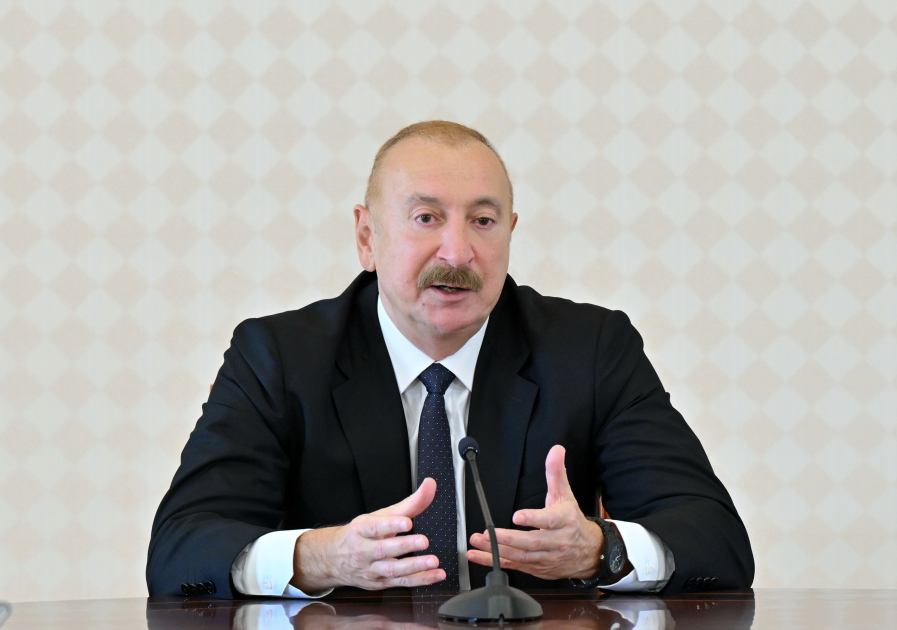
In this context, the current meeting of the heads of security agencies acquires particular significance. If summits of leaders set strategic guidelines, then sectoral formats translate them into the realm of practical cooperation. In the sphere of security this is especially important — it requires constant coordination, the exchange of experience, and a joint response to risks that change quickly and extend beyond individual states.
Moreover, the security of the OTS states is ever more closely linked to the economy and infrastructure. Energy facilities, transportation routes, trade routes, and communications are becoming part of a common system of resilience. That is why the conversation about security in Baku naturally extends to issues of energy, transportation, and connectivity. This is especially relevant for a space that connects several large regions.
The very geography of the OTS lends these issues a special dimension. The organization's space links several large regions and possesses key energy and transportation routes. Therefore, the resilience of this system directly depends on how reliably the infrastructure and logistical links among its participants function. For Azerbaijan this has particular significance — the country's position at the junction of Europe and Asia makes it possible to connect enormous energy and transportation flows.
For Baku this is simultaneously an opportunity and a responsibility. The more Central Asian states use routes across the Caspian and through Azerbaijan to reach Türkiye and European markets, the greater the importance of the reliability of the infrastructure that has been created. And this means that the development of transportation and energy security is becoming a common interest.
In this respect, it is also telling how the Azerbaijani leader characterizes the economic dynamics of the OTS states: "Our countries are also demonstrating confident economic growth, especially at a time when we see that in different parts of the planet processes are moving in the opposite direction: stagnation, economic decline, and other economic and social difficulties — today, generally speaking, these are the realities of the modern world. But in the OTS space we see positive dynamics: growth in industrial production, and economic indicators, and stable financial systems. All of this is also a great achievement of our countries and of the policy that is being pursued in our countries at the state level."
The next stage, therefore, consists not so much in creating separate links as in joining them into a single system. Energy requires transportation routes. Transportation needs sustainable security. Without trade, the economic potential of infrastructure is not realized. Investment makes it possible to develop new projects, while political coordination creates the conditions for their long-term implementation. It is precisely in this linkage that the practical significance of the OTS manifests itself.
For Azerbaijan, participation in this process has an additional dimension. Baku is not only part of the Turkic space as an active participant, but also possesses the capabilities to connect its different parts. That is why the country's role extends beyond ordinary cooperation among member states.
Baku is becoming a place where political dialogue, security, energy, transportation, and the economy intersect. It is precisely this multilayered nature that is gradually shaping a new content for the concept of "Turkic cooperation." It is no longer confined only to historical and cultural closeness — that remains the foundation — but on top of it economic, infrastructure, investment, and institutional ties are being built.
Against this background, the strategic goal of the OTS — to become one of the leading international organizations — acquires quite concrete content. The scale of the economies, the volume of trade, natural resources, geography, and transportation potential create an objective foundation for this. But turning potential into real influence requires constant coordination and the ability of states to act within the framework of a common agenda.
Azerbaijan offers precisely such an approach, consistently forming a space in which Turkic states are becoming ever more closely linked with one another — politically, economically, and in terms of infrastructure. Baku, meanwhile, acts as one of the key centers where the common priorities of the OTS move from the political agenda into practical cooperation.
It is precisely this that defines Azerbaijan's role in the Turkic world today — not merely to participate in shaping the common agenda, but to create the conditions for its practical implementation, through energy, transportation, infrastructure, and economic ties.