The collapse of Armenian separatism — the triumph of Azerbaijan's sovereignty: the historical lesson of September 19
Today's date — September 19 — occupies a special, fateful place in the modern history of Azerbaijan, and indeed of the entire South Caucasus.
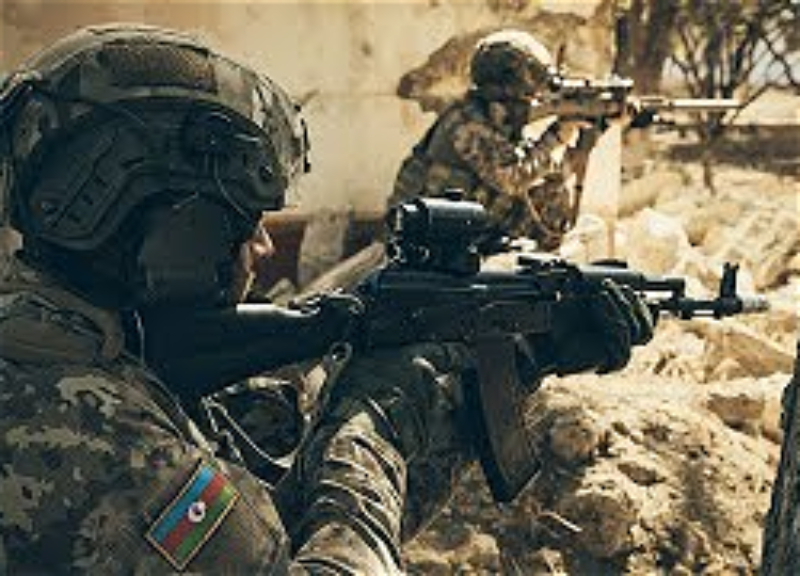
It was on this day three years ago that the Azerbaijani Armed Forces launched local anti-terrorist measures in Karabakh with the aim of eliminating the remnants of the separatist entity and establishing lawful authority.
As a result of the lightning-fast operation, carried out with surgical precision, the criminal regime that had operated on these lands for 30 years capitulated within a matter of hours, and its military infrastructure was destroyed. This military-political event, local in place and time but of the utmost significance in its historical consequences, predetermined the subsequent act of the junta's final self-liquidation. The logical conclusion of this act was the signing, by its then newly elected leader Samvel Shahramanyan, of a decree on September 28, 2023, on the termination of the existence of the so-called "Nagorno-Karabakh Republic." This historical complex of events put an end to the history of military occupation and returned to Azerbaijan the absolute fullness of state sovereignty over all of its internationally recognized territory.
The causes and inevitability of September 19: the exhausted limit of diplomacy and mine terror
To understand that there was no alternative to the decisions that led to the anti-terrorist operation of September 19-20, 2023, it is necessary to analyze the military-political situation that had developed in the region after Azerbaijan's historic Victory in the 44-day Patriotic War of 2020.
The signing of the Trilateral Statement of November 10, 2020, imposed clear and fixed obligations on the Armenian side, the main one of which was the complete and immediate withdrawal of units of the armed forces of Armenia and the disbandment of illegal armed formations. However, for three postwar years, Yerevan and the junta in Khankendi under its control sabotaged the implementation of these key provisions.
Instead of laying down their weapons and integrating, the illegal formations continued to strengthen echeloned lines of defense, covertly bring in weapons and ammunition along dirt roads, carry out engineering and sapper work, and undertake sabotage raids.
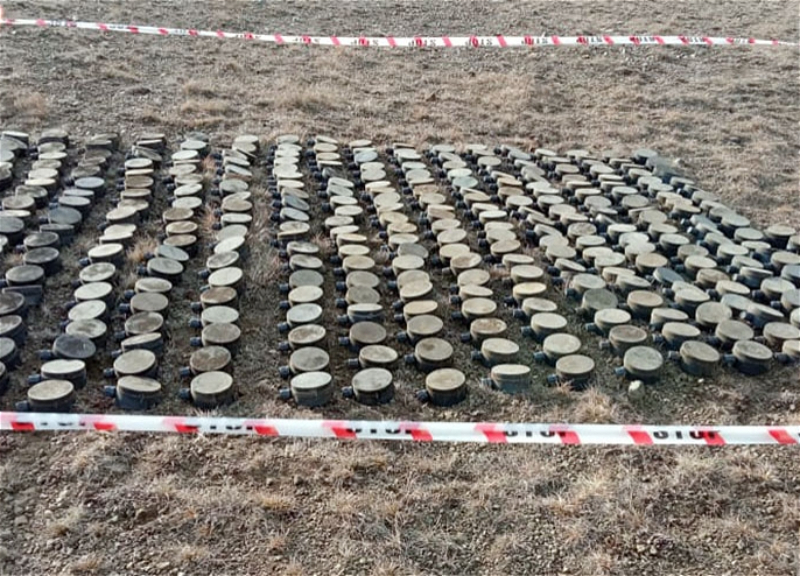
The decisive drop that overflowed Baku's cup of patience was the intensive mine terror. On September 19, 2023, as a result of explosions on mines planted by Armenian sabotage and reconnaissance groups on the newly built Ahmadbayli - Fuzuli - Shusha highway, Azerbaijani civilian construction workers and employees of the Ministry of Internal Affairs were killed. Such brazen terrorist acts on the liberated lands demonstrated that the preservation of illegal gangs operating under the megaphone of separatism posed an immediate and direct threat to Azerbaijan's national security, to the lives of its citizens, and to the implementation of the Great Return program. Under these conditions, Baku exercised its sovereign right to self-defense and to ensuring the rule of law by conducting an anti-terrorist operation.
The triumph of the Azerbaijani army: 23 hours and 43 minutes of high precision and capitulation
The anti-terrorist measures launched on September 19 entered the world's military textbooks as an example of impeccable strategic preparation, technological superiority, and the highest humanitarian standard. The President of Azerbaijan, Supreme Commander-in-Chief of the Armed Forces Ilham Aliyev, gave a firm and unambiguous order: strikes were to be carried out exclusively against legitimate military targets, firing positions, ammunition depots, headquarters, and air defense assets of the illegal formations, using high-precision weapons. Civilian infrastructure and the peaceful population were not to suffer, and the Azerbaijani army brilliantly accomplished this task.
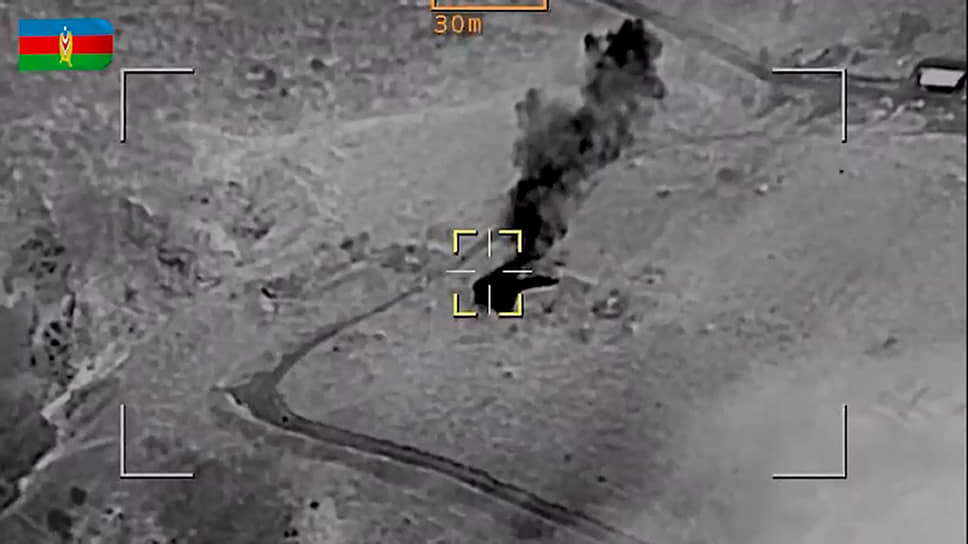
The separatists' military machine, built up over thirty years, was neutralized and paralyzed in exactly 23 hours and 43 minutes. High-precision strikes destroyed the command system, eliminated artillery batteries and electronic warfare assets, leaving the enemy not the slightest chance of organizing prolonged resistance or escalation. Realizing the inevitability of their complete physical destruction, the junta's leadership was forced as early as September 20 to throw out the white flag and accept all, without exception, of the conditions put forward by Azerbaijan: a complete cessation of hostilities, the surrender of weapons and heavy equipment, the withdrawal of the remaining Armenian servicemen, and the self-disbandment of the illegal structures.
September 28 as the legal finale: debunking the screen of occupation
The direct and inevitable political and legal consequence of the military victory of September 19-20 was Shahramanyan's well-known decree of September 28. According to this document, the so-called "Nagorno-Karabakh Republic" ceased to exist, and absolutely all of its structures and quasi-institutions were subject to final disbandment. This decree was of fundamental importance, as it recorded the final legal collapse and voluntary self-liquidation of a project that had been used for three decades to disguise external aggression.
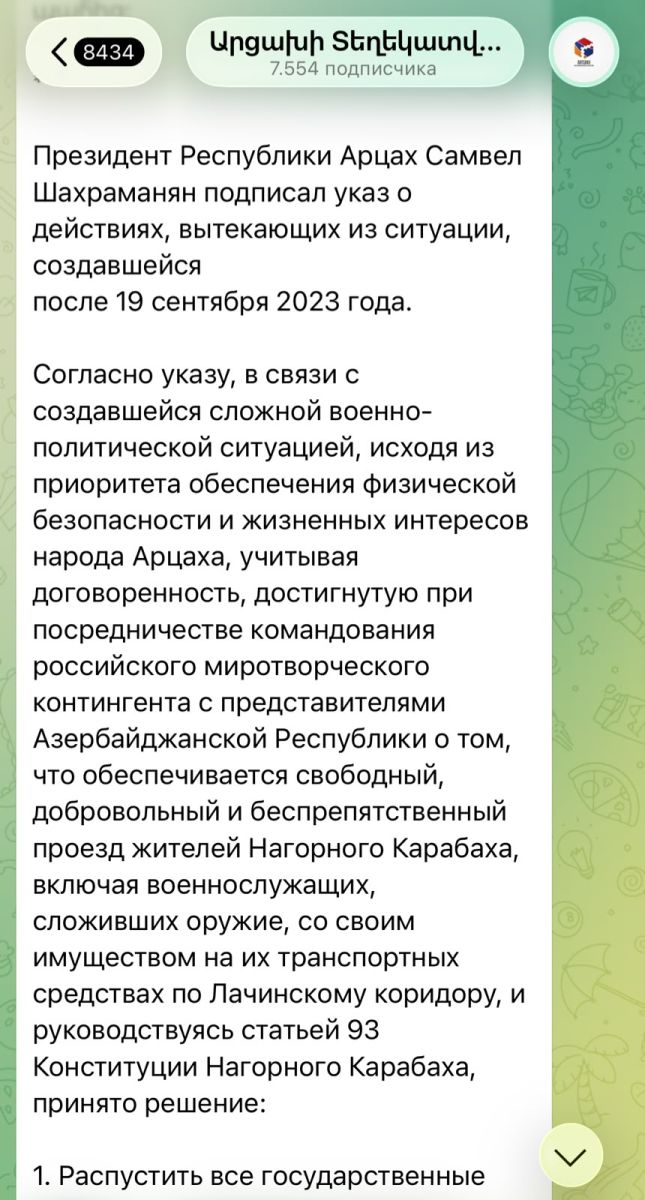
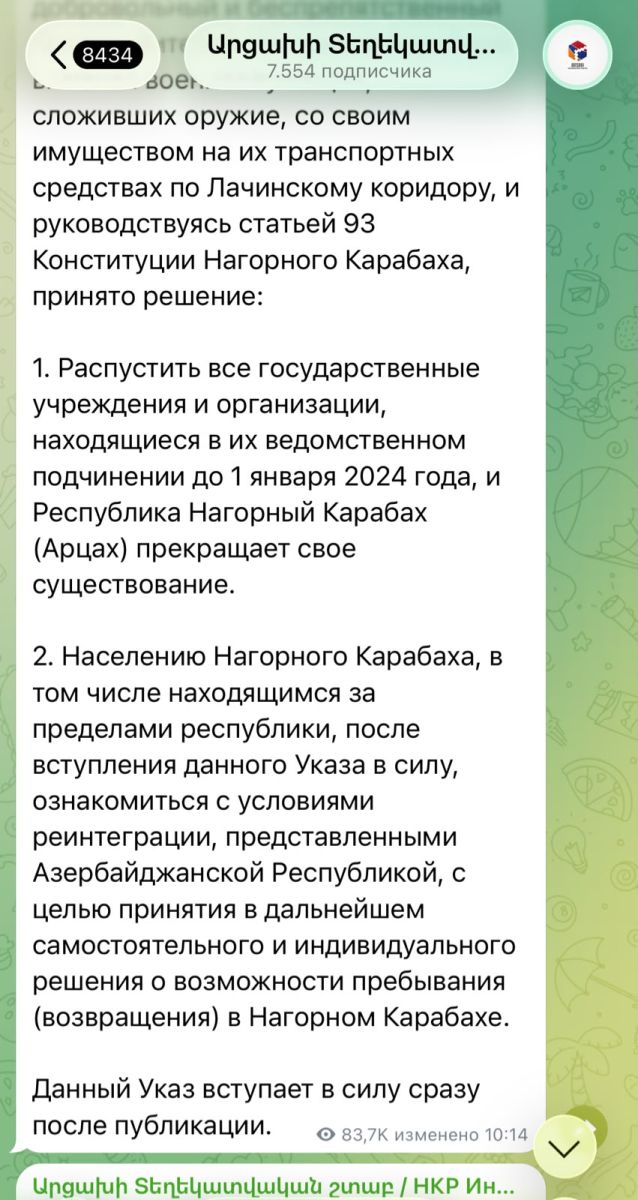
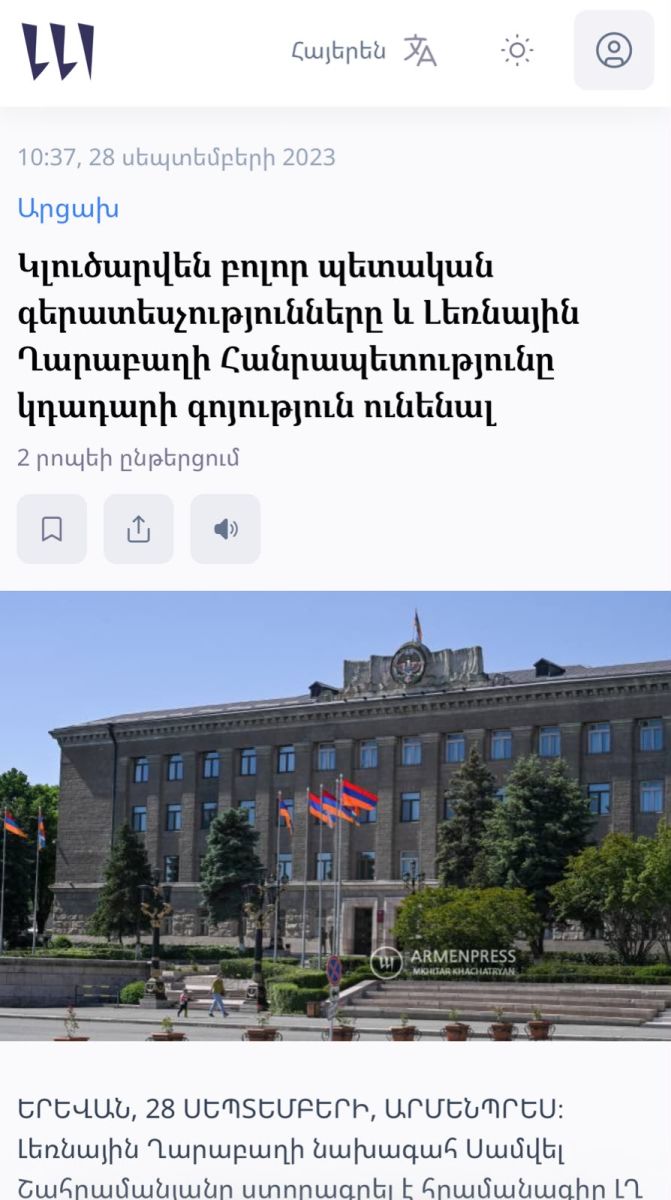
The puppet regime created in the early nineties never possessed the attributes of an independent state entity. It was no more than an artificial screen, speculatively constructed by Yerevan to cover up the fact of the direct occupation of Azerbaijani territories and to prevent the imposition of international sanctions against Armenia as an aggressor state. For thirty years, the illegal structure was entirely maintained from the Armenian state budget, was governed from Yerevan, and was supplied by Armenian conscripts, which was officially confirmed by rulings of the European Court of Human Rights concerning Armenia's "effective control" over the occupied lands. The signing of the document dated September 28 stripped the ideology of Armenian revanchism of its last legal illusions and confirmed that any separatist experiment on the sovereign territory of Azerbaijan is doomed to an inevitable and shameful end.
Legitimate Retribution: Detention, Conviction, and Serving of Sentences for the Leaders of the Criminal Regime
The criminal prosecution and subsequent conviction of the leadership of the former separatist junta became a natural and principled act celebrating the triumph of the rule of law. Many of its representatives—who participated in the genocide of the Azerbaijani people, committed numerous war crimes and crimes against humanity, and held vast territories of Azerbaijan under occupation for nearly 30 years—were unable to evade justice.
As a result of brilliant operations by the special services and law enforcement agencies of Azerbaijan, key figures of the illegal regime—former "presidents" of the puppet entity Arkadi Ghukasyan, Bako Sahakyan, and Arayik Harutyunyan, former "foreign minister" David Babayan, "parliament speaker" David Ishkhanyan, former commander of illegal formations Levon Mnatsakanyan, his deputy David Manukyan, as well as billionaire Ruben Vardanyan, who financed the separatist underground—were detained, brought to Baku, and stood trial before an Azerbaijani court.
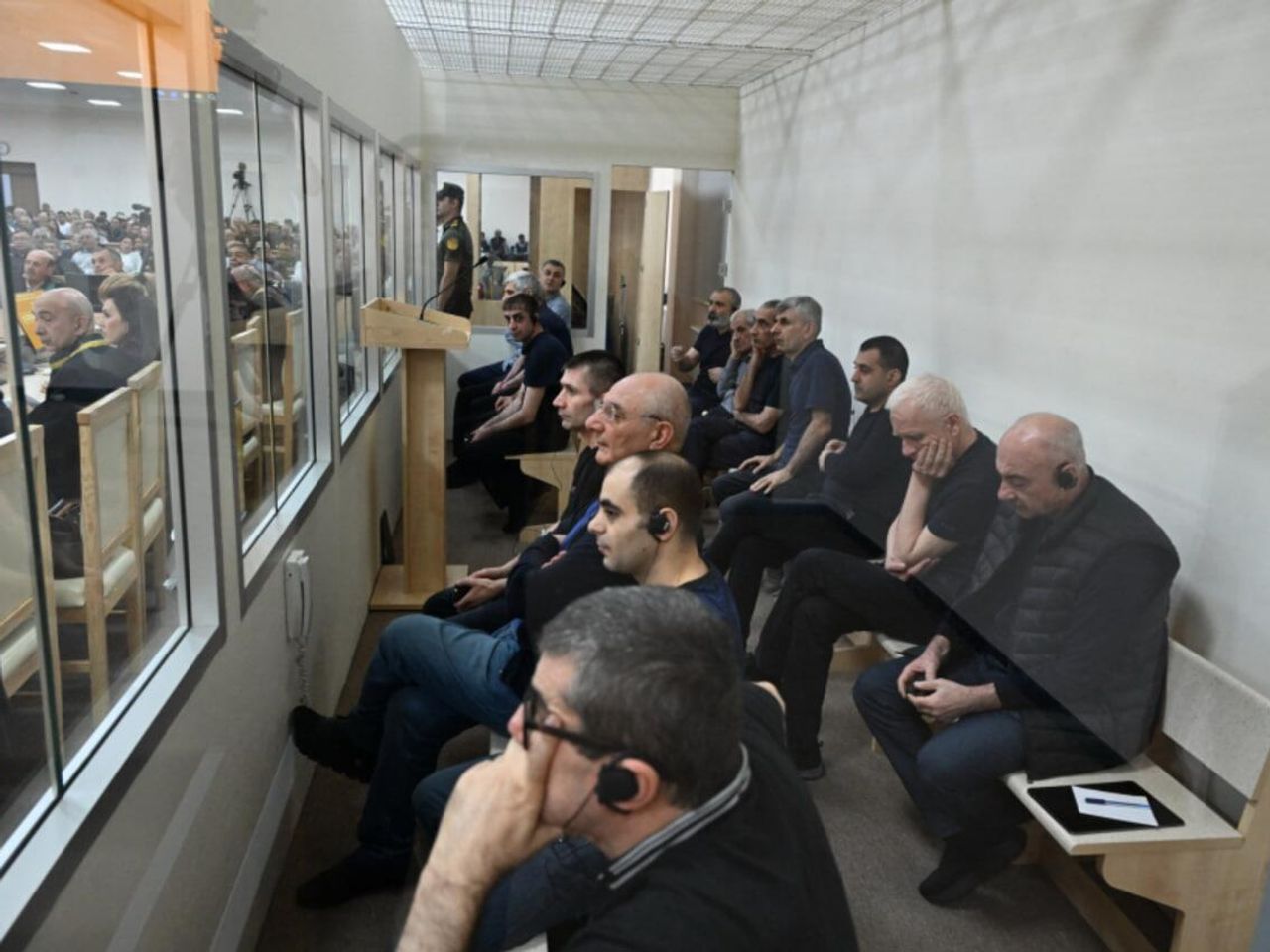
As a result of the trials, the defendants were found guilty under articles of the Criminal Code of the Republic of Azerbaijan, including war crimes, crimes against humanity, financing of terrorism, and encroachment on the territorial integrity of the state, and were sentenced to long terms of imprisonment, up to life imprisonment. Currently, the convicted leaders of the junta are serving their court-mandated sentences in correctional facilities in Azerbaijan.
At the same time, historical justice has not yet been fully established: the main ideologues and architects of the occupation policy, bloody crimes in Khojaly, and ethnic cleansings—Robert Kocharyan and Serzh Sargsyan—have not yet faced an Azerbaijani court. However, the neutralization of the puppet junta and the conviction of its ringleaders prove that there is no statute of limitations for the gravest crimes against the Azerbaijani people, and the hour of justice for the primary war criminals is merely a matter of time.
Restoration of Historical Justice and the Era of Creation
The events of September 2023 definitively closed the historical chain of restoring the country's territorial integrity. The historic raising of the state flag of Azerbaijan by President Ilham Aliyev in Khankendi, Khojaly, Aghdara, and Khojavend in the autumn of 2023 marked the end of a decades-long chapter of occupation and the beginning of an era of absolute sovereignty.
Today, Karabakh and East Zangezur are rapidly changing their appearance, transforming from a former zone of legal vacuum and devastation into a dynamically developing macro-region. As part of the "Great Return" program, innovative "smart" villages and cities are being built, modern transport highways are being laid, and international airports and power stations are being constructed. Former internally displaced persons are returning en masse to their native homes in Lachin, Fuzuli, Zabukh, Shusha, Khojaly, and Khankendi, gaining confidence in tomorrow.
Anniversary of the Start of the Anti-Terror Operation
September 19 is a date that reminds the world that Azerbaijan is capable of independently—relying on its own strength, international law, and the firm will of its leader—solving the most complex geopolitical tasks. The victory of September 19–20 and the subsequent self-dissolution of the separatist regime on September 28 are forever inscribed in the history of Azerbaijani statehood as a symbol of the complete triumph of justice, law, and peace.