Russia's consumer watchdog bans the sale of a number of Georgian wines, beers and beverages
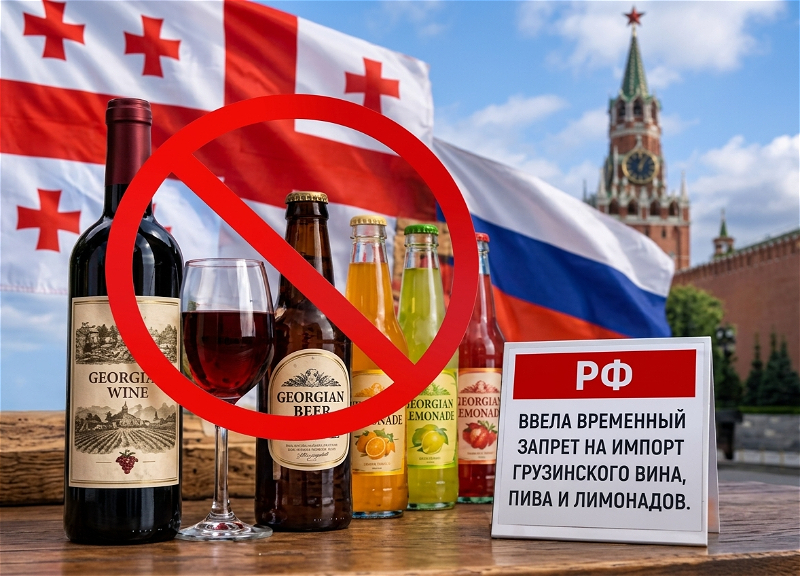
Rospotrebnadzor has introduced a temporary ban on the import and circulation in Russia of certain alcoholic and non-alcoholic beverages produced in Georgia, RBC reports, citing a document in its possession as well as sources in the alcohol market and at a major retail chain.
According to the document, the restriction was introduced as part of a temporary sanitary measure provided for by a decision of the Council of the Eurasian Economic Commission. It concerns products that do not comply with established requirements for organoleptic and physico-chemical indicators, as well as safety indicators.
The restrictions cover wines from the companies Teliani Valley, Tbilvino and Winemen, as well as wine and cognac from the producer Askaneli Brothers. The ban also applies to beer from the Georgian Beer Company, highly carbonated non-alcoholic Coca-Cola produced in Georgia, and Nabeghlavi mineral water from the company Healthy Water.
An RBC source in the alcohol market confirmed the information about the restrictions. A representative of one of the largest retail chains also told the publication that the corresponding letter had been received.
RBC sent inquiries to Rospotrebnadzor, the Association of Retail Trade Companies (AKORT), as well as to the retail chains X5, Magnit, Lenta, Spar, Auchan and Metro.
Earlier, the Russian agency introduced restrictions on beverages from Armenia. In May 2026, Rospotrebnadzor ordered the suspension of sales of alcoholic products from three Armenian producers — VEDI-ALCO, the Abovyan Cognac Factory and the Shahnazaryan wine and cognac house — after non-compliance with mandatory requirements was identified.
In April, the agency also suspended the import and circulation of certain batches of the Armenian mineral water Jermuk. The reason was an allegedly detected excess of permissible levels of hydrocarbonates, chlorides and sulfates.