
Muradova: school uniform is a legal issue, not a dispute over morality
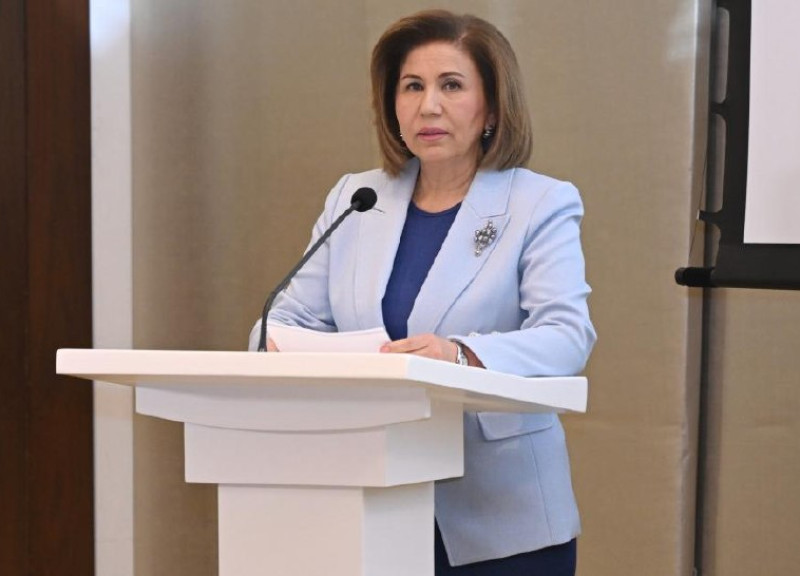
Attempts to turn state policy on children's clothing into a harmful argument about women's moral worth, morality and human dignity completely change the essence of the issue, the chair of the State Committee for Family, Women and Children Affairs, Bahar Muradova, said while setting out her position on the single school uniform.
"In legal and democratic societies, individual freedoms should as a rule be exercised not through the denial of common rules, but within respect for public interests and lawful requirements," Muradova said.
Exercising individual freedoms does not rule out compliance with common rules, she said. "In other words, this right does not mean that every personal choice can be realized in any public space absolutely and without being limited by any common rule. Where such requirements are lawful, clear and proportionate to a legitimate aim, their existence cannot in itself be regarded as a denial of freedom," she said.
"School is a special social environment precisely in this respect: its main purpose is for children to receive an education, to form as individuals, to have equal opportunities and to acquire a shared culture of behavior. Every pupil who enters school must comply with the general requirements of the educational process," Muradova said.
The uniform is introduced to create a common rule for everyone in the educational environment, and not to link clothing with a person's honor, dignity or moral qualities or to define the individual moral worth of learners, she said.
"On the contrary, the introduction of a single uniform should be seen as one of the most effective means of preventing pupils' clothing from becoming a display of their families' financial means, social status and fashion choices, and of shifting attention from appearance to education," she said.
"Even if it would be wrong to claim that a single dress rule automatically removes all social differences, it must be emphasized that it limits expensive brands, fashion and differing clothing opportunities from becoming a subject of competition in the educational environment and creates a real opportunity to reduce social comparison among pupils," Muradova said.
This is not about declaring someone's personal choice morally superior, but about applying the same rule to everyone in the same educational environment, which matters for the school's educational mission, she said.
"As for the secular aspect of the topic, it unambiguously implies equal treatment of all pupils by the state and the education system regardless of their religious affiliation, and teaching based on general educational goals. The introduction of a single school uniform should be assessed precisely as part of this common rule," she said.
Setting and applying a single school uniform is a legal and public matter concerning the organization of education, and it should be assessed only in terms of children's equality, the characteristics of the educational environment, parents' obligations and the state's lawful regulatory powers, Muradova said.