COP17 in Yerevan: Armenia's environmental facade and the price of irresponsibility
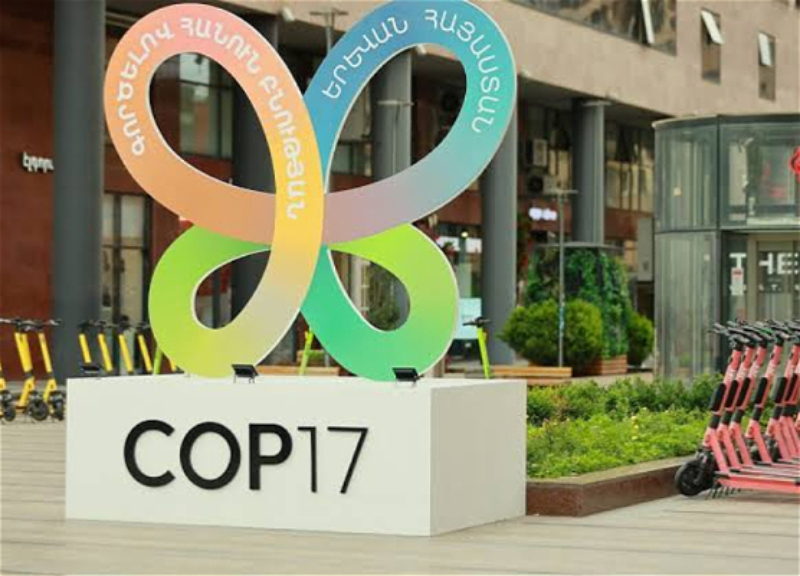
From October 19 to 30, Yerevan will host COP17 — the UN conference on biodiversity, where the protection of nature and the responsibility of states for its preservation will be discussed.
For Armenia, this is a convenient opportunity to make loud environmental statements and demonstrate commitment to the international agenda. But a major forum inevitably raises an uncomfortable question: how convincing is it to talk about saving ecosystems when one's own environmental practice leaves far too many grounds for criticism? Hosting an international event devoted to the protection of nature does not yet mean living up to the principles being proclaimed.
In mining regions, environmental problems have already manifested themselves in specific incidents. In August 2025, damage to a pipeline leading to the Nakhatak tailings pond resulted in pollution of the Debed River. The Armenian environmental inspectorate took samples and sent the materials to the Investigative Committee. In June 2026, yellowish runoff near an abandoned mine in Kapan once again forced supervisory bodies to test water and soil and to forward materials on a possible environmental offense to the prosecutor. The final conclusions of the investigations still matter, but the recurring alarm signals already raise the question of the quality of oversight of the industrial legacy and the mining industry.
The problem here is not limited to individual accidents or violations. The mining industry leaves behind tailings ponds, waste dumps and potential sources of pollution that require constant supervision. If oversight proves insufficient, the consequences may appear years later and affect territories far beyond the industrial site. That is why environmental responsibility must begin long before the next incident — with reliable monitoring, prevention and the inevitability of punishment for proven violations. Otherwise, the state is forced to deal with consequences that could have been prevented.
The situation with water resources looks no better. In the Ararat Valley, intensive extraction of groundwater for fish farming and irrigation has exceeded the capacity for natural replenishment of reserves. In August 2026, the authorities inspected 969 illegal deep wells in the Ararat and Armavir regions, suspended the operation of 146 of them and stated that thanks to these measures it would be possible to save about 15 million cubic meters of water annually. The very scale of the violations identified indicates that the problem did not arise yesterday and is not limited to a few unscrupulous users. At the same time, water from Lake Sevan is being used for irrigation. When a state has to shut down hundreds of illegal wells, its environmental statements should be measured above all against how it allowed such large-scale pressure on water reserves.
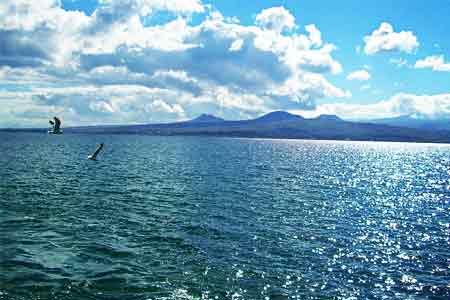
Water is a resource on which agriculture, settlements and the sustainability of natural systems depend. Its depletion cannot be compensated for by a single administrative raid: long-term control of water intake, compliance with established restrictions and an assessment of the real balance between consumption and the restoration of reserves are needed. A report on closed wells may indicate the beginning of work, but at the same time it serves as a reminder of the scale of the accumulated problem. For a country hosting a biodiversity conference, this is far from a secondary issue.
The consequences of Armenia's environmental policy are not confined to its territory. The Okhchuchay originates in Armenia, crosses the border and flows into the Araz, so pollution of the river becomes a problem for Azerbaijan. In 2021, a mass die-off of fish occurred on the Azerbaijani stretch; heavy metals, including cadmium, lead, nickel, manganese and zinc, were found in the samples. The Azerbaijani side linked the pollution to waste from the Kapan copper ore enterprise and the Zangezur copper-molybdenum combine. A transboundary river cannot serve as a free channel for transferring the consequences of someone else's industrial activity. If the source of pollution is located upstream, a state border does not absolve one of responsibility.
In such cases, open data exchange, joint monitoring and a readiness to eliminate the source of pollution, rather than limiting oneself to statements, are especially important. A country on whose territory an environmental problem originates cannot shift its consequences onto its neighbors. For Azerbaijan, the state of the Okhchuchay is not a subject of abstract international discussion, but a matter of water quality and the protection of its own natural environment. That is why the discussion of biodiversity in Yerevan should also include the problem of transboundary pollution, rather than avoiding it for the sake of an agenda convenient to the organizers.
The problems also affect protected natural areas. In 2023, more than eight thousand pines dried up in the Sevan National Park, and about another ten thousand trees were under threat. It was reported that signs of disease had been observed since 2017. Such losses require a convincing explanation and systemic measures, not a formal response after the fact. Natural heritage cannot be protected by statuses and fine formulations alone if alarming processes remain unresolved for years.
No less telling is the dispute around the Amulsar gold deposit near Jermuk. The project has been accompanied by protests and concerns about its impact on natural areas and water systems. In 2023, the Standing Committee of the Bern Convention called on Armenia to review the environmental assessment and to prevent threats to protected species and habitats, as well as to speed up the process of granting Jermuk national park status. In 2025, the authorities claimed that mining had not yet begun, although preparatory work had resumed. The very combination of commercial plans, public resistance and international environmental observations calls for especially strict oversight.
On August 31, 2026, the government, the company Lydian Armenia and representatives of several communities signed an agreement on the development of the territories. It provides for payments of $7 million annually during the construction and production stages, with a possible increase to $9 million during the extraction period if the average price of gold exceeds $3,550 per ounce. The economic benefits are presented quite concretely; the environmental guarantees should be equally convincing. Investments and revenues for local budgets may matter for the development of communities, but they do not cancel the obligation to prevent damage to nature. If the environmental risks are underestimated, their price may ultimately fall on the residents of the region and on future generations.
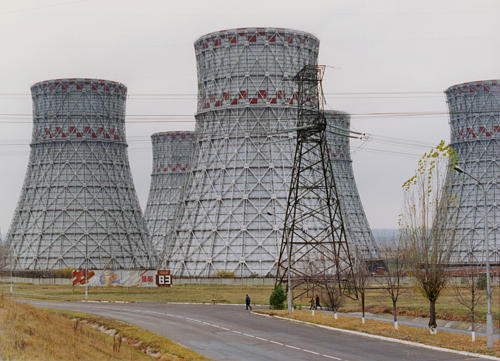
A separate topic is the Metsamor nuclear power plant, whose second power unit began operating in 1980. Armenia has extended the plant's service life and intends to keep it running until 2036, citing modernization and safety measures. But for a facility of such an age, it is not enough to refer to technical work that has been carried out. A transparent risk assessment, reliable oversight and openness toward neighboring states, which could also face the consequences of a possible accident, are necessary. Nuclear safety by definition is not confined to national borders, which means that any doubts require professional answers, not political self-reassurance.
COP17 should become a conversation about the real protection of biodiversity, water and natural ecosystems. However, for the host country this forum is also a test of consistency. One cannot convincingly call on the world to show environmental responsibility while avoiding uncomfortable questions about river pollution, illegal water extraction, the condition of forests and the risks of major industrial projects. The international status of the event replaces neither effective supervision, nor transparent investigations, nor responsibility for the damage caused.
For Azerbaijan, these issues are of practical importance, since the pollution of transboundary waters directly affects its interests. That is why Yerevan's environmental statements should be assessed not by the content of speeches on an international platform, but by the results of investigations, by real measures to protect nature and by a readiness to answer for the consequences of its own activities. Otherwise, COP17 risks turning into a showcase of environmental intentions, behind which unresolved problems will remain. And for nature, unlike for participants in international forums, declarations are not enough.