Tpe Executive Director Rustam Ismayilov Delivers Speech at UN Climate Conference - PHOTO

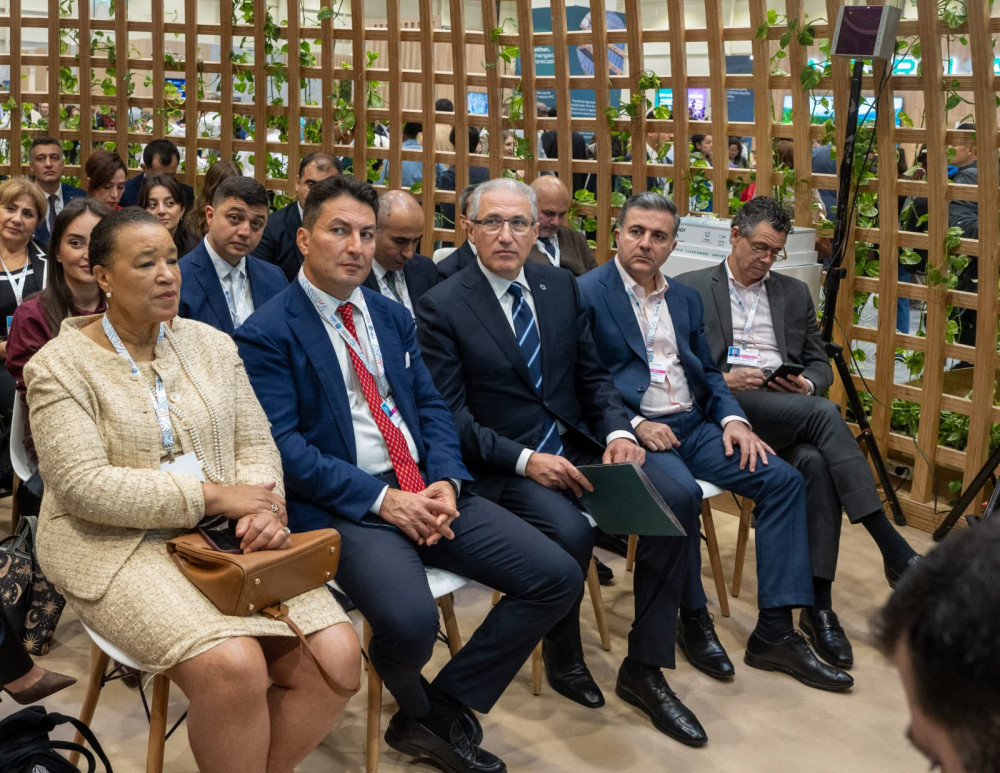
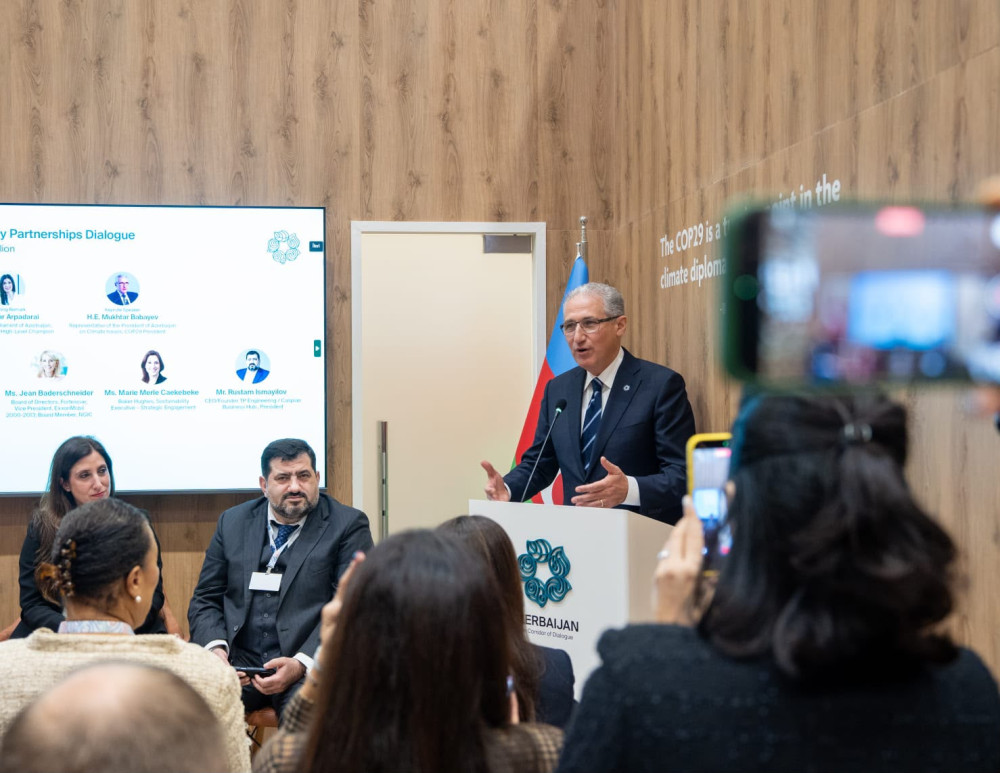
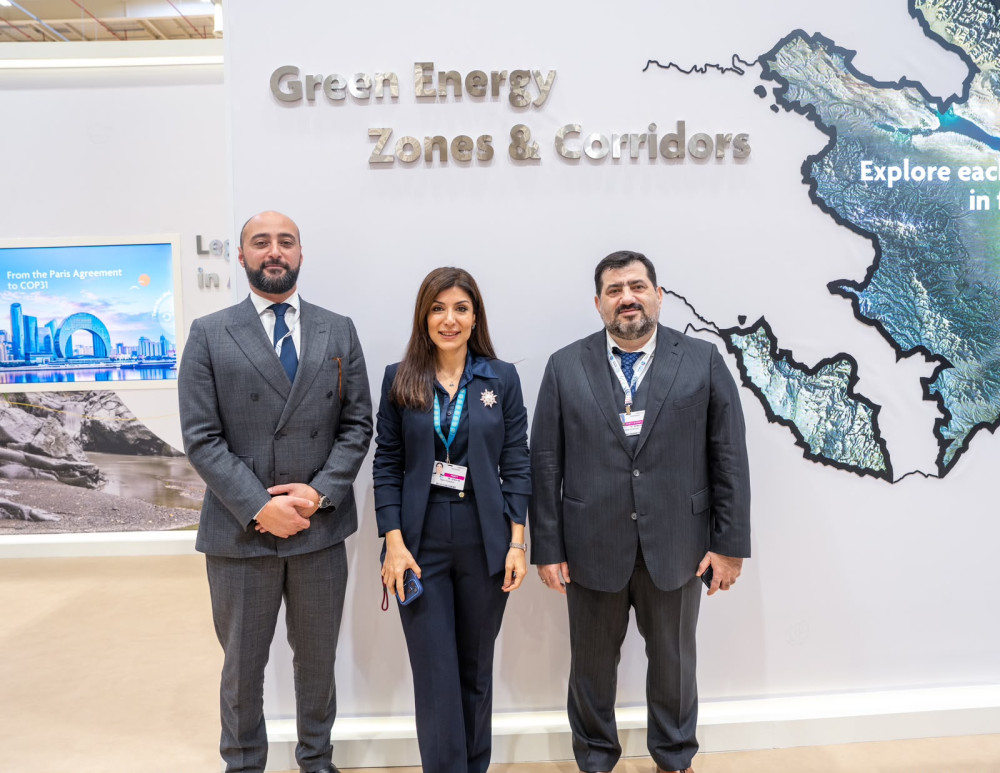
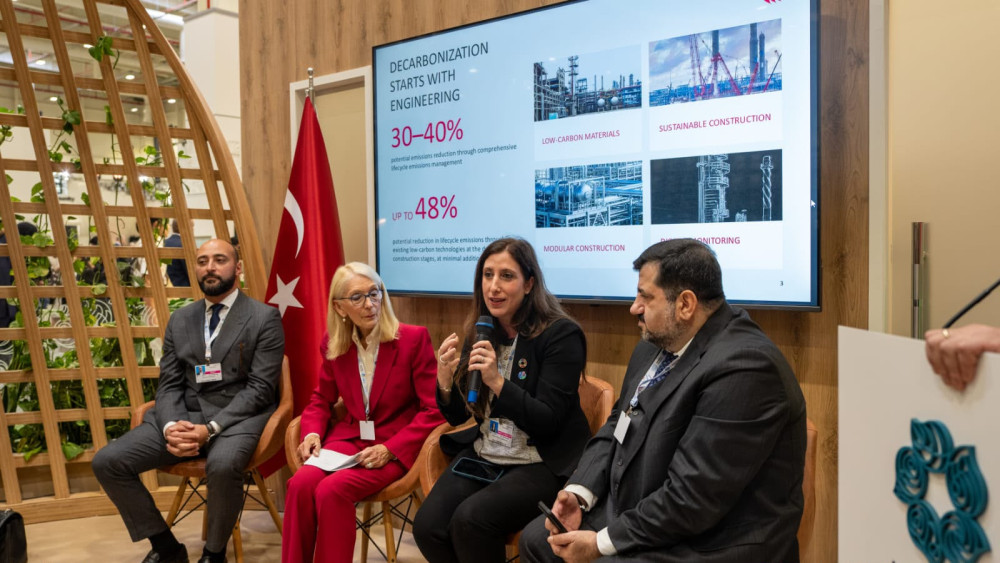
Rustam Ismayilov, Executive Director of engineering company tpe and President of Caspian Business Hub, delivered a speech at the COP31 climate conference in Antalya, addressing the topic “Environmental Requirements: A Challenge and an Opportunity for Regional Business”.
During his address, Ismayilov presented an initiative to establish a unified environmental support operator for small and medium-sized enterprises (SMEs). He also highlighted the importance of strengthening the competitiveness of national businesses and safeguarding their economic opportunities as the transition to a green economy gathers pace.
The issue is particularly significant for Azerbaijan, which is currently at an important stage of industrial and infrastructure development.
“2028 could be one of the peak years for demand for engineering, construction and maintenance services. It is therefore essential to develop solutions now that will shape the environmental and economic performance of these projects for decades to come,” Ismayilov said.
He identified the integration of environmental solutions at the earliest stages of infrastructure projects as another key priority. According to expert estimates, applying existing low-carbon technologies during the design and construction phases can reduce emissions across a project’s life cycle by up to 48%, while requiring only minimal additional investment. A comprehensive approach to emissions management throughout the entire project life cycle can deliver reductions of 30–40%.
“As an engineering company, we see several practical areas for action. The first is the use of low-carbon construction materials and the optimisation of their consumption. The second is improving the environmental performance of construction sites through measures such as electrifying machinery, reducing reliance on diesel generators and adopting alternative energy sources. The third is expanding the use of modular construction, which can significantly reduce waste, transport requirements and project delivery times. Finally, digital technologies—including BIM modelling and monitoring systems—make it possible to track resource consumption and manage the carbon footprint,” said the head of tpe.
According to Ismayilov, these measures can already deliver tangible environmental and economic benefits, provided they are implemented consistently by all project participants. “Every major industrial facility depends on dozens of contractors, including construction, installation, transport, engineering and service companies. We estimate that local SMEs account for up to 40% of the works, goods and services delivered within major infrastructure projects,” he said.
Ismayilov noted that failure to meet ESG requirements could prevent national contractors from accessing major contracts, even when they have the necessary professional expertise.
“Our task is not to lower standards, but to make compliance with them economically viable,” the tpe Executive Director emphasised.
To address this challenge, Ismayilov proposed establishing a unified environmental support operator serving a group of independent SMEs. The model would pool the expertise, technology and organisational resources required to meet environmental requirements.
The operator would provide participating companies with access to shared infrastructure and services. These could include the development of common environmental management methodologies, specialised consultancy and training, digital monitoring tools, assistance with ESG reporting and audits, and support for the adoption of low-carbon technologies. Pooling these services would allow costs to be shared among participants and reduce the financial burden on individual businesses.
The initiative is intended to benefit all market participants. Local contractors would be better equipped to meet the requirements of major clients; investors would gain access to more transparent and manageable supply chains; and the government would have an additional tool to advance climate objectives while supporting national entrepreneurship.
A pilot project, which Caspian Business Hub plans to launch in 2027, will be a key step in putting the initiative into practice.
“The project is expected to be implemented in cooperation with a group of SMEs. Its results will enable an independent assessment of the proposed model’s environmental and economic effectiveness. If the model proves successful, the approach is expected to be scaled up in 2028, first across Azerbaijan and subsequently in other countries of the Caspian region,” Ismayilov said.
Concluding his address, Ismayilov invited representatives of the Ministry of Economy of the Republic of Azerbaijan and SOCAR to join the initiative and take part in establishing a working group to develop an environmental support system for the country’s SMEs.
“The success of green industrialisation is measured not only by the number of technologies introduced or the volume of emissions reduced. It also depends on how many national companies are given the opportunity to become part of the new economy. Our goal is to strengthen competitiveness by enabling businesses to meet environmental requirements effectively,” Ismayilov concluded.