Sustainable urban development practices discussed at the Türkiye Pavilion during COP31 with the participation of the Karabakh Revival Fund - PHOTO

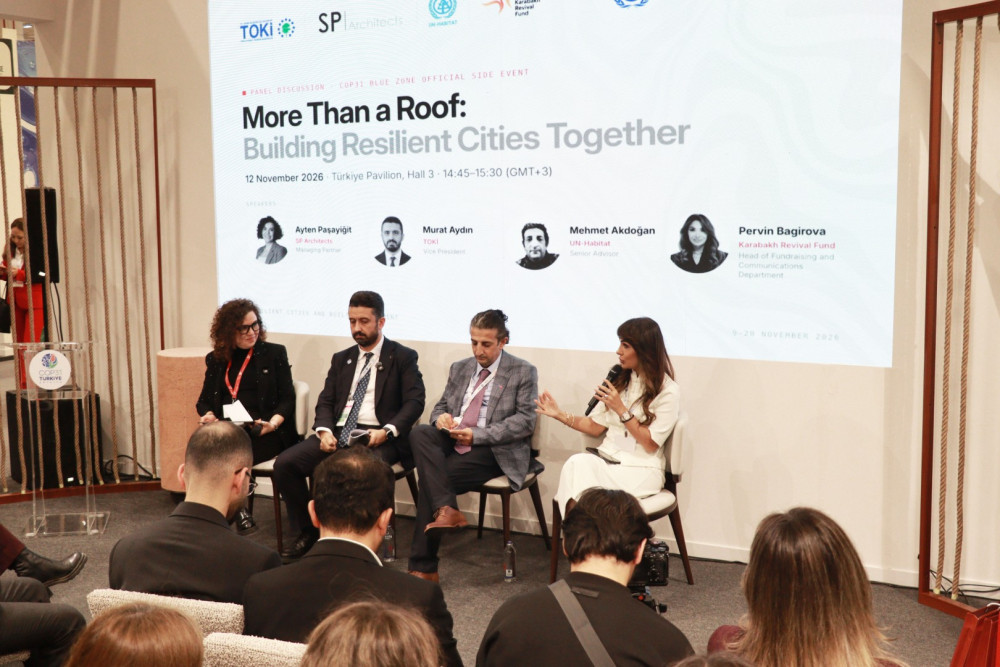
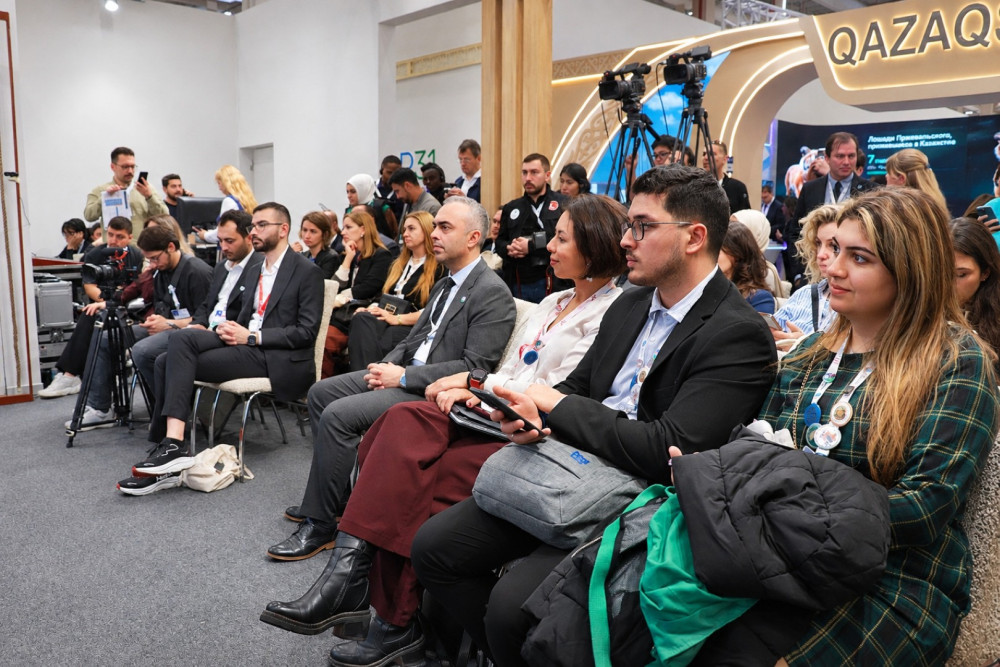
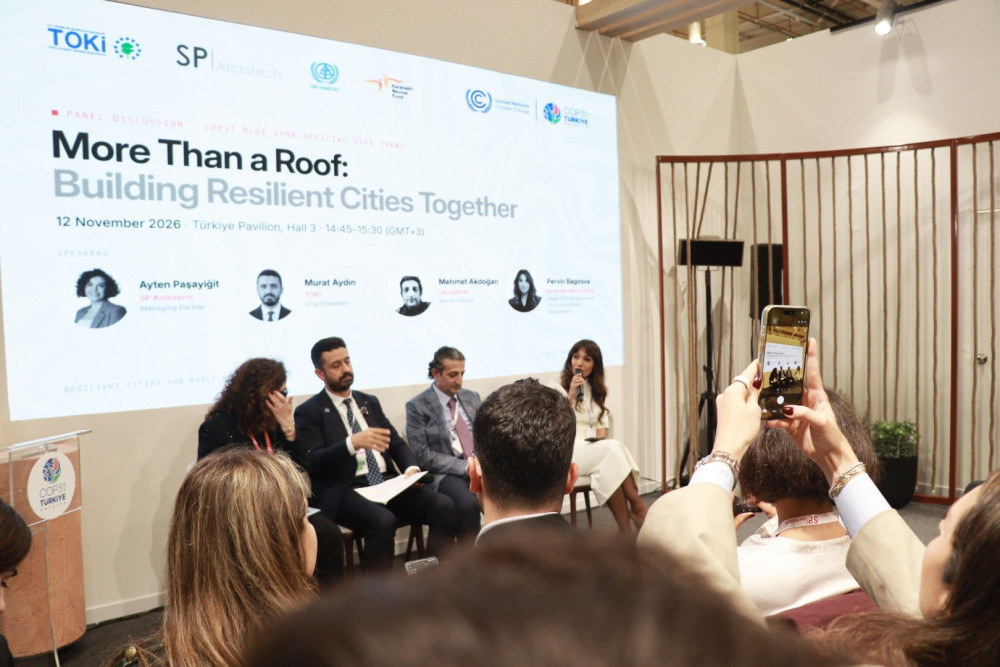
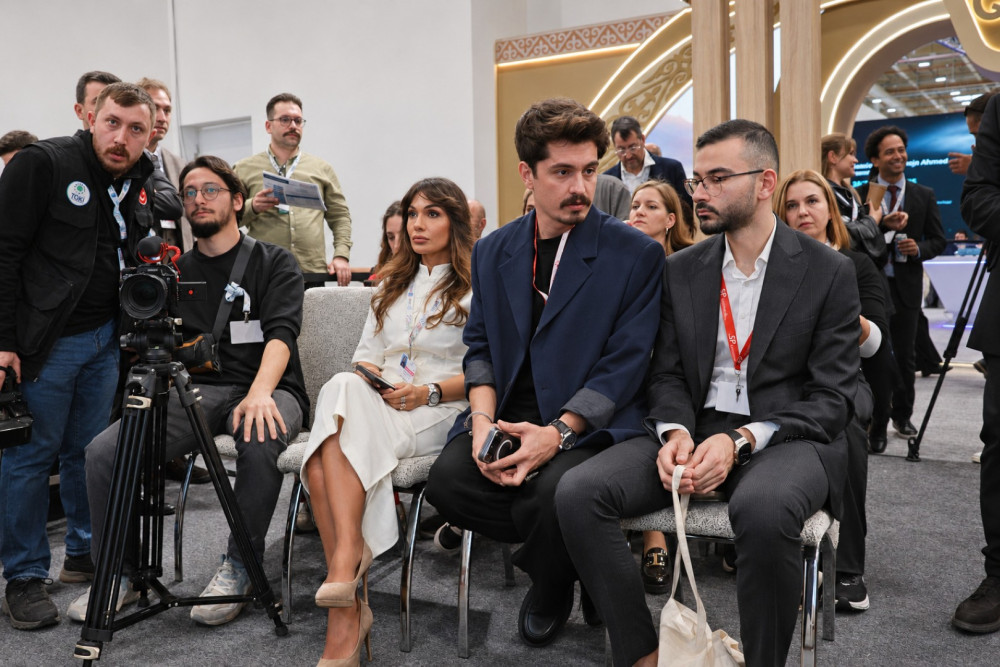
On November 12, 2026, a panel discussion titled “Sustainable Cities, Climate Resilience, and Modern Urban Development Practices” was held at the Türkiye Pavilion as part of the 31st session of the Conference of the Parties to the United Nations Framework Convention on Climate Change (COP31).
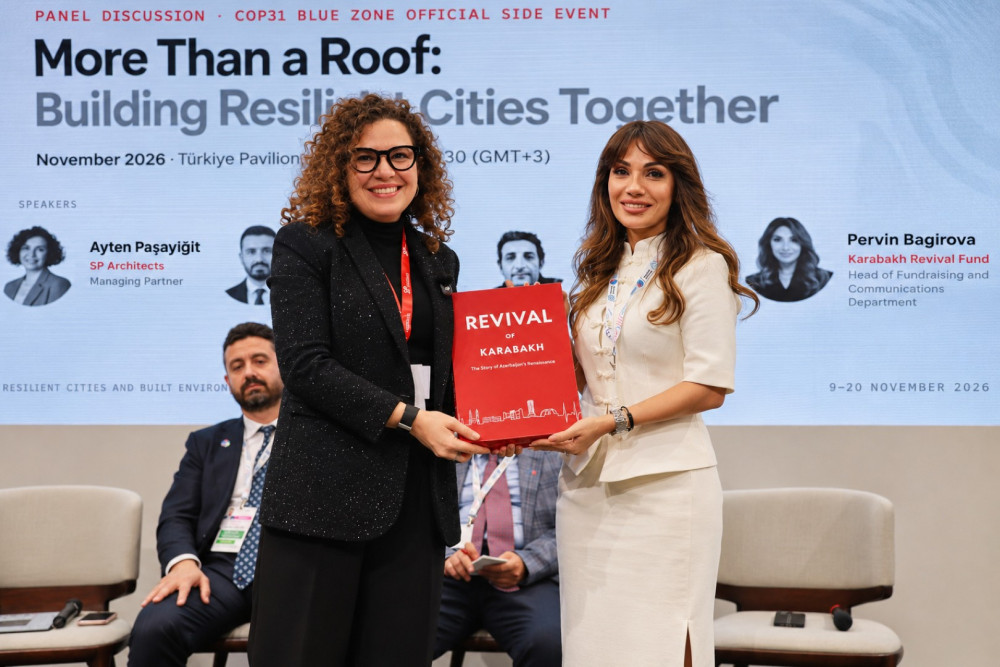
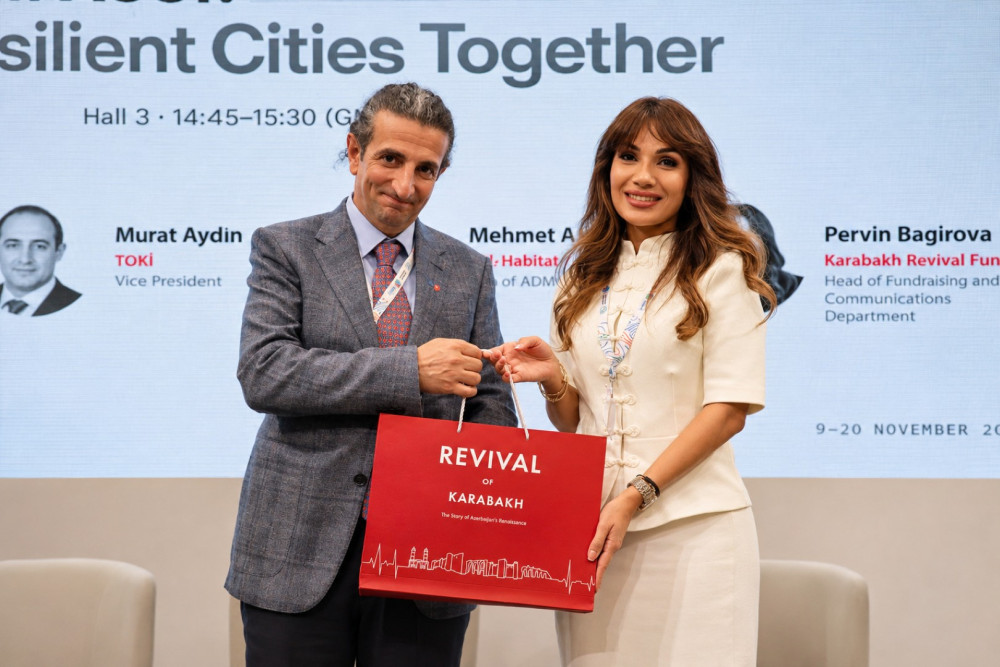
The discussion was moderated by Ayten Paşayiğit, Managing Partner of SP Architects, and featured Murat Aydın, Vice President of Türkiye’s Housing Development Administration (TOKİ); Mehmet Akdoğan, Senior Advisor to the United Nations Human Settlements Programme (UN-Habitat); and Parvin Baghirova, Head of Fundraising and Communications Department of the Karabakh Revival Fund.
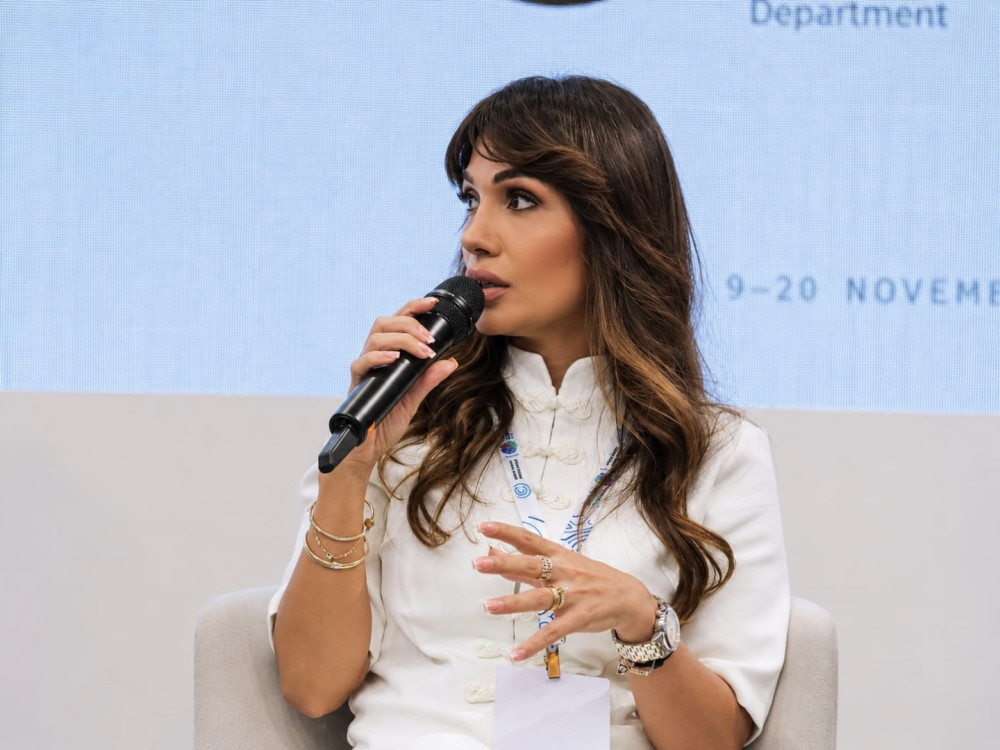
Speaking at the panel, Parvin Baghirova provided detailed information about the restoration and reconstruction efforts underway in Azerbaijan’s liberated territories, sustainable resettlement, modern urban planning approaches, and the Fund’s activities in these areas.
The Head of Department noted that the Fund was established pursuant to a Decree dated January 4, 2021, by the President of the Republic of Azerbaijan, H.E. Ilham Aliyev. She stated that its primary purpose is to support the state’s restoration and reconstruction policy and engage civil society, the private sector, and international partners in this process.
Addressing the impact of climate change on urban resilience, modern urban planning approaches, and the importance of Türkiye’s and Azerbaijan’s reconstruction experience, Parvin Baghirova noted that climate change has become a reality accompanied by droughts, floods, extreme heat waves, and the recovery costs they entail. According to her, cities must be made resilient to climate-related and natural disaster risks from the initial planning stage.
Referring to the earthquake that struck Türkiye on February 6, 2023, Parvin Baghirova emphasized that this tragedy was also a source of profound sorrow for the Azerbaijani people. She noted that Azerbaijani rescuers worked shoulder to shoulder with their Turkish brothers from the very first hours following the disaster. She also highlighted the importance of Türkiye’s reconstruction experience, particularly that of Kahramanmaraş, TOKİ, and the Urban Transformation Directorate, from an urban planning perspective.
Speaking about reconstruction efforts in Azerbaijan’s liberated territories, Parvin Baghirova noted that during the thirty-year occupation, cities such as Aghdam, Fuzuli, and Jabrayil, along with their infrastructure, were destroyed. However, she noted that an opportunity has now emerged to rebuild these territories in accordance with modern urban planning and sustainability principles.
It was noted that Garabagh and East Zangazur have been declared green energy zones, and restoration efforts are being carried out based on the “smart city” and “smart village” concepts. Residents are already living in Aghali, the first smart village. The declaration of 2026 as the “Year of Urban Planning and Architecture” and the hosting of WUF13 in Baku in May are also indicators of the importance attached to this field.
Parvin Baghirova highlighted that more than 40,000 former internally displaced persons have returned to 47 settlements, while approximately 96,000 people in total now live, work, and study across the region. Since 2020, more than 25 billion AZN has been allocated from the state budget for reconstruction efforts.
The speech also emphasized the importance of mine safety for sustainable development. It was noted that more than 300,000 hectares of land have been cleared of mines since 2020, while more than 400 people have been killed or injured in mine explosions. Parvin Baghirova explained that mines have left land, vegetation, and water resources inaccessible for many years, emphasizing that mine clearance is an integral part of Azerbaijan’s climate agenda.
In this context, on November 11, the documentary film “Deadly Legacy,” commissioned by the Karabakh Revival Fund, was screened at the Azerbaijan Pavilion. Directed by Alison Jayne Wilson, the film was shot in Azerbaijan, Bosnia and Herzegovina, Colombia, and Laos and highlights the shared challenges posed by landmines in different countries.
Speaking about the Fund’s initiatives in mine safety, Parvin Baghirova noted that grant competitions are organized for non-governmental organizations, mine detection dogs have been donated to ANAMA, and international projects such as “Deadly Legacy” have been funded. She also highlighted that the Fund’s new grant competition is aimed at supporting sustainable resettlement and community life in the liberated territories.
The speech also underscored the importance of economic development and employment in ensuring sustainable resettlement in Garabagh and East Zangazur. Parvin Baghirova stated that the Fund has begun working to support entrepreneurship, promote financial instruments for small and medium-sized businesses, and present the region to international investors.
The panel also raised the issue of mutual learning between Türkiye’s post-earthquake reconstruction experience and Azerbaijan’s urban development practices in the liberated territories. Parvin Baghirova stated that the Fund is open to cooperation through expert meetings, joint research, and projects for students pursuing studies in this field.
Concluding her remarks, Parvin Baghirova emphasized that although Kahramanmaraş and Aghdam have experienced different tragedies, both experiences reveal a shared truth: a sustainable city is not defined solely by strong infrastructure and buildings. It is also a place where people can return, live, and work, and look to the future with confidence.
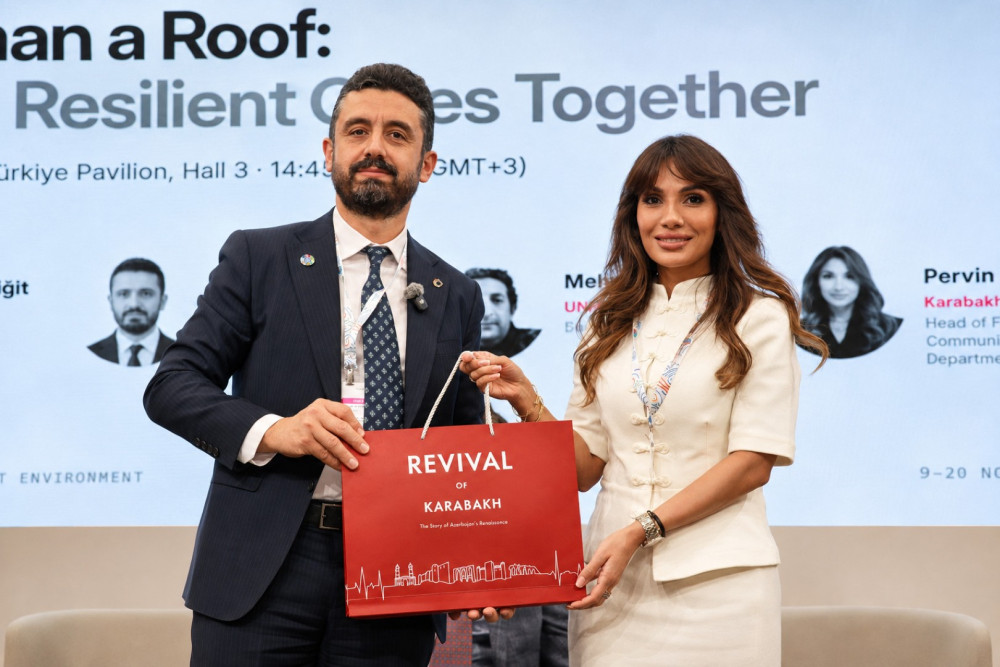
At the end of the event, Parvin Baghirova presented the panel participants with copies of the book “Revival of Karabakh: The Story of Azerbaijan’s Renaissance,” written by renowned British author Graham Wilson at the commission of the Karabakh Revival Fund. She noted that the book is important for communicating the realities of Garabagh to international audiences, including the large-scale restoration and reconstruction efforts being carried out in the liberated territories.