First knowledge, then choice: reflections on freedom and the secular school
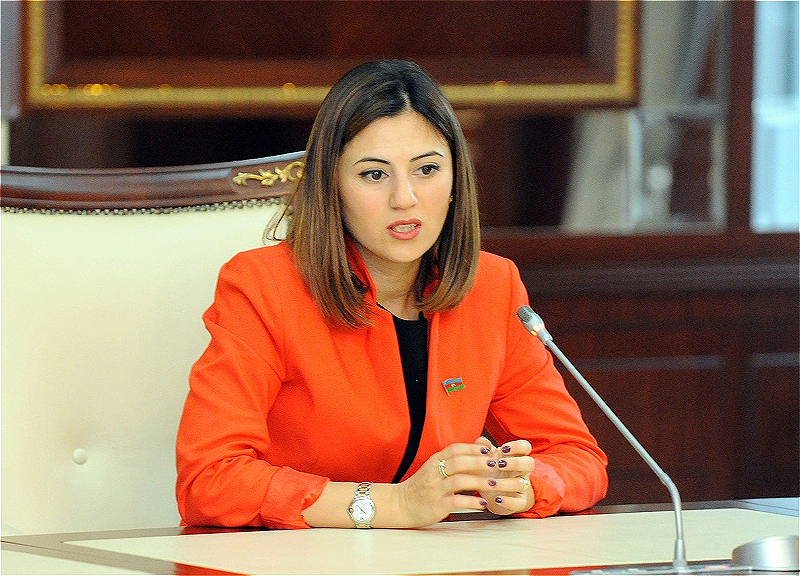
Sevinj Fataliyeva,
member of the Milli Majlis of the Republic of Azerbaijan
There are questions that cannot be resolved by a single decree alone, because they concern not only rules, but also how we understand the human being, freedom, and faith.
The question of what the space of a public school should be like belongs precisely to such topics. That is why I would like to speak about it not in the language of legal formulations, but in the language of meaning and essence.
Let us begin with the main concept — freedom.
We often speak of freedom of choice as if it arises together with the person and exists in a ready-made form from the very beginning. Meanwhile, freedom is not only the right to choose. It is above all the ability to make a choice. And such an ability is not given to a person all at once. It is formed gradually — along with experience, knowledge, the ability to doubt, to compare, and to bear responsibility for the decisions made.
The philosophers of the Enlightenment described this path as the emergence of the human being from a state of immaturity — that is, from a condition in which he does not dare to use his own reason without the guidance of another. Immanuel Kant saw in this the very essence of enlightenment: to have the courage to think independently.
A child, by his very nature, is only at the beginning of this path. He trusts adults, imitates them, strives to earn their approval and praise. This is natural and wonderful. But that is precisely why a decision a child makes at the age of eight, ten, or thirteen does not always fully belong to him. Often such a choice reflects the will of those whom he loves and trusts.
And this is not a reproach to families. Loving parents always want to pass on to their children what they themselves consider most valuable, and there is nothing reprehensible in that. The main question is different: where does the boundary lie between the transmission of values and that personal choice which a person must make independently?
The secular school answers this question very simply. It tells the child: here you are first and foremost a student. Here you are judged not by your family's origin, its material means or worldview, but by your knowledge. Here you learn to think. And how to use this ability, you will decide for yourself when you grow up.
Sometimes such an approach is perceived as a restriction. In my view, it is quite the opposite: it is a manifestation of deep respect both for the child and for faith.
For the child — because the secular school protects his right to a future independent choice. It does not decide for him what kind of person he should be.
For faith — because faith accepted consciously has an entirely different depth than habit or outward adherence to rules. In all great religious traditions, a person's sincere turning to God holds special value. The choice of an adult, understanding, and free person is a choice of both the heart and the mind. It is precisely such a choice that deserves genuine respect.
This question has yet another important aspect — equality.
A school class is perhaps the first society in a person's life in which he meets people unlike himself. Children from different families, with different traditions, different levels of prosperity, and different views of their parents sit in the same classroom, at adjacent desks. And how this first society is arranged largely determines what the adult society will later become.
If from the very first days children see themselves divided into groups by clothing, material status, or religious affiliation, they grow accustomed to living in a world of boundaries and divisions. But if they are united by a shared space, common rules, and a common goal — knowledge — they learn to see in one another first and foremost a human being.
That is precisely why common rules in school do not mean a desire to make everyone the same. It is a matter of equal starting opportunities. A child's individuality should be expressed in his thoughts, talents, work, and achievements, and not in external attributes that he often did not even choose himself.
Our people have their own rich and profound enlightenment tradition, and today it is especially important to remember it.
Azerbaijani enlighteners of the 19th and early 20th centuries — Mirza Fatali Akhundzade, Hasan bey Zardabi, Jalil Mammadguluzade, and many others — devoted their lives to one idea: the future of a people is determined by education. They fought against ignorance not because they rejected faith, but because they believed in the human being and his reason. They understood perfectly well that a people deprived of knowledge can easily become an object of others' manipulation.
When Haji Zeynalabdin Taghiyev opened a school for Muslim girls in Baku, the very idea of female education seemed extremely bold to many. Today we take pride in that step. We are also proud that the Azerbaijan Democratic Republic was one of the first in the East to grant women the right to vote.
All these achievements are united by one idea: the belief that a human being — and especially a girl, a young woman, a woman — has the right to knowledge and to decide her own destiny independently.
The modern secular school is a direct continuation of this tradition. It follows the same line: first knowledge, then choice.
I understand that the new rules cause anxiety for many people, and I treat these feelings with respect. The secular character of the school is directed neither against faith nor against the family. Mosques are operating, religious life is free, and the right of an adult person to profess his religion and live in accordance with its precepts is protected.
No one is depriving girls of the right to a future choice. It is only a matter of this choice being made when it truly becomes their own.
The school does not give a child ready-made answers. It gives him the ability to seek and find these answers on his own. Perhaps this is the most valuable gift that society can present to its children.
Let our children come to school as students — equal, open, and striving for knowledge.
And let them leave it as free people, capable of deciding independently what to believe in and how to live.
It is precisely in this, in my view, that the true meaning of secular education lies.