Gold rush against the backdrop of COP17. Amulsar exposes Armenia's environmental contradictions
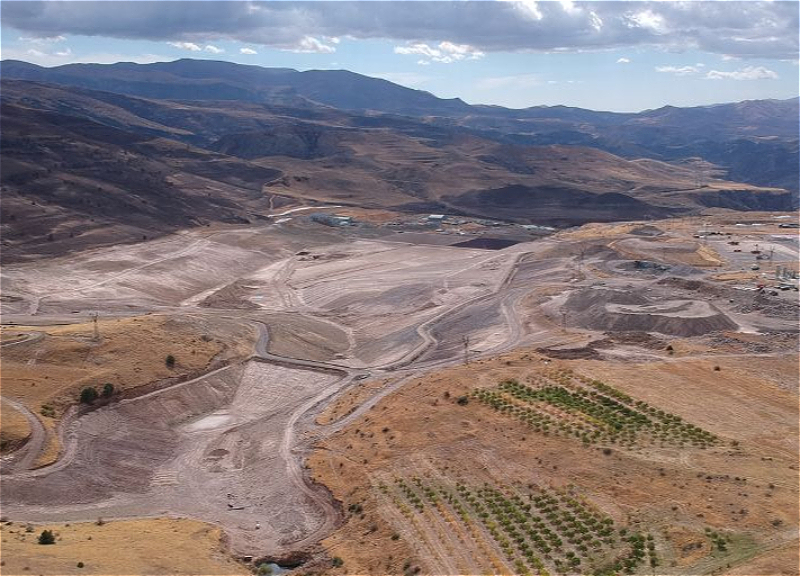
Yerevan is preparing to host an international conference on biodiversity, but on the eve of COP17 it is launching a gold mining project around which protests and disputes over safety have not subsided for years.
And this concerns not only the fate of Armenian natural areas; the consequences of possible contamination of water systems could also affect neighboring countries, including Azerbaijan.
The industrial development of the Amulsar gold deposit, after many years of delays connected, among other things, with environmental concerns, is moving into the practical stage of implementation.
The other day, Armenian Prime Minister Nikol Pashinyan took part in the ceremony launching the mine. Thus, a decision whose consequences for the environment remain the subject of heated debate has been backed by the political support of the Armenian government.
The result is a paradoxical contrast: the international agenda demands the protection of natural systems, while Armenia's economic strategy envisages extracting gold from a deposit located in an environmentally sensitive zone. The question is not the existence of the mining industry as such; it is who guarantees safety and how, if the price of a mistake is water contamination, the destruction of habitats of rare species, and damage that will not stop at the state border.
The price of golden promises
The name Amulsar translates from Armenian as "barren mountain." However, behind this name lies not a desert territory; this is an area connected with water systems and natural areas whose significance extends far beyond the deposit.
The mine is located approximately 13 kilometers from the resort town of Jermuk, on the territory of Armenia's Vayots Dzor and Syunik provinces, in the area of the catchment basins of the Arpachay and Bazarchay (Vorotan) rivers. Its proximity to mineral springs, water bodies, and protected natural areas became one of the main reasons for the years-long confrontation surrounding the project.
The deposit is considered the second largest in Armenia in terms of gold reserves. According to data previously provided by the operator, it contains about 73.7 tons of gold with an average content of 0.78 grams per ton of ore, as well as significant reserves of silver. The project is designed for more than ten years of operation, with an average annual production volume planned at the level of 200,000 ounces of gold. Its cost was estimated at approximately $370-400 million.

For the Armenian government, the economic arguments are obvious. The authorities are counting on tax revenues, jobs, infrastructure development, and additional budget income. According to official estimates, when fully operational the mine is capable of ensuring GDP growth of approximately 1% annually, while tax revenues could reach $120 million per year.
However, economic forecasts are expected benefits, whereas environmental consequences in the event of a serious accident or prolonged contamination could prove to be long-term. And it is precisely this contradiction that requires from the Armenian authorities not assurances of a favorable outcome, but maximally transparent oversight.
In February 2025, the government of Armenia adopted a decision to provide Lydian Armenia with budget guarantees amounting to up to $150 million for attracting credit funds. In addition, the state received 12.5% of the company's shares. In fact, the authorities not only permitted the project to continue, but themselves became a financially interested participant in it.
This circumstance deserves special attention. When the state simultaneously acts as a guarantor of financing, a shareholder, and a party interested in tax revenues, society must have the opportunity to make sure that environmental supervision remains independent and that monitoring results are not subordinated to commercial interests.
On August 31 of this year, the Armenian government, the company Lydian Armenia, and the communities of Jermuk, Vayk, and Sisian signed an agreement providing for the annual allocation, starting in 2027, of $9 million for the development of these territories during the period of the mine's operation.
Such payments may bring benefits to local residents. But they do not answer the main question: are the environmental protection measures reliable enough, and who will bear responsibility if they are not? Roads, schools, and additional budget revenues cannot compensate for the loss of water resources or the irreversible destruction of the natural environment.
Warnings that cannot be written off
The history of Amulsar shows that doubts about the project's safety arose long before its launch.
Back in 2018, residents of Jermuk and environmental activists blocked the roads to the deposit. The protests continued, and work effectively came to a halt for several years. Participants in the "Amulsar without a mine" campaign warned of the risk of destruction of the mountain landscape, water contamination, and damage to the region's ecosystem.

Their concerns involved not only the gold mining itself. In the course of development, it is planned to extract ore by the open-pit method and to use cyanide to obtain gold. Opponents of the project pointed to the potential risks of contamination of surface and underground waters, as well as to the consequences for Jermuk's mineral springs and the water systems connected with Lake Goycha (Sevan).
Pashinyan's government, which came to power in 2018, demanded a review of the project's permits and environmental issues. Subsequently, work was resumed, and in 2023 the parties signed a memorandum that provided, among other things, for the transfer of a stake in the company to the state.
The Armenian authorities assert that the necessary inspections were carried out and that the environmental risks have been studied and can be controlled. But the existence of such conclusions does not in itself mean that all concerns have been eliminated. Especially when it comes to complex mountainous terrain, water basins, and processes whose consequences may manifest themselves years later.
Doubts about Amulsar's environmental safety are also reflected in the materials of the Council of Europe's Bern Convention. Consideration of the project began after a complaint filed by environmental organizations in 2020. It pointed to the possible impact of the development on sites of the "Emerald Network" - a system of territories intended for the conservation of protected species and their natural habitats.
Among the potentially affected areas named are Jermuk, Sevan National Park, and Gorhajk. The case materials list possible threats to water systems and to the habitats of animals and plants.
In 2021, the relevant bodies of the Bern Convention again called for suspending work capable of negatively affecting protected species and their habitats. In 2023, the Standing Committee repeated the call to halt construction, revise the environmental impact assessment, and accelerate the process of declaring Jermuk a national park. The issue continued to appear in the convention's materials in 2025-2026 as well.
This does not mean that all the declared dangers have already materialized, but it does mean that environmental questions cannot be considered definitively closed merely because the authorities have decided to launch the mine. Instead of treating international warnings as grounds for additional verification, Yerevan has staked everything on the practical implementation of the project. And now responsibility for safety must be confirmed not by political statements, but by publicly available results of constant independent monitoring.
Transboundary water
Amulsar's geographic position is cause for particular alarm. Rivers do not recognize state borders.
The Arpachay River is connected with the Araz basin, while the Bazarchay (Vorotan) passes through the southern regions of Armenia and is further connected with the region's transboundary water system. In particular, the Okhchuchay, which originates in Armenia, flows through the territory of Azerbaijan's Zangilan district and empties into the Araz.
Therefore, any impact on water quality in transboundary basins requires special attention. In assessing the Amulsar project, it is important to establish what pollutants may be generated during mining, by what route they are capable of entering the water network, and what the possible consequences are for downstream territories.
The sulfide rocks contained in the deposit, under certain conditions, may create a risk of acid drainage - upon contact with air and water, minerals oxidize, as a result of which acids and dissolved metals are able to enter the aquatic environment. The use of cyanide in gold extraction also requires strict control over storage, waste processing, and the prevention of leaks.
It cannot be asserted that each of these scenarios will necessarily materialize. But it is precisely the probability of such processes that explains why heightened requirements are imposed on projects of this scale. If contamination enters the river, the consequences could spread to territories whose residents will receive neither jobs from the mine nor a share of its revenues, but will be forced to deal with environmental problems.
For Azerbaijan, this question has practical significance. As a downstream state along a number of transboundary water systems, the country is directly interested in the quality of water arriving from adjacent territories. Potential contamination is capable of affecting water resources, agriculture, and the ecosystems connected with them.
Moreover, this concerns not only Amulsar. The situation requires an assessment of the cumulative impact of Armenia's mining industry, including enterprises in the Syunik province and the Alaverdi area. To understand the real scale of the threats, comparable monitoring data, open exchange of analysis results, and verification of the condition of water bodies on both sides of the border are necessary.
Here it is appropriate to turn also to the Espoo Convention, which establishes procedures for environmental impact assessment in a transboundary context. Its principles presuppose that potentially affected states must have the opportunity to receive information and participate in the discussion of projects capable of affecting their territory. Environmental safety cannot depend exclusively on how convincing the state on whose territory extraction is being carried out considers its own guarantees to be.
Okhchuchay: a warning that can no longer be ignored
For Azerbaijan, concerns about transboundary contamination are not limited to hypothetical scenarios.
For several years, Azerbaijani specialists have reported serious contamination of the Okhchuchay, linking it to the activities of mining enterprises on the Armenian side, including the Kajaran copper-molybdenum and Kafan copper ore plants.
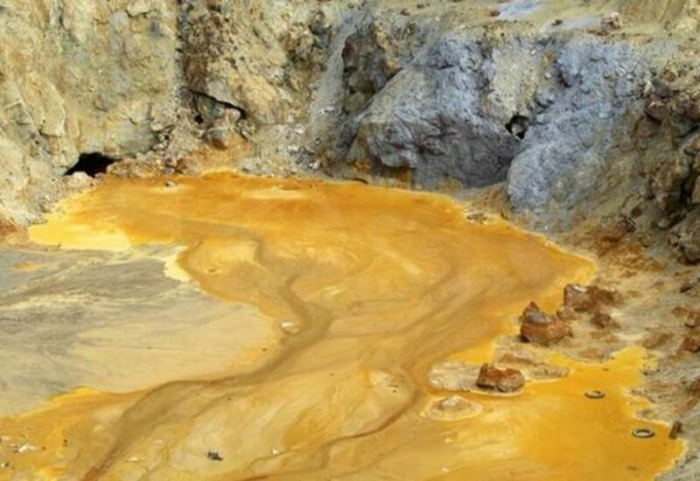
According to monitoring data from Azerbaijan's Ministry of Ecology and Natural Resources, water samples from the Okhchuchay recorded excesses of permissible concentrations of copper, molybdenum, manganese, iron, zinc, chromium, and other substances. Changes in the color of the water, the appearance of a sharp odor, and elevated content of ammonium and sulfates were also reported. Data from automatic hydrological stations on transboundary rivers indicated a deterioration in water quality indicators.
Even if it is incorrect to automatically transfer these results to the development of Amulsar, they show why environmental control of mining enterprises in the region must be constant and independent, rather than reduced to one-time inspections before the issuance of permits.
The experience of the Okhchuchay clearly demonstrates how acute a problem industrial pollution can become for a neighboring state. Consequently, in implementing new large projects it is not enough to assure the population that modern technologies minimize risks. It is necessary to establish a control system in advance, ensure open access to analysis results, and determine mechanisms for rapid response to possible contamination.
Azerbaijani specialists have repeatedly raised the question of the environmental impact of Armenia's mining industry. The Environmental Protection First coalition has declared its readiness to cooperate with Armenia's environmental organizations, foreign experts, and international structures to conduct monitoring of the industry's enterprises.
Such a proposal deserves consideration on its merits. If environmental safety is truly a priority, then international oversight and professional cooperation must be perceived as a real instrument for preventing damage.
Economic benefit today - an environmental bill tomorrow?
Amulsar's environmental contradictions are unfolding against the backdrop of broader problems of natural resource management in Armenia itself.
The World Bank report on the country's climate and economic risks, published in November 2024, notes a high level of water stress. In the Ararat Valley, the withdrawal of groundwater for commercial fish farming and irrigation exceeds the volume of its annual natural replenishment. The volumes of water released from Lake Goycha (Sevan) for irrigation needs also substantially exceed the indicators of historical natural runoff. This creates an additional burden on water resources and the ecosystems connected with them.
Against this backdrop, the launch of a large mining project in an area that raises concerns due to possible impact on water systems and natural territories requires especially rigorous justification.
Here a fundamental problem of Yerevan's economic policy becomes apparent. The authorities speak in detail about potential revenues, jobs, taxes, and investments. But the environmental costs, if they arise, may turn out to be distributed in a completely different way - the profit will go to the company, the budget, and the local economy, while the consequences of contamination are capable of affecting a far wider circle of people and territories.
That is precisely why environmental assessment must not turn into a formality needed only to launch the project. It must remain a functioning control mechanism throughout the entire period of the deposit's operation, including monitoring of water, soil, air, the condition of protected species, and waste management.
For Amulsar, this means the necessity of regularly publishing the results of independent studies, disclosing information about the technologies used and accident risks, ensuring specialists' access to data, and determining in advance responsibility for possible damage.
Where transboundary risks are present, such measures must necessarily also provide for interaction with neighboring states.
Otherwise, promises of environmental safety risk turning out to be merely part of the advertising accompaniment of an expensive project.
COP17: a test of responsibility
The approaching COP17 conference provides Armenia with an opportunity to show how international environmental commitments are embodied in national policy. That is precisely why Amulsar is becoming a telling test for the host country.
It is impossible to convincingly call on the world community to preserve biodiversity while sidestepping questions about the impact of one's own industrial projects on natural territories. Environmental safety cannot be regarded exclusively as a state's internal affair when river basins and natural systems connect several countries.
Armenia will have to answer entirely concrete questions: how fully have the risks of the Amulsar project been assessed, how will the independence of monitoring be ensured, in what way will water resources be protected, and what mechanisms are provided for in case of transboundary contamination? And, finally, are the authorities prepared to provide international experts and the public with data allowing their assurances to be verified?
These questions do not negate Armenia's right to develop its economy and use its natural resources, but such a right does not relieve it of responsibility for the consequences of economic activity. The higher the potential damage, the stricter the requirements for transparency, control, and risk prevention must be.
If COP17 in Yerevan is truly intended to become a platform for a serious international conversation about preserving biodiversity, Amulsar must not remain outside this discussion. Its example poses a question that is far broader than the fate of a single gold mine: who is responsible for natural resources when one state's economic benefit may turn into a risk for an entire region?