UN sounds the alarm over the rapid spread of Ebola in Congo
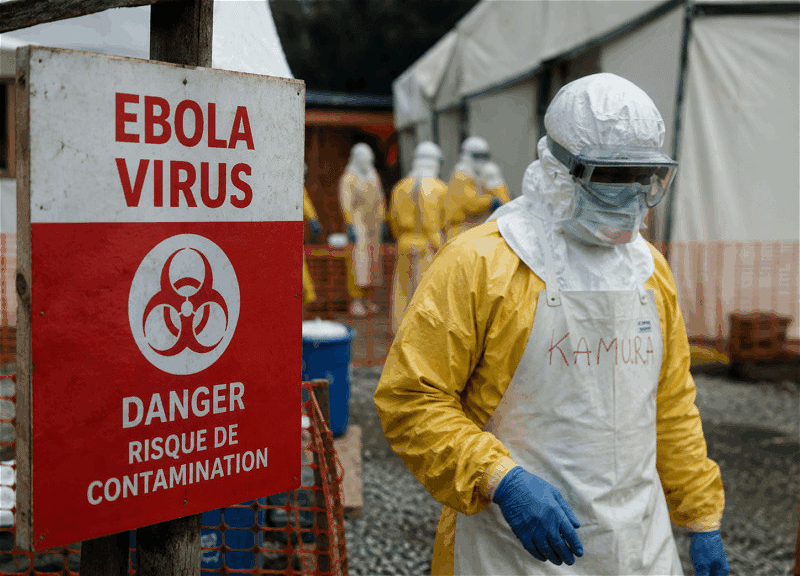
UN Under-Secretary-General for Humanitarian Affairs and Emergency Relief Coordinator Tom Fletcher has called on the international community to urgently scale up assistance to the Democratic Republic of the Congo (DRC) in connection with the fastest-growing Ebola epidemic in the history of the fight against this disease.
1news.az reports this with reference to the UN News Service.
In recent weeks, the UN Secretary-General, the head of the World Health Organization (WHO) and Fletcher himself have repeatedly warned about the seriousness of the outbreak. «We must turn this alarm into action,» he stressed.
Let us note that the epidemic has engulfed a country that is already going through a deep humanitarian crisis: nearly 11 million people here need assistance, while armed conflict is forcing families to leave their homes amid an acute food shortage.
The scale of the response is growing, but the virus is spreading even faster, Fletcher warned. The outbreak has already been recorded in six provinces, including those where an unsafe environment limits access for humanitarian workers and where health systems are weak to begin with. In such conditions it is more difficult to identify the sick, trace their contacts, treat patients and win people's trust.
It is emphasized that the outbreak is having a particularly severe impact on women and girls, above all pregnant women. Children who have lost their parents and guardians become easy prey for human traffickers.
«This is not just a health emergency. This is a humanitarian crisis layered on top of many already existing ones,» Fletcher noted.
The UN News Service reports that the emergency relief coordinator highly praised the efforts of the DRC government, which is acting with the support of UN agencies and other partners. Operational centers have started working, funds have been mobilized, and a unified system for coordinating efforts has been built as part of the «humanitarian reset.»
However, it is no longer possible to respond with targeted measures to an epidemic that is growing «exponentially,» Fletcher warns. What is needed is a large-scale and long-term operation capable of outpacing the virus: more places to treat the sick, more teams providing safe and dignified burials, and reliable access for humanitarian workers and cargo.
«Ebola cannot be fought in isolation from everything else,» he states. «People need functioning medical services, clean water, sanitation, food, protection and livelihoods. And most importantly – trust.»
Those working on the front lines of the fight against the epidemic are taking enormous risks: more than 40 health workers have died of Ebola fever while saving others, and treatment centers and ambulances have repeatedly come under attack. Fletcher called for ensuring the protection of medical personnel.
Preparedness measures have also been strengthened in neighboring countries, above all in South Sudan and the Central African Republic, which are themselves experiencing severe humanitarian crises. Last week, the WHO announced the end of the outbreak in Uganda – no new cases of the disease had been registered there for 42 days.
The revised humanitarian plan for the DRC for 2026 is estimated at 2.1 billion dollars (3.57 billion manats), of which 300 million (510 million manats) is intended directly for the fight against Ebola. At the same time, donors have provided only about half of the necessary funds. «The virus will not wait until we find this money,» Fletcher remarked.
From the Central Emergency Response Fund, Fletcher allocated more than 57 million dollars for assistance and preparedness in the DRC and neighboring countries.
Fletcher addressed three appeals to states. The first is to use their influence to keep the crisis at the center of the international agenda. The second is to ensure the safe and rapid movement of humanitarian personnel and cargo. The third is to increase funding and make it more flexible, and not only for the fight against Ebola but for the entire humanitarian operation in the DRC.
«We have the experience, we have the means and we have remarkable people risking their lives to stop this epidemic. What is needed now is political will, access and resources,» the UN representative concluded. «We have defeated Ebola before. We can do it this time as well.»
Read on the topic:
WHO warned that the Ebola outbreak in Congo could become the largest in history
WHO: The new outbreak of Ebola fever in the DRC is spreading faster than previous ones