Diplomats came to Karabakh. Why does this worry Armenia so much?
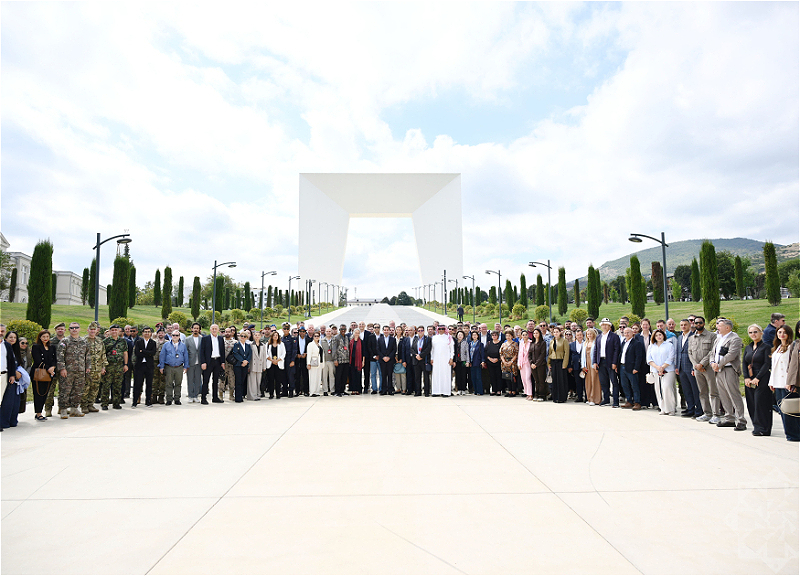
The trip by representatives of the diplomatic corps accredited in Azerbaijan to Karabakh and East Zangezur has ended, but the reaction it provoked in Armenia is, judging by all appearances, only gaining momentum.
Within a few days, a whole chorus of statements has emerged in the Armenian information and political field — here there are grievances against foreign diplomats, accusations against Baku, demands to give a political assessment of the trip, and talk of the "appropriation" of Armenian heritage. Moreover, the tone of these statements noticeably goes beyond the bounds of the usual discussion around historical and cultural sites.
The fact of the trip itself, meanwhile, is extremely simple. Foreign diplomats visited territories under the sovereignty of Azerbaijan. This was already the 22nd such trip. Around 150 representatives of 58 countries and nine international organizations took part in the current visit. They visited Khankendi, Shusha, Aghdere, Kalbajar, visited the Ganjasar and Khudavang monastery complexes, familiarized themselves with the progress of the restoration of the liberated territories, and saw sites that are part of Azerbaijan's historical and cultural heritage.
It is precisely this circumstance that is the main one which Armenian critics of the trip are today trying to leave out of the equation. The diplomatic corps did not come to Yerevan or to the territory of Armenia. It came to Azerbaijan — to regions that Baku, after restoring its control over them, regards as part of its sovereign territory and where the state is carrying out a large-scale restoration program. Therefore, the very organization of such trips requires neither coordination with Yerevan nor its political approval.
In this sense, an entirely logical question arises: why does the visit of foreign diplomats to Azerbaijani territories provoke such a stormy reaction in Armenia?
The answer to it is largely provided by the Armenian information agenda of recent days itself. For Yerevan and a significant part of the Armenian socio-political field, the problem lies no longer in the fact of the trip itself, but in what exactly is being shown to foreign representatives and what historical interpretation they hear in the process.
The situation manifested itself particularly acutely around Ganjasar and Khudavang. The Azerbaijani side presents these monuments in the context of the history of Caucasian Albania and points to the changes, in particular the Armenianization, to which these and other historical sites were subjected during the period when the territories of Karabakh and East Zangezur were under Armenian occupation. It is precisely here that the real nerve of the Armenian reaction was exposed.

And here it is important to separate two completely different things. Azerbaijan has the right to determine independently which events to hold on its own territory, whom to invite to Karabakh, and what position to present to foreign guests. As for the opinion that the Armenian side possesses an exclusive right to historical interpretation, it requires an evidentiary basis, not political declarations.
However, it is precisely here that the Armenian reaction takes on an overtly political character.
Armenia's Minister of Foreign Affairs Ararat Mirzoyan stated that the Armenian side had taken "the necessary steps" in connection with what was happening in Ganjasar, and he referred to the Matenadaran (a repository of ancient manuscripts in Yerevan) as a specialized structure. That is, official Yerevan did not ignore the situation but deemed it necessary to bring in state and scientific-cultural structures.
In parallel, the Speaker of Armenia's parliament, Ruben Rubinyan, stated that Baku's statements about the Albanian heritage of Karabakh do not contribute to peace. Representatives of the Armenian opposition and various public organizations spoke out even more harshly.
The reaction to the foreign diplomats themselves deserves particular attention. They have in fact begun to be reproached for having agreed to take part in events on the territory of Azerbaijan. In a statement by one of the Armenian organizations, the trip was presented as part of a policy allegedly pursued by Baku of changing the origin of "Armenian heritage."
The result is a rather paradoxical picture. Representatives of foreign states come to the territory of Azerbaijan, which they visit as part of an officially organized trip, familiarize themselves with the restoration of the region, its economic facilities and historical monuments — and for this they become the object of political criticism from Armenia. One gets the impression that for certain forces in Yerevan the very fact of the presence of foreign representatives in Karabakh is becoming a problem regardless of what exactly they see there.
But there is a fundamental difference between disputing Baku's historical interpretation and effectively calling into question Azerbaijan's right to receive foreign diplomats on its own territory. After the end of the war, Karabakh ceased to be a zone closed to the outside world. On the contrary, Azerbaijan is consistently opening the region to foreign diplomats, journalists, representatives of international organizations, investors and guests. Let us recall that the current trip by representatives of the diplomatic corps was already the 22nd and clearly not the last.
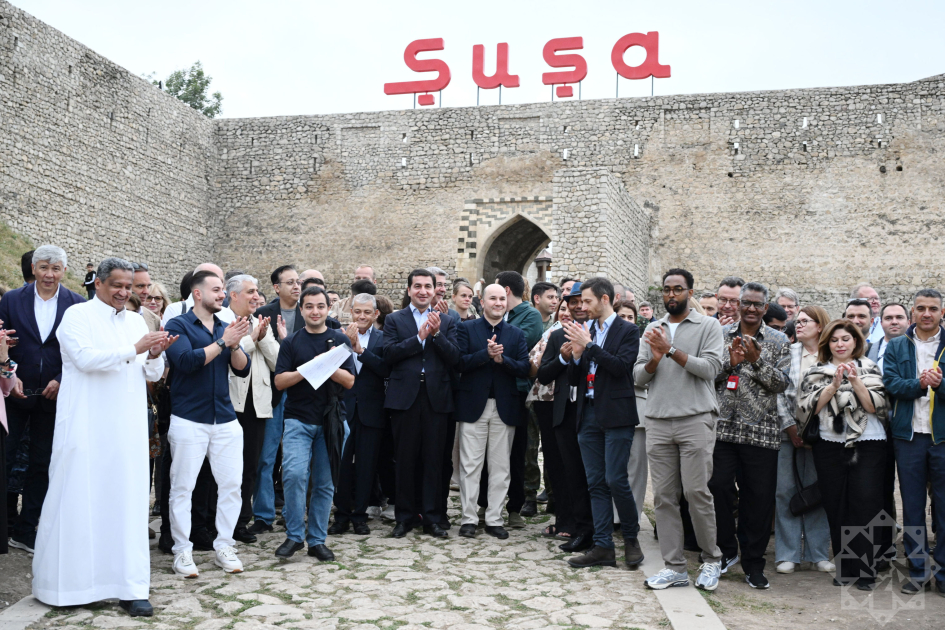
For Baku there is a very concrete sense in this. Foreign representatives get the opportunity to see Karabakh not through the materials of Armenian propaganda, but directly on the spot, with their own eyes. They see the districts destroyed during the years of the conflict, new roads, infrastructure projects, the restoration of towns and villages, the work of enterprises, historical monuments and the reconstruction program being carried out by the state.
In this respect, the regular trips of the diplomatic corps are becoming part of the region's new reality. The more foreign representatives visit Karabakh, the fewer opportunities remain for the monopolization of "historical truth" by the Armenian side and for its speculation regarding the constructive processes taking place there. And it is precisely this that is probably one of the reasons for such a nervous reaction in Armenia.
The nature of this reaction is hidden in revanchism, an idea that has permeated the entire Armenian political establishment — not only its marginal part in the person of the radical opposition, but the authorities themselves. At the same time, while the Armenian opposition speaks openly about the intention to "return" Karabakh, the authorities speak of peace, normalization of relations, peaceful coexistence and so on. But these, as it turns out, are merely words; there is no sincerity behind them. And in the hysterical campaign unfolding in Armenia in connection with the diplomats' trip to the liberated territories, the Armenian authorities themselves play no small role.
For the peace process this creates an obvious problem. A peace agreement in itself does not mean the disappearance of all contradictions. But if every trip by a foreign diplomat to Karabakh is declared a provocation, and any presentation of the Azerbaijani historical position a threat to peace, the space for normal communication will only narrow.
At the same time, the current situation also shows something else. Despite all the criticism, international representatives continue to come to Karabakh. Moreover, with each time their ranks expand further. Regular trips are becoming part of diplomatic practice. And no statements by Armenian politicians or public organizations are capable of changing this and forcing Azerbaijan to abandon an already established good tradition. Moreover, as Karabakh is restored, the content of such trips will also expand: from familiarization with monuments and infrastructure to new economic, cultural and international events.
Therefore, the question that is gradually arising before the Armenian political class no longer consists in how to prohibit foreign diplomats from visiting Karabakh. Such a mechanism does not exist. The question is different: how will Armenia exist in the new regional reality, in which Karabakh is no longer an object of its control, and its future is determined within the framework of Azerbaijan.