September 27: from Victory to a new architecture of peace and security
"After September 27, 2020, the South Caucasus is no longer the same South Caucasus. The results of the 44-day Patriotic War were not limited to the liberation of a significant part of Azerbaijan's territories from occupation. The war changed the political order that had been taking shape in the region over decades, formed a new balance of power, and shifted the future agenda of Azerbaijani-Armenian relations onto an entirely different plane.
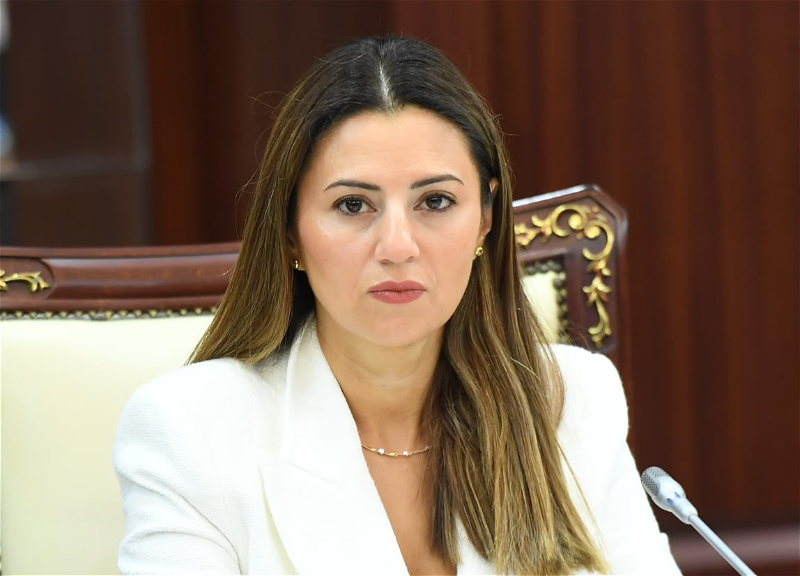
That is precisely why, six years later, September 27 — the Day of Remembrance — must be viewed far more broadly than solely through the prism of the military events of 2020. Today it is already possible to assess the strategic results to which the process that began on that historic day has led," said Sevinj Fatalieva, a deputy of the Milli Majlis of Azerbaijan.
According to her, before the war the main discussion was built around the question of "how the conflict should be settled." Over nearly thirty years of the negotiation process, countless meetings were held, statements were made, and mediation initiatives were undertaken, yet the real state of affairs remained unchanged. The fact of occupation persisted, and hundreds of thousands of Azerbaijanis could not return to their native lands.
In 2020, this model was destroyed. The military results achieved by the Azerbaijani Army in 44 days also changed the very essence of the diplomatic process. Whereas previously negotiations were conducted amid ongoing occupation, after the war the issues of delimiting borders, opening communications, normalizing relations, and concluding a peace treaty came to the center of the agenda. This became a fundamental change.
The events of September 2023, in turn, completed for Azerbaijan the stage of actually ensuring state sovereignty throughout the entire territory of the country. Thereby one of the main problems that had long faced Azerbaijani statehood was resolved — ensuring unified state authority across the country's entire internationally recognized territory. From that moment, the nature of the main tasks facing the state also changed.
The deputy noted that if before 2020 the main national goal was the liberation of the lands from occupation, today the strategic task is to restore sustainable life in these territories, return people to their native lands, and transform the military-political result achieved into a solid system of security and development.
It is precisely through this prism that the large-scale construction being carried out today in Karabakh and East Zangezur should be viewed. The construction of new roads, airports, energy and communication infrastructure, residential complexes, and schools goes far beyond ordinary economic projects. This is about forming the social and economic foundations of the long-term presence of the Azerbaijani state in these territories.
In the parliamentarian's opinion, the Great Return also occupies a central place in this policy. The return of people to their native land after decades shifts the concept of territorial integrity from the plane of state borders on a map into real life. State sovereignty begins with the raising of the flag, but it is not exhausted by that. Its full content is formed by security, the economy, effective governance, and the ability of citizens to live in their own homes.
At the same time, the most important issue of the new stage is peace. The initialing on August 8, 2025, in Washington of the text of the Agreement on the Establishment of Peace and Interstate Relations between Azerbaijan and Armenia became an important diplomatic step at the post-conflict stage. This process shows that the new reality formed after 2020 must be consistently consolidated in the political and legal plane. The result of the war should not be permanent confrontation, but the creation of a sustainable system of peace.
"However, the signing of a document alone is not enough to ensure lasting peace. For it to be long-term, the parties need mutual respect for each other's sovereignty and territorial integrity, security guarantees, stability on the border, as well as the elimination of legal and political problems capable of once again creating grounds for confrontation," Sevinj Fatalieva emphasized.
According to her, it is precisely in this context that the contemporary significance of September 27 manifests itself especially clearly. Six years ago, Azerbaijan began to resolve the historic task facing it in the military plane. Today the country faces the responsibility of ensuring the political irreversibility of the Victory and forming on its basis a secure regional system for future generations.
"The highest manifestation of respect for the memory of our martyrs lies not only in remembering their heroism, but also in making irreversible the security, sovereignty, and development of Azerbaijan, for which they gave their lives.
That is precisely why September 27 is at once a Day of Remembrance of the past and a day of responsibility for the future. The Victory gave us the opportunity to restore historical justice. Now our task is to turn its results into lasting peace, creation, and long-term stability," the deputy emphasized.