Yerevan's dangerous gamble: the Polish vector joins Armenia's militarization
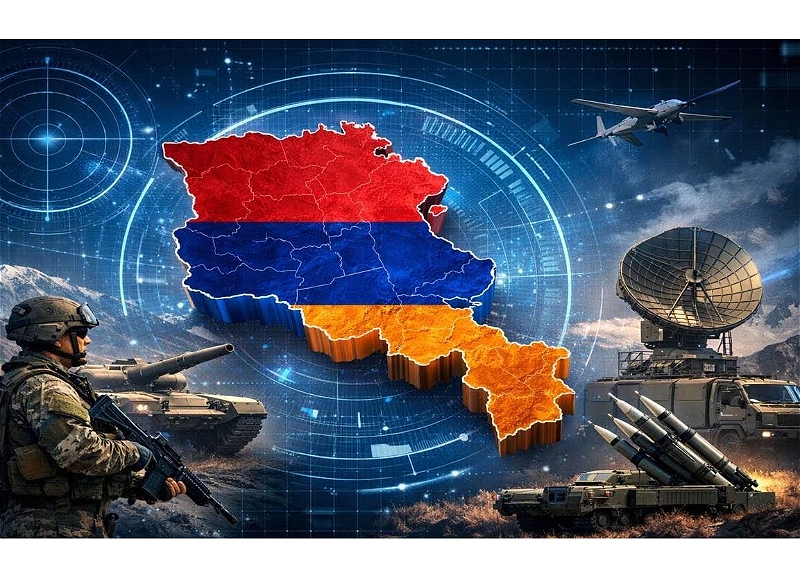
Yerevan is happy to talk about peace, yet it continues to collect arms partners.
First France, then India, and now Poland has been added to this list, and with all the "attributes" — an annual cooperation plan and negotiations on specific purchases.
It would seem that this is merely about "finding new partners and expanding international cooperation," yet behind this formula another trend is becoming ever more apparent — an attempt to draw outside players into the region, to change the established balance of power and to consistently build up the potential of the Armenian army.
The military component is becoming one of the main instruments of Armenia's broader rapprochement with the West. In essence, this is no longer simply about diversifying partnerships, but about forming a new military-political configuration around Armenia. And the more actively this process gains momentum, the more obvious its contradiction with the declared peace agenda becomes. And here it is especially important to look at how quickly the militaristic infrastructure is taking shape.
The beginning of systematic military and military-technical cooperation came in 2025. According to the report of the UN Register of Conventional Arms, during that period Poland exported 50 revolvers and self-loading pistols to Armenia. The batch is small, but quite telling — the channel has been opened. In this context, it is worth paying attention to the visit of a delegation of the Polish Chamber of National Defense Manufacturers in December of that same year and its meetings at Armenia's Ministry of Defense and the Military-Industrial Committee. The result was an annual cooperation plan between defense enterprises. In February of this year, an agreement on military-technical cooperation was signed by the defense ministries themselves, providing for joint research, the exchange of information on the weaponry in use, and the development of direct interaction between defense industry enterprises. In September, the Armenian government approved its ratification.

At the current stage, cooperation is characterized by the following main trends:
- an institutional and organizational basis for military-technical cooperation has been formed, including a separate cooperation plan in the field of the defense industry;
- the parties have begun discussing individual deliveries and interaction between defense enterprises;
- Poland has confirmed that negotiations are being held on purchases for Armenia's Ministry of Defense;
- the main areas of interaction are UAVs and troop control systems, secure communications, reconnaissance and information-exchange systems, counter-UAV assets, small arms and armored vehicles;
- from January 1, 2027, an Armenian military attaché begins work in Poland; the Armenian cabinet approved this position in August.
What Warsaw is offering
In early May, a separate area of cooperation took shape around the Polish company WB Group / WB Electronics. Armenian Defense Minister Suren Papikyan visited the Polish enterprise. His Polish counterpart Władysław Kosiniak-Kamysz described this company as a major manufacturer in UAV projects.
He also noted that Armenian servicemen have already undergone training in Poland, that additional courses in this area are being discussed, and that joint military exercises between the two countries are planned.
The Polish minister openly stated that the parties had held talks on potential arms purchases, and that the Armenian side is interested in acquiring military equipment from Poland, in particular tanks.
In June, the Polish Chamber of National Defense Manufacturers took part in the exhibition-forum of high technologies, innovation, engineering and the defense industry — RISE in Armenia. The forum created an additional platform for direct cooperation between the defense-industrial sectors of Poland and Armenia, as well as conditions for continuing the contacts begun in December 2025 and developed in May 2026.
In September of this year, a delegation headed by the Chief of the General Staff of Armenia's Armed Forces, Edvard Asryan, visited the Nowa Dęba training ground in Poland, where it observed demonstration events as part of military exercises. The Armenian military then attended the international defense exhibition in Kielce and held direct contacts with Polish manufacturers. One of the most concrete contacts at the exhibition was a meeting with the company Advanced Protection Systems (APS). The company itself described the talks with the Chief of Armenia's General Staff as productive, linking them to operational needs and the development of counter-UAV capabilities. Asryan concluded his visit with a meeting with his counterpart; according to the Polish side, the talks discussed the modernization of Armenia's Armed Forces and further military cooperation.
Thus, the contacts and the step-by-step development of cooperation during 2025-2026 indicate that military and military-technical ties between the two countries are acquiring an increasingly systematic character.
Another curious area of interaction is the use of Poland's capabilities to modernize Soviet-made equipment in service with the Armenian army. The Polish defense industry knows how to repair and modernize Soviet equipment, supplementing it with Western electronics, optoelectronic devices, and communications and control systems. And for Yerevan, whose arsenal is predominantly of Soviet origin, this is the main interest. Here is what it consists of:
- Air defense. Air defense is considered one of the most developed areas of military-technical cooperation between the two countries, where there is practical experience from past years.
Back in 2010, the company Wojskowe Zakłady Uzbrojenia and Armenia's Ministry of Defense signed a cooperation agreement on modernizing the 9K33 Osa anti-aircraft missile systems.
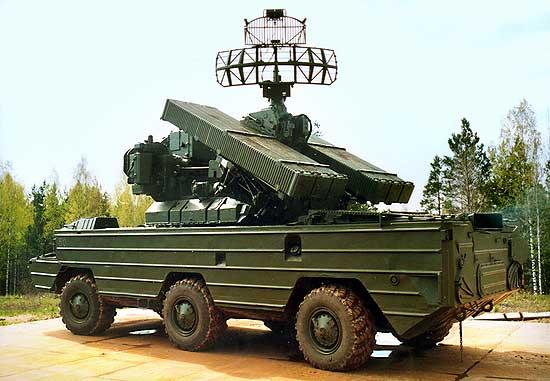
The enterprise is capable of repairing and digitizing these systems, as well as modernizing the 2K12 Kub and S-125 systems, including radar assets and command-and-control equipment. For the ZSU-23-4 Shilka, the company Zakłady Mechaniczne Tarnów has a ready modernization package, the ZSU-23-4MP Biała.
- Tanks. The Polish defense industry has significant potential with regard to T-72 tanks. The companies Bumar-Łabędy and WZM Poznań are capable of carrying out an overhaul of these tanks and modernizing the power plant, protection systems, sighting complexes, and communications and fire-control equipment.
The most realistic option for Armenia appears to be a modular approach: updating individual components instead of a complete rebuild of the platforms. A certain base for repairing T-72s and other armored vehicles also exists at the Charentsavan Machine Tool Plant, which makes such cooperation even more feasible.
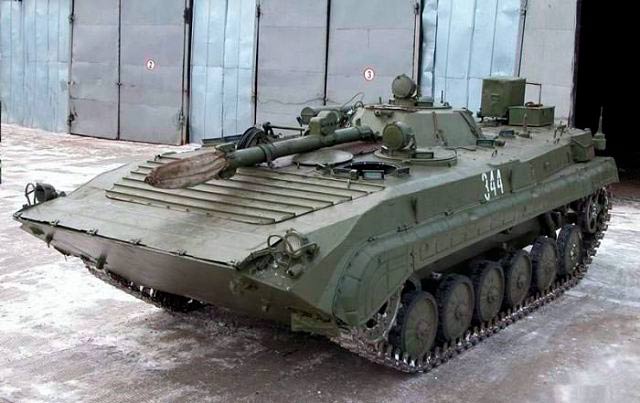
- IFVs and reconnaissance vehicles. The same approach is applicable to the BMP-1/BMP-1K and BRM-1K: first of all, this means upgrading digital communications, thermal imaging and optoelectronic systems, as well as navigation equipment.
- Helicopters. Polish enterprises can also repair the Mi-8/Mi-17 and Mi-24 helicopters in service with Armenia, extend their service life and install Western avionics and communications systems on them.
What Yerevan wants
The official logic is simple: the Polish track can create additional opportunities for Armenia to diversify its sources of arms and military equipment supplies. Looking ahead, the likelihood of developing cooperation in the sphere of UAVs, protection systems and counter-UAV systems, as well as digital communications and control assets, is assessed as high.
Further on, the plans look more ambitious. They involve expanding industrial cooperation, a partial transfer of technology, and joint production with Armenian military-industrial enterprises. The repair, service-life extension and modernization of individual items of Soviet-made weaponry and military equipment in service with Armenia — in particular T-72 tanks and BMP-1 vehicles — are also assessed as realistic directions. In this context, the creation of a service center in Armenia and the training of repair personnel are possible.
Joint production of certain shells and munitions of various calibers is also being considered. Polish short-range air defense systems may be of particular interest to Yerevan — there is a gap in this niche in the Armenian forces.
Peace in words, militarization in deeds
Polish authorities, meanwhile, openly link the development of bilateral relations to support for the pro-European and pro-Western course of Nikol Pashinyan's government. In May of this year, Poland's Defense Minister Władysław Kosiniak-Kamysz directly declared support for the "pro-European and pro-Western actions" of the Armenian government. It was precisely during this period that Warsaw and Yerevan were discussing quite specific areas of military cooperation — from the training of servicemen and joint exercises to arms deliveries.
In this connection, a natural question arises: how compatible is such a policy with the declared course toward peace and stability? If a country truly seeks to consolidate peace, it would be logical to expect a reduction in military tension, not the consistent expansion of the circle of arms suppliers, military contacts and military-technical projects.
France, India, now Poland — what is at issue is already an emerging system of military-technical ties. Its further development means not just the renewal of arsenals, but also the gradual formation of a new military-political reality around Armenia.
The problem is that weapons by themselves do not create security. On the contrary, large-scale military buildup is capable of intensifying mutual mistrust. Therefore, the more actively Yerevan expands military cooperation under the slogans of modernization and diversification, the more acutely the question arises of the price of this course for regional stability.
But first and foremost — for Armenia itself.