Shaffer: Azerbaijan's victory in the Karabakh war paved the way for peace with Armenia
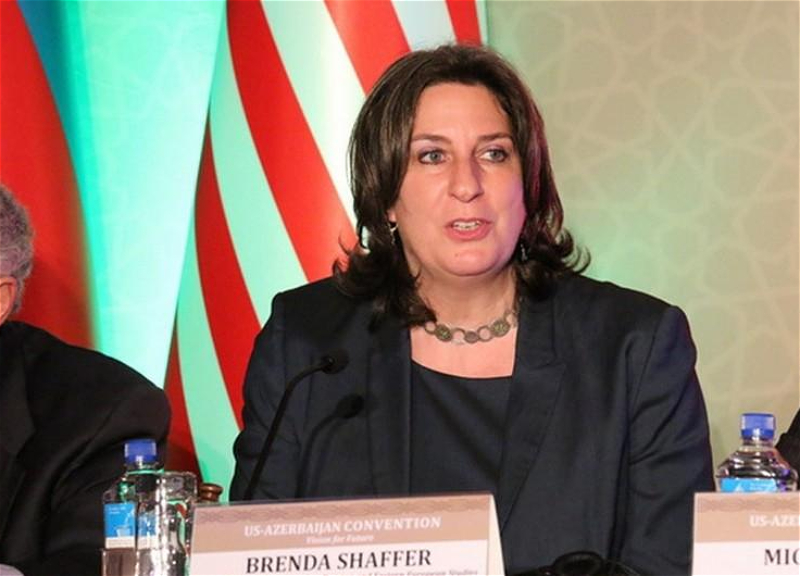
Azerbaijan's military liberation of territories previously occupied by Armenia paved the way for peace between the two countries, while the long-standing activity of international mediators effectively prolonged the conflict.
As 1news.az reports, this is stated in an article by Professor Brenda Shaffer, "Armenia and Azerbaijan Achieved Peace Despite the Conflict Resolution Industry," for RealClearWorld.
According to her, the UN and other organizations that spend billions of dollars of public funds on conflict resolution rarely achieve results. She cites the Armenian-Azerbaijani conflict as a clear example.
The author recalls that six years ago Armenia and Azerbaijan were at war. However, after that war the situation in the South Caucasus improved significantly, and the governments of the two countries are working together to ensure regional security and prosperity.
In Shaffer's assessment, the scale of the developing cooperation between Armenia and Azerbaijan is exceptional.
"At a time when the world is hastily seeking new energy routes bypassing Iran, Yerevan and Baku are working to establish trade," the article says.
From the new situation in the South Caucasus, the author highlights five main lessons, one of which is the importance of leadership.
The first lesson, in her opinion, is that military actions determine diplomatic outcomes, despite the claims repeated by many European and Western politicians that such actions are incapable of resolving international conflicts.
The second lesson is that international and regional institutions often do not play a constructive role in conflict resolution. The author notes that the UN Security Council adopted four resolutions in 1993 aimed at restoring peace in the region, but the UN took no steps to implement any of them.
The third lesson is the importance of leadership. According to her, it is precisely the leadership of Azerbaijani President Ilham Aliyev and Armenian Prime Minister Nikol Pashinyan that is of great importance in achieving peace between the two countries. Thanks to their approach, both peoples will live in greater security and prosperity in the long term.
The fourth lesson, according to Shaffer, lies in the divergence of positions between Armenian diaspora organizations in the United States and Armenia itself. Pashinyan is now seeking cooperation with Turkey and Azerbaijan, while many diaspora organizations continue to oppose such cooperation and peace itself.
"Such divergences are not uncommon: diaspora communities are often dominated by irreconcilable nationalists who oppose compromise and do not personally pay the price of war. However, for decades American policy toward the conflict was strongly influenced by Americans of Armenian origin. The second Trump administration, by contrast, has largely ignored them, giving preference to direct engagement with Yerevan," the author writes.
The fifth lesson is that this conflict was never connected with religion, culture, or history, but rather represented a manifestation of traditional geopolitics.
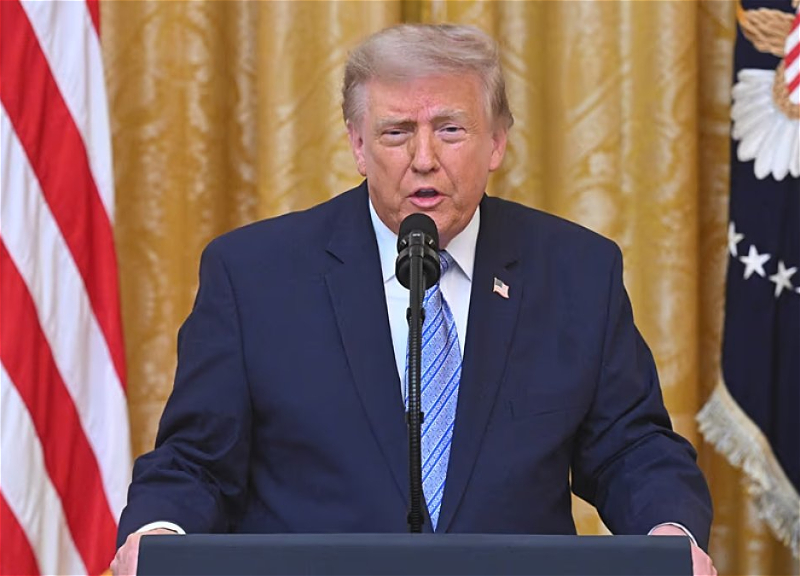
In Shaffer's opinion, the Armenian-Azerbaijani conflict demonstrates the advantages of Donald Trump's unconventional approach to peacemaking.
"Instead of becoming bogged down in history, religion, culture, and the agendas of diaspora organizations and international institutions, he focused on the national interests of the parties involved. The United States bypassed the long-standing processes that career diplomats and the UN promoted and benefited from for decades, and as a result became a significantly more important player in the South Caucasus," the author notes.