The Nuremberg precedent: why Armenian war criminals must not escape responsibility
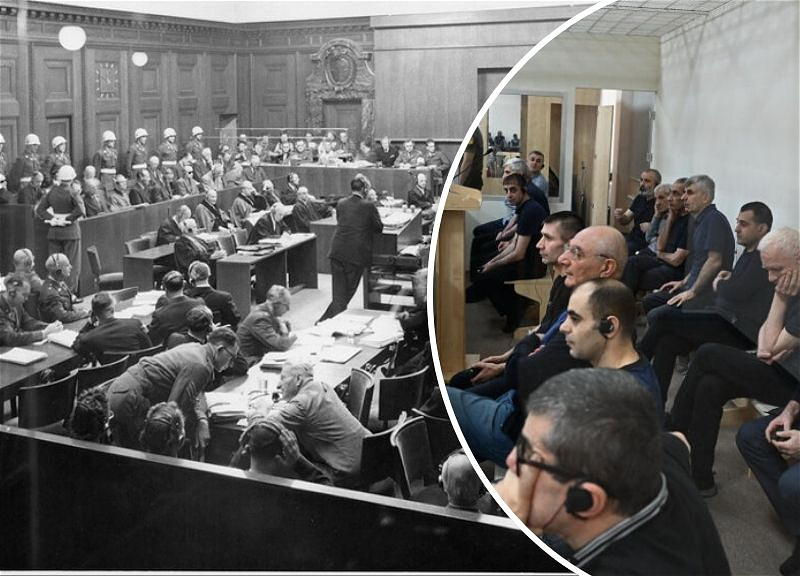
The Nuremberg Trials are one of the most important milestones in the history of international law.
They enshrined a principle that remains fundamental to this day: neither status, nor influence, nor political interests can serve as a justification for crimes or as a shield from justice.
Years later, this principle retains its relevance and has a direct bearing on the events that Azerbaijan experienced during the period of the Armenian occupation of its territories. The liberation of the seized lands and the restoration of territorial integrity and state sovereignty became a historic turning point. But there remains a question, the answer to which determines not only the assessment of the past but also the security of the future: will those who stood at the helm of Armenia during the years of occupation, and whose direct involvement in war crimes, acts of genocide and other grave deeds must receive a legal assessment, be held accountable?
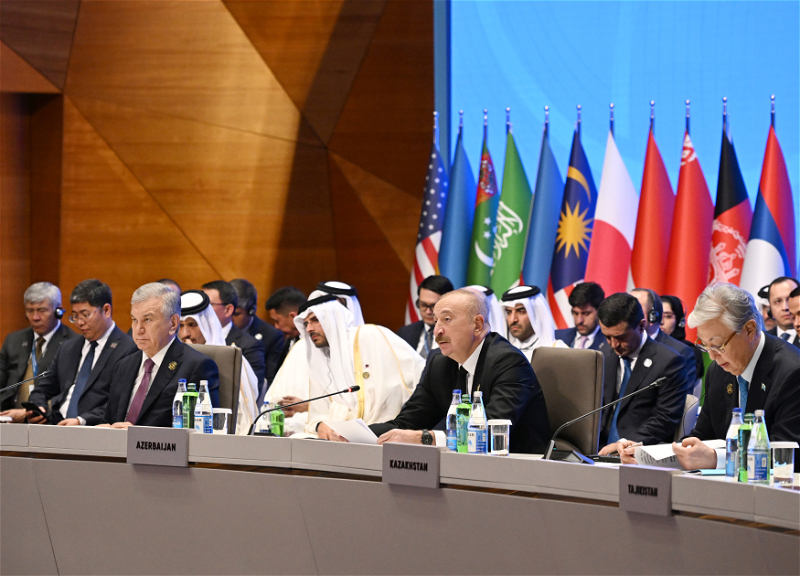
It was not by chance that President of Azerbaijan Ilham Aliyev raised this issue at the 7th Summit of the Conference on Interaction and Confidence Building Measures in Asia (CICA). His speech was not merely a reminder of what Azerbaijan had endured; it set out Baku's principled position: war crimes must not be left unpunished, and political changes cannot automatically nullify responsibility for the past.
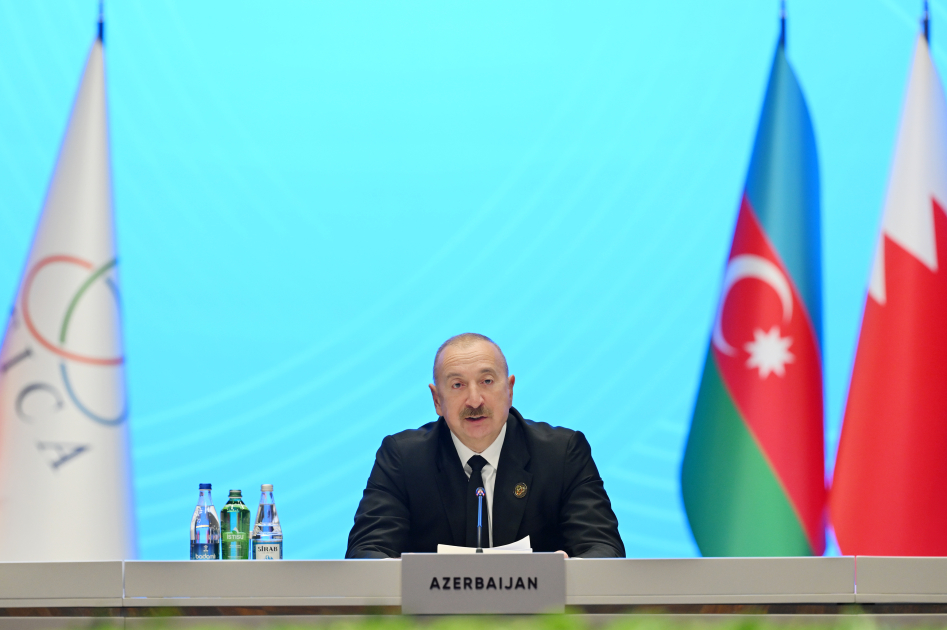
"Since the restoration of its independence 35 years ago, our country has constantly faced double standards. Over 30 years, Armenia occupied approximately 20 percent of the internationally recognized territory of Azerbaijan. Armenia committed military aggression against Azerbaijan, expelling 1 million Azerbaijanis from their ancestral historical lands in Karabakh and East Zangezur, as well as from the territory of present-day Armenia, and carrying out ethnic cleansing," Ilham Aliyev stated.
Behind these figures lie the tragic fates of people who lost their relatives and loved ones and were deprived of their homes and customary way of life. Responsibility for these war crimes rests with the Armenian state. At the same time, the international community had instruments for exerting political pressure on the aggressor and occupier. This includes, among other things, the United Nations Security Council resolutions that Armenia ignored for decades. President Ilham Aliyev recalled this in his speech: "In 1993, the UN Security Council adopted four resolutions demanding the immediate, complete and unconditional withdrawal of Armenian troops from the occupied territories, but they remained on paper for 30 years."
Herein lies one of the main lessons of the Armenian-Azerbaijani conflict. International decisions that are not followed by a real enforcement mechanism risk turning into empty declarations. If a state can keep foreign territories under occupation for years without facing effective consequences for its crimes, it gains grounds to count on future ones going unpunished as well.
Ilham Aliyev stated his position in the harshest terms: "The former leadership of Armenia – all three of its former presidents and their supporters, these war criminals and child killers, have still not borne the punishment they deserve."
The position of international structures, under which the possibility of settling the conflict was constantly pushed back, also directly contributed to the preservation of the occupation. "The UN Security Council did not insist on the implementation of the resolutions it had adopted, the OSCE showed indifference. The European Parliament and the Council of Europe – these two examples of anachronism and atavism in international relations – constantly targeted Azerbaijan, which was the victim of aggression, and encouraged the aggressor, Armenia," Ilham Aliyev stated. The activity of the OSCE Minsk Group, created in 1992 to resolve this issue, was imitative in nature: "The OSCE Minsk Group, created to settle the conflict, was monopolized by the co-chairs, whose activity was aimed at freezing the conflict, which ultimately led to the paralysis of its work."
Armenia's current leadership also continued the criminal policy of its predecessors. Ilham Aliyev recalled how Armenian Prime Minister Nikol Pashinyan declared in 2019, in then-occupied Khankendi: "Karabakh is Armenia, period." At the same time, Armenia's defense minister threatened Azerbaijan with a new war for new territories. "The international, so-called international community turned a blind eye to all this boundless insolence. No one condemned Armenia for the occupation, war crimes, ethnic cleansing and mass killings, the desecration of the religious shrines of the Azerbaijani people," the Azerbaijani leader emphasized.
The absence of an effective international reaction, including sanctions against the aggressor, only strengthened the Armenian leadership's confidence in its impunity and created conditions for new provocations. "In July and August 2020, Armenia committed two military provocations, as a result of which Azerbaijani servicemen were killed. The patience of the Azerbaijani people ran out and the time of reckoning came. The Patriotic War lasted 44 days. During this time, Azerbaijan drove the Armenian occupiers from the seized lands and liberated more than 300 cities and villages in the course of the hostilities. On November 10, 2020, Armenia signed the act of capitulation. The war stopped, however, part of Azerbaijan's territories still remained under occupation," the president recalled. "For three years, Azerbaijan tried to resolve the issue of the full restoration of its sovereignty by peaceful means. However, Armenia used the ceasefire regime as an opportunity to restore its military strength and, with the help of its new patrons from the West, to attack Azerbaijan again. This is exactly what happened in September 2023, and then the 'iron fist' of the Azerbaijani soldier once again had its say. In less than 24 hours, the Armenian occupation army in Karabakh was completely routed. Azerbaijan fully restored its sovereignty and territorial integrity and put an end to separatism. And the leaders of the separatists, war criminals and child killers, appeared before an Azerbaijani court," the head of state emphasized.
An important step toward the restoration of historical justice and holding the guilty accountable was bringing the leaders of the separatist junta to trial: "In its essence and form, this was an analogue of the Nuremberg Tribunal. However, this time it was Armenian fascists sitting in the dock. Those who threatened us, declaring that they would arrive on tanks and seize Baku, that they would drink tea here, are today drinking Azerbaijani tea in our prisons. And their tanks are on display in the Military Trophy Park."
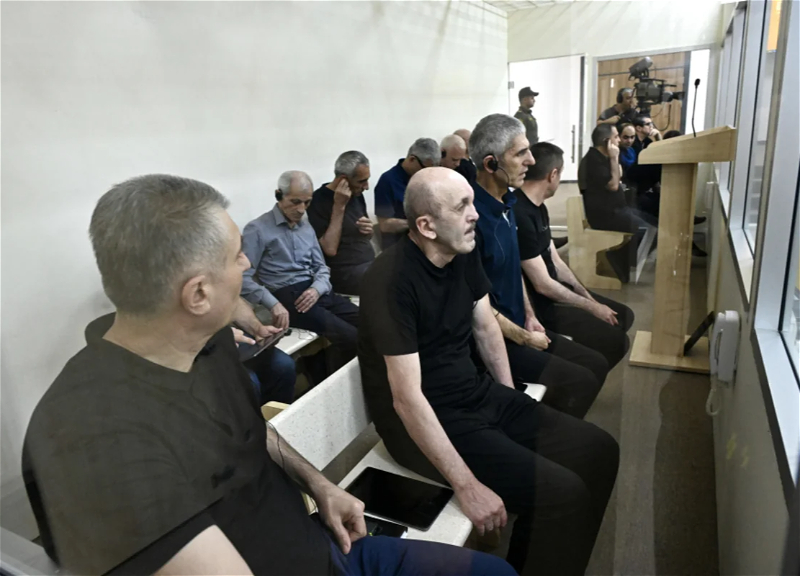
However, the significance of the trial in Baku goes far beyond the punishment of specific individuals. The Armenian-Azerbaijani conflict clearly demonstrated what the inaction of international institutions leads to, when their decisions remain on paper and the aggressor faces no real consequences. That is precisely why the president emphasized the global significance of the issue of accountability and the need for effective mechanisms that will not allow such scenarios to be repeated. "Until mechanisms are developed that ensure the implementation of the decisions and resolutions of the UN Security Council and other international organizations, wars and conflicts will continue, and new ones will also arise," the president of Azerbaijan warns.
"If sanctions had been imposed on Armenia in a timely manner for the occupation, genocide and ethnic cleansing, Azerbaijan would not have had to break the back of Armenian fascism on the battlefield. The impunity of the aggressor only gave it even more insolence," Ilham Aliyev said.
This is one of the central ideas of the head of state's speech. When violations of international law do not entail tangible consequences, the price of a new violation for its organizers – in their understanding – decreases. In the case of Azerbaijan, they miscalculated.
"War was not our choice. Armenia forced us to enter the war. Its patrons standing behind it apparently did not assume that Azerbaijan would restore its sovereignty and international law by force. However, they all miscalculated. They probably had a poor knowledge of the character of our proud, freedom-loving people, who live by their own traditions and moral values," the Azerbaijani leader stated.
The president emphasized that Azerbaijan, having won, did not choose the path of collective retribution: "We won the war, we drove the occupiers from our lands. However, we did not take revenge on them for 30 years of suffering, genocide, the destruction of our cities and villages. We took our revenge on the battlefield and offered Armenia peace. Here, once again, the moral qualities of our people were manifested. We did not strike an already defeated opponent. We did not sink to the level of the barbarians and child killers who caused our people so much suffering. We offered peace and have been living in conditions of peace for a little more than a year. This peace is still fragile, it must be protected and strengthened."
Azerbaijan has fully restored its territorial integrity and state sovereignty. Now it is of fundamental importance that the crimes committed during the years of occupation not be left without a legal assessment. Peaceful coexistence cannot serve as a universal justification for renouncing responsibility for grave crimes. Azerbaijan restored historical justice by its own efforts. Another important part of this process is the restoration of legal justice: holding the guilty accountable to confirm that impunity cannot be eternal. This is important so that such crimes are not repeated in the future.

The historical significance of the Nuremberg Trials lay in the affirmation of a fundamental principle: grave crimes do not disappear along with the political order under which they were committed, and they do not cease to require a legal assessment with the passage of time.
The Armenian-Azerbaijani conflict poses the same question to the international community: is a lasting peace possible if those implicated in grave crimes count on political status or the passage of years to protect them from justice? The answer to this question must be determined by the Law.
The main lesson of Nuremberg is that responsibility for crimes against humanity is inevitable, and the coming of peace does not mean they are forgotten. Without justice, peace risks remaining merely a pause before new conflicts – and it is precisely about this danger that the president of Azerbaijan warns.