Farhad Mammadov: What's happening with the peace agenda between Azerbaijan and Armenia?

Author: Deputy Head of the Center for Analysis of International Relations and Multiculturalism Farhad Mammadov
Source: F. Mammadov's Telegram channel
After the parliamentary elections in Armenia, the formation of the government and the adoption of the Government Program, an intensification within the framework of the peace agenda was expected.
However, over the past two months there has been more information noise in the peace agenda than concrete actions. Substantively, the process is on pause.
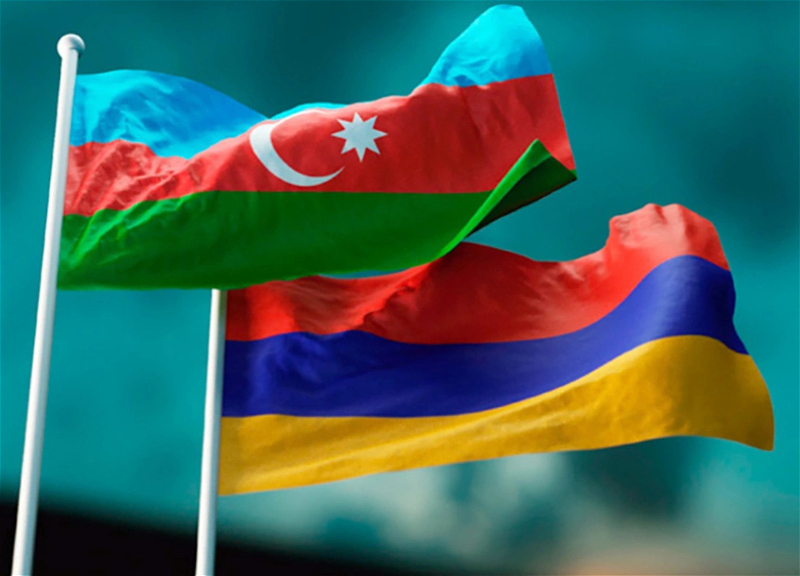
The official track continues by inertia from the agreements reached within the framework of the de facto peace established in Washington in August 2025. Although the meeting of the leaders of Azerbaijan and Armenia held in Bishkek was constructive, no progress is visible in the most important areas.
The draft of the new Constitution of Armenia has still not been presented to the general public. There is no point in even speaking about a referendum. There is no information about tenders for the construction of TRIPP; it is unclear who the contractor will be (after all, railway sleepers must be ordered well in advance).
On the contrary, over two months of absence of concrete steps, the peace agenda is being poisoned, which has led to a pause in communication at the level of civil society. The incident with the Azerbaijani soldier who crossed the undelimited and undemarcated border creates additional difficulties in the perception of peace.
Yes, de facto peace has been established, and Azerbaijan at the highest level is committed to the terms of the de facto peace and does not intend to abandon this achievement. As the President of Azerbaijan Ilham Aliyev said: "Our word is as weighty as our signature."
Under these conditions, the leadership of Armenia at the level of the prime minister creates content on the peace agenda which, on the one hand, stimulates uncertainty, and on the other, lowers the level of expectations from the peace process as a whole. Let us consider the latest statements of the Prime Minister of Armenia.
N. Pashinyan's statement about the intention to conclude a peace treaty with Azerbaijan before 2031…
The agreed peace agenda has a sequence of steps, which Baku constantly recalls. A referendum on the new Constitution, the adoption of a Constitution without territorial claims, and only after that the signing and ratification of the Agreement on Peace and the Establishment of Interstate Relations between Azerbaijan and Armenia. Everything depends on the leadership of Armenia; on when a referendum will be announced and held in Armenia. In 6 months, a year, two… that is for the government of Armenia to decide.
"Azerbaijan knows how to wait…" — this could be seen over the past years. Without the adoption of a new Constitution, the signing of a peace treaty will not take place.
Exchange of enclaves/exclaves
This topic was brought up in Armenia literally out of nowhere, since this issue is not being discussed within the framework of the intergovernmental commission. This was precisely confirmed by the commission's co-chair from Armenia, Deputy Prime Minister Mher Grigoryan. The intergovernmental commission approved the regulations, all accompanying documents of joint work, and adopted as a basis the determination of the border from north to south. The only exception may be the section of the border at the entrances to and exits from TRIPP, and even then only when this becomes relevant. On the topic of exclaves/enclaves there has been not only no agreement, but not even any discussion.
The Prime Minister of Armenia speaks about an exchange of territories, and one gets the impression that negotiations are underway on this topic. Or is the prime minister in this way making Armenia's participation in the work of the intergovernmental commission conditional? This is futile in the case of Azerbaijan, and counterproductive from the point of view of the effectiveness of the intergovernmental commission's work.
As a result, we get a large body of information, discussions, and conclusions that have nothing in common with reality. The peace agenda needs tangible events, principled decisions and resolute deeds. Waiting for some changes in the region in the hope of transforming the terms of the agreed agenda may lower the level of trust in the peace agenda even further.